Is It Cooling Sickness or a Summer Cold? Telling AC Sniffles and Coughs Apart
When your baby gets sniffles and a cough after the AC, it's hard to tell cooling sickness from a summer cold. Here's how to get your bearings at home using fever, contagion clues, and symptom patterns, plus how to adjust the environment and the signs that mean seeing a doctor. An accurate diagnosis needs a visit.
When your baby starts sniffling and coughing a few days after you've had the air conditioner running, your mind fills with worry right away. "Did the AC give them cooling sickness, or is it a summer cold, or just a regular cold?" Since the right response depends on the cause, even a single runny nose sets off a whole round of second-guessing.
Let's start with the big picture. What people often call "cooling sickness" isn't actually an illness you catch. It's the body's reaction when it can't adjust to a sudden temperature swing and dry air. Because it isn't an infection, there's usually no fever, and it doesn't spread to others. A "summer cold," on the other hand, comes from being infected by a virus going around in summer, so it can come with a fever or a sore throat, and it can be contagious.
So when you're first trying to get your bearings at home, it helps to look at whether there's a fever, whether there's any sign it was passed along, and what the symptoms look like together. That said, this is only a rough guide for reference. A baby's symptoms can overlap and can change within a single day, so please remember first that an accurate judgment is up to a pediatric visit. Especially for a young infant, a fever on its own is reason to be seen promptly.
Cooling sickness isn't really an "illness"
Let's untangle the most confusing point first. Because the name is "cooling sickness," it's easy to mistake it for a contagious illness like a cold, but that's not the case. Cooling sickness isn't a disease caused by infection with bacteria or a virus; it's a catch-all term for the various discomforts that appear when an air-conditioned environment puts strain on the body.
Three causes usually overlap. First, the sharp temperature difference from moving back and forth between a cool indoors and a hot outdoors. Second, the body's autonomic nervous system not quite keeping up with that swing, which throws off how the baby feels. Third, running the AC dries out the room, so the lining of the nose and throat gets dry too, which plays a part. Medical health information also explains cooling sickness not as a contagious disease but as the body's reaction to these environmental factors.
So the discomfort of cooling sickness tends to ease naturally once you set the environment right. If the runny nose started after a day when your baby took cold air directly all day, went in and out often, or spent time in a very dry room, this is a possibility worth keeping in mind.
What symptoms show up with cooling sickness?
What's commonly seen with cooling sickness are nasal symptoms: a stuffy nose, clear runny nose, and sneezing. Along with that, there can be a heavy, listless feeling, unusually cold hands and feet, or digestive symptoms like a bloated tummy and poor digestion. In a baby, it may show up as being fussier than usual or not wanting to feed well.
There's one feature that's helpful for telling them apart. Cooling sickness generally doesn't come with a fever. If there's a runny nose or listlessness but the temperature isn't rising much, you can consider that the environment, rather than an infection, may be behind it. Another point: symptoms easing noticeably once you leave the cool, dry room and adjust the temperature and humidity also leans toward cooling sickness. Of course, this tendency doesn't apply the same way to every baby, so please take it only as "this is how it often goes."
What's different about a summer cold?
A "summer cold" sounds similar but is different in nature. It's a genuine infection caused by a virus that circulates in summer. In summer, viruses that become active in the hot season, such as enterovirus, go around and cause cold symptoms, and can lead to illnesses like hand-foot-and-mouth disease or herpangina that come with fever, a rash, and blisters in the mouth.
Because it's an infection, there are points where it diverges from cooling sickness. There can be a fever or a sore throat, and it can spread to others. If someone at daycare or in the family has had similar symptoms, you can also keep in mind the possibility that it was passed along. The runny nose, too, may start clear and then change over a few days, turning a deeper color or getting thick and sticky.
Above all, a summer cold doesn't get better right away just by changing the environment. It often runs a course of several days as the virus passes, and in the meantime you end up caring for and watching over your baby's condition. If a fever rises or you see them feeding poorly and getting listless, it's safer to confirm the cause with a visit than to tough it out with environmental adjustments alone.
Cooling sickness, summer cold, and a regular cold at a glance
To give you something to refer to when getting your bearings at home, I've lined up the three side by side. To stress it again, this table is a collection of general tendencies, and you can't confirm a diagnosis with it. Symptoms often overlap or are ambiguous, so please always confirm the final judgment with a visit.
Category | Cooling sickness | Summer cold | Regular cold |
|---|---|---|---|
Cause | Sharp temperature swing, autonomic system not adapting, dryness (not an infection) | Infection by a virus circulating in summer | Cold virus infection |
Fever | Usually none | May be present | May be present |
Contagiousness | Doesn't spread | Can spread | Can spread |
Runny nose | Mostly clear runny nose and stuffiness | Clear, sometimes turning thicker | Clear, sometimes turning thicker |
Accompanying symptoms | Listlessness, poor digestion, cold hands and feet | Possible sore throat, rash, blisters in the mouth | Cough, sore throat, mild fever |
Course and response | Usually improves once you adjust the environment | Runs a few days; watch condition and see a doctor if needed | Runs a few days; see a doctor if needed |
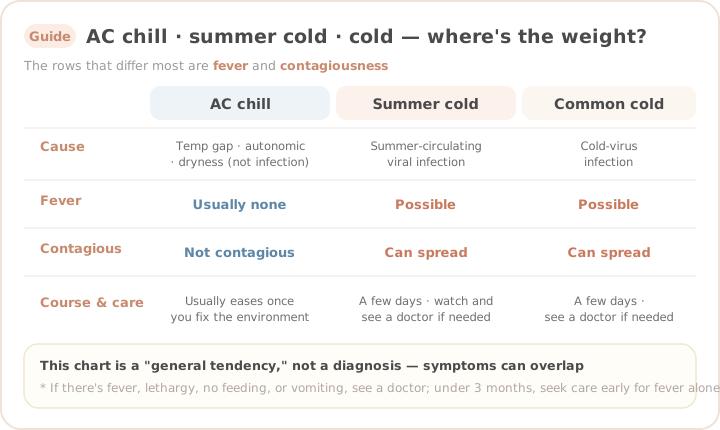
Looking at the table, the columns that split them most are fever and contagiousness. If there's no fever and no sign of it being passed along, just a runny nose and listlessness, you can weigh cooling sickness a bit more; if there's a fever or similar symptoms nearby, you can weigh infection a bit more. Even so, ambiguous overlaps are common, so use the table only as a hint about "which way to lean."
When cooling sickness is suspected, what you can try at home
If the runny nose leans toward the cooling environment rather than an infection, just tweaking the environment a little can make your baby a good deal more comfortable. The steps aren't hard.
1. Reduce the indoor-outdoor temperature difference
The larger the gap between outside and inside, the harder the body works to adapt. Aim to keep the temperature difference within 5°C, and rather than running the AC too hard, keep the room moderately cool. Setting the baby's room to roughly 24–26°C while watching how your baby is doing works well.
2. Keep the cold air from hitting your baby directly
If your baby takes the AC's cold air directly for a long time, their body cools easily and the mucous membranes dry out more. Set the airflow to low, angle it upward or toward a wall (the swing function is good too), and place your baby's spot out of the path the air travels.
3. Look after the air with ventilation and humidity
Running the AC for a long time leaves the air stale and dry. Open a window to ventilate for more than 5 minutes every 2–4 hours, and humidify toward a target of 40–60% humidity to keep the balance. When the nasal lining stays moist, stuffiness eases a good deal too. Dust or mold on the filter can strain the airways, so it's good to keep up with cleaning the filter about once every 2 weeks.
If you'd like to know more about what temperature to set the AC to, see Signs your baby is hot or cold, and how to adjust can help with fine-tuning.
If, a day or two after adjusting the environment this way, the runny nose and listlessness ease noticeably, the cooling environment was likely the influence. Conversely, if it doesn't improve even after adjusting, or a fever rises and they get listless instead, it may be an infection, so please refer to the next section.
Please see a doctor in these cases
This is the most important part of this article. Whether it's cooling sickness or a summer cold, you can get a rough read at home, but if you see the signs below, it's safer to confirm with a visit than to judge on your own.
A fever appears, or the fever won't come down easily
They're listless and slow to respond, or unusually and severely fussy
They aren't feeding well, or are vomiting repeatedly
Their breathing is labored, or they seem to struggle to breathe
Signs of dehydration, such as a noticeable drop in how much they urinate and dry lips and mouth
Please be especially sure to remember this. Babies under 3 months of age, and especially under 1 month, need to be seen right away for a fever on its own. In a young baby, the condition can change quickly while you wait for other symptoms, so even without other symptoms, treat the fever itself as a sign to be checked promptly. Rather than watching and assuming "it's probably just cooling sickness," at this age a fever is itself a sign to see a doctor.
Judgments like whether it's okay to give a fever reducer, or which medicine is right, also vary with the baby's age and condition, so rather than deciding on your own, we recommend confirming through a visit or consultation.
Frequently asked questions
Q. Does cooling sickness spread to other children too?
Cooling sickness isn't an infection but the body's reaction to a temperature swing and a dry environment, so it's understood not to spread to others. That said, if family members sharing the same room all have a runny nose and listlessness, it may be from sharing the cooling environment, but a summer cold virus could also be going around. If there's a fever, or several people are similarly unwell, please keep infection in mind as you watch.
Q. Can cooling sickness and a summer cold come together?
Yes, that can happen. When the nasal lining is weakened by a dry, cold environment and a virus is layered on top, the discomfort from cooling and the symptoms of infection can appear together. So it's often hard to split them cleanly by symptoms alone, and if there's a fever or the symptoms drag on, it's safer to confirm with a visit.
Q. If the runny nose is clear, is it definitely cooling sickness?
A clear runny nose is fairly common with cooling sickness, but a summer cold also often starts with a clear runny nose in its early stage. It's hard to confirm the cause from the color of the runny nose alone; you need to look at the fever, any sign of it being passed along, and the overall condition together to get your bearings.
Q. If my baby has no fever, is it okay not to go to the doctor?
Without a fever, you can often watch while adjusting the cooling environment, but no fever doesn't automatically mean everything's fine. If they aren't feeding well, are listless, struggle to breathe, or dehydration is suspected, a visit is needed regardless of fever. In particular, for babies under 3 months of age, the judgment should be even more cautious.
To wrap up
Just because your baby has a runny nose and cough after you've run the AC doesn't mean it's all the same situation. "Cooling sickness" isn't an infection but the body's reaction to a sharp temperature swing, the autonomic system not adapting, and dryness, so there's usually no fever, it doesn't spread, and it tends to get better once you adjust the environment. A "summer cold," on the other hand, is a summer viral infection, so it can come with a fever or sore throat and can spread. At home, get your bearings from the fever, any sign of it being passed along, and what the symptoms look like, but this is only for reference, and a sure judgment is up to a visit. If there's a fever, listlessness, poor feeding, vomiting, labored breathing, or suspected dehydration, see a doctor, and especially for babies under 3 months of age, please be seen promptly for a fever on its own. For how to set the AC in summer, referring to the sister articles as well can help you look after your baby's condition.