Signs of a suspected baby food allergy: What are the red flags?
If your baby develops hives, vomits, or starts wheezing after eating baby food, could it be an allergy? We’ve put together a guide to help you identify symptoms across three areas—skin, digestive, and respiratory—along with the differences between immediate and delayed reactions. Learn when it’s okay to monitor your baby at home, when to visit the pediatrician or ER, and how to recognize the emergency signs of anaphylaxis.

It’s a heart-dropping moment when you feed your baby just one spoonful of solid food and suddenly notice redness or hives around their mouth. It’s natural to feel anxious, wondering if it's an allergy, if it's dangerous, or if you should rush to the doctor.
Food allergy symptoms generally appear in three areas: Skin (hives, redness, rashes around the mouth, swelling, itching), Digestive System (vomiting, diarrhea, abdominal pain, extreme fussiness), and Respiratory/Systemic (coughing, wheezing, runny nose, paleness, or lethargy). While symptoms usually appear within a few minutes to two hours after eating, some delayed reactions can show up a day or two later. If it's just a single, mild local rash, stop the food and monitor them. However, if the rash spreads or is accompanied by vomiting or coughing, it’s best to have them checked at a pediatric clinic.
Above all, remember this: If hives spread across the entire body, the lips, tongue, or face swell, the baby struggles to breathe with wheezing sounds, or they become lethargic and vomit repeatedly, it could be a dangerous reaction called anaphylaxis. In this case, do not hesitate—call emergency services or head to the emergency room immediately. Since every baby reacts differently, the general rule is to stop the food and consult a pediatrician if you have any doubts.
Baby Food Allergy Symptoms: Where and How Do They Appear?
Allergic reactions can appear in multiple places at once or individually. Categorizing them into these three areas makes it much easier to determine if what you're seeing is an "allergy signal."
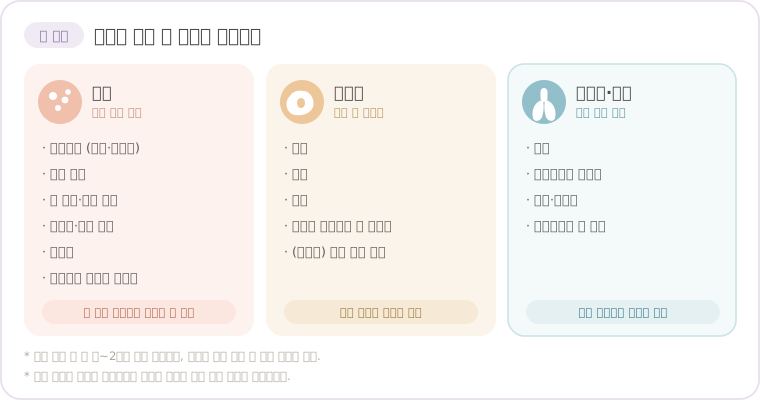
1. Skin — The Most Common Signal
Skin symptoms are the most frequent signs of food allergies. This includes hives (raised, itchy bumps), red flushing, rashes around the mouth or face, swelling of the eyelids or lips, itching, and sudden flare-ups of pre-existing atopic eczema. Redness often starts right where the food touched the mouth.
2. Digestive System — Internal Reactions After Eating
Common digestive symptoms include vomiting, diarrhea, and abdominal pain. Since babies can't use words yet, this might show up as sudden, intense fussiness or curling up in pain. In rare cases, blood may appear in the stool; if this happens, don't wait for it to get better—seek medical advice from a pediatrician.
3. Respiratory and Systemic — Areas You Must Not Miss
Respiratory symptoms like coughing, wheezing, a runny nose, or sneezing can also be caused by allergies. These can be particularly dangerous because they might look like a mild cold but can quickly escalate into a systemic reaction. Labored breathing or multiple symptoms occurring at once can indicate an emergency, which we have detailed below.
When Do Symptoms Appear?
The timing of the symptoms is a key factor in identification. Food allergies generally fall into two categories: "Immediate-type," which appears within minutes to two hours after eating, and "Delayed-type," which shows up one to two days later. Hives, swelling, and respiratory issues are usually immediate, while some digestive issues may be delayed.
Because of these delayed reactions, it's hard to definitively say "it’s not an allergy" just because symptoms appeared much later. This is why it’s best to introduce new solid food ingredients one at a time and observe for a few days rather than mixing several new items. This makes it much easier to pinpoint the culprit. For more details on which ingredients to start with, check out First Foods: What Should My Baby Eat First?.

When to Monitor at Home vs. When to See a Doctor
The most confusing part is deciding whether to stay home or go to the clinic. While there isn't one absolute rule, categorizing the symptoms into these three stages can help you decide.
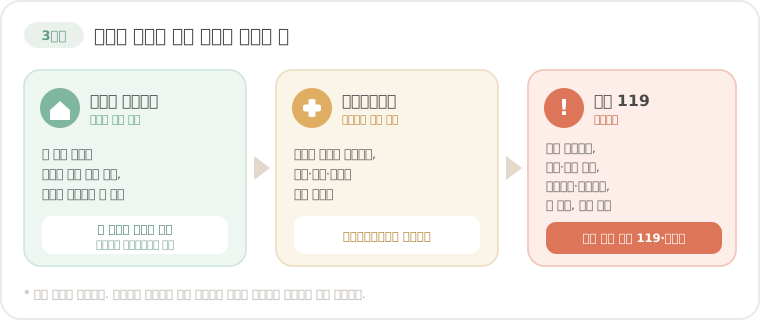
| Situation | What to Do |
|---|---|
| A single mild rash where food touched, baby is acting normal | Stop that food and monitor; consult a pediatrician if unsure |
| Rash spreads to the body, or vomiting, diarrhea, or coughing occurs | Visit a pediatric clinic for a check-up |
| Full-body hives, swelling of lips/face, wheezing/trouble breathing, lethargy, repeated vomiting | Call emergency services or go to the ER immediately |
Even if symptoms seem mild, it’s safer to seek medical attention if your baby is unusually lethargic, if the rash is spreading, or if symptoms appear in multiple areas at once. Babies can change conditions very quickly, so if you're in doubt, a quick check at the pediatrician will give you peace of mind.
Seek Emergency Help Immediately if You See These Signs
A systemic reaction where multiple symptoms occur rapidly is called anaphylaxis. This is a life-threatening emergency, so recognizing it quickly is vital. If you see the following signs, do not wait—call emergency services or go to the ER right away.
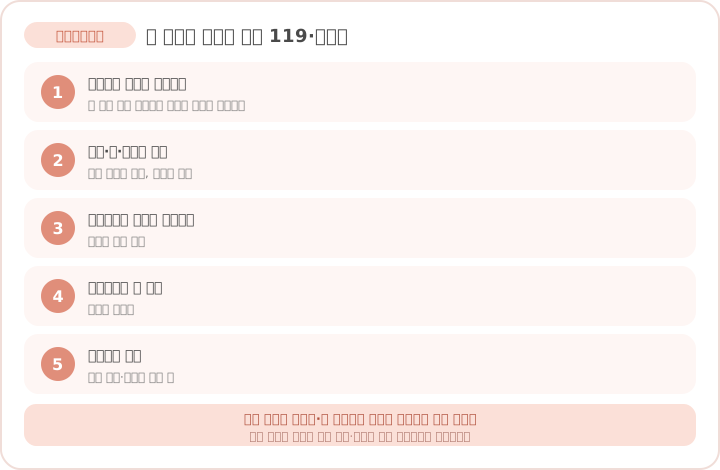
- Hives spreading across the entire body accompanied by severe itching
- Swelling of the lips, tongue, or face, a feeling of the throat tightening, or a change in voice
- Wheezing, difficulty breathing, or uncontrollable coughing
- Turning pale, becoming lethargic, or losing consciousness
- Repeated vomiting or severe abdominal pain and diarrhea occurring together
If two or more of these occur at once, or if even one symptom worsens rapidly, do not delay. Anaphylaxis can look mild at first and turn critical within minutes. It is always safer to ask for help the moment you suspect it rather than waiting. Do not try to suppress symptoms with self-administered antihistamines; leave the diagnosis and treatment to emergency professionals.
What to Do When You Suspect an Allergy
Even if it’s not an emergency, taking these steps when you suspect an allergy will help you find the cause and prepare for next time.
First, stop the suspected food immediately. Don't keep feeding it to them thinking they might get used to it. Second, record the symptoms and the time. Noting what they ate, when they ate it, and exactly what time the symptoms appeared/how long they lasted is incredibly helpful. If possible, take photos of the rash to show the doctor. Third, consult your pediatrician. A specialist needs to evaluate the baby’s condition to determine the cause and how to handle that food in the future.
Having a reaction once doesn't necessarily mean they can never eat that food again. Many babies outgrow allergies as they get older. You can discuss the timing and method for reintroducing foods with your pediatrician. The key is not to make self-diagnoses or cut out multiple foods entirely without professional guidance.

The Mouth is Red—Is It Always an Allergy?
Many parents worry about allergies the moment they see redness around the mouth, but it’s often just simple irritation. Saliva left on the skin for too long or acidic foods like tomatoes, citrus, or strawberries touching the skin can cause redness. These irritant reactions are usually limited to the contact area and fade once the skin is cleaned and some time passes.
In contrast, an allergy often spreads beyond the mouth or comes with hives, swelling, or digestive/respiratory issues. Of course, it can be hard to tell the difference visually. If the reaction repeats or spreads, it’s best to have a pediatrician confirm whether it’s irritation or an allergy.
Frequently Asked Questions
Is it safer to delay new foods as much as possible because of allergies? While it was once thought that delaying allergenic foods was better, current medical opinion suggests that introducing them at the appropriate time can actually help prevent allergies. However, since the approach varies based on your baby’s health and family history, consult your pediatrician about the timing. We've covered this more in When and How to Start Allergenic Foods.
How do I find the cause for delayed-type reactions? Delayed reactions are harder to pinpoint. This is why introducing one new ingredient at a time for a few days and keeping a food diary is the most reliable method. These records are invaluable when narrowing down the cause during a doctor's visit.
Should I be more careful if there's a family history of allergies? If parents or siblings have allergies or eczema, the baby may have a slightly higher risk. This doesn't mean you should avoid specific foods entirely; rather, proceed more slowly with observations and coordinate the process with your pediatrician.
In Summary
Baby food allergy symptoms manifest in the skin, digestive system, and respiratory system. They can appear within minutes to 2 hours (immediate) or 1 to 2 days later (delayed). For a single mild rash at the point of contact, stop the food and observe. If it spreads or other symptoms appear, see a pediatrician.
Most importantly, remember that full-body hives, swelling, wheezing, lethargy, and repeated vomiting are emergency signals for anaphylaxis—head to the ER or call emergency services immediately. For suspected allergies, stop the food, record the details, and consult a professional. Every baby is different, so when in doubt, checking with a doctor is the most reassuring path for your family.
References
Doctor Now Health Info — Food Allergies
MSD Manual Consumer Version — Food Allergy
Seoul National University Hospital Medical Info — Food Allergy
Kormedi — Infant and Toddler Food Allergies