Baby Formula Selection & Switching Guide: Differences by Type and How to Switch
Are you worried about how to choose and switch formulas for your baby? We’ve summarized everything at a glance—from the differences between regular, hydrolyzed, and special formulas to ingredient comparisons and safe ways to switch.

Are you comparing different types, ingredients, and features of formula to find the perfect fit for your baby? It might feel overwhelming at first, but the core principle is simple: Observe your baby's digestion, skin reactions, and bowel movements, and change only one thing at a time.
Key Answer
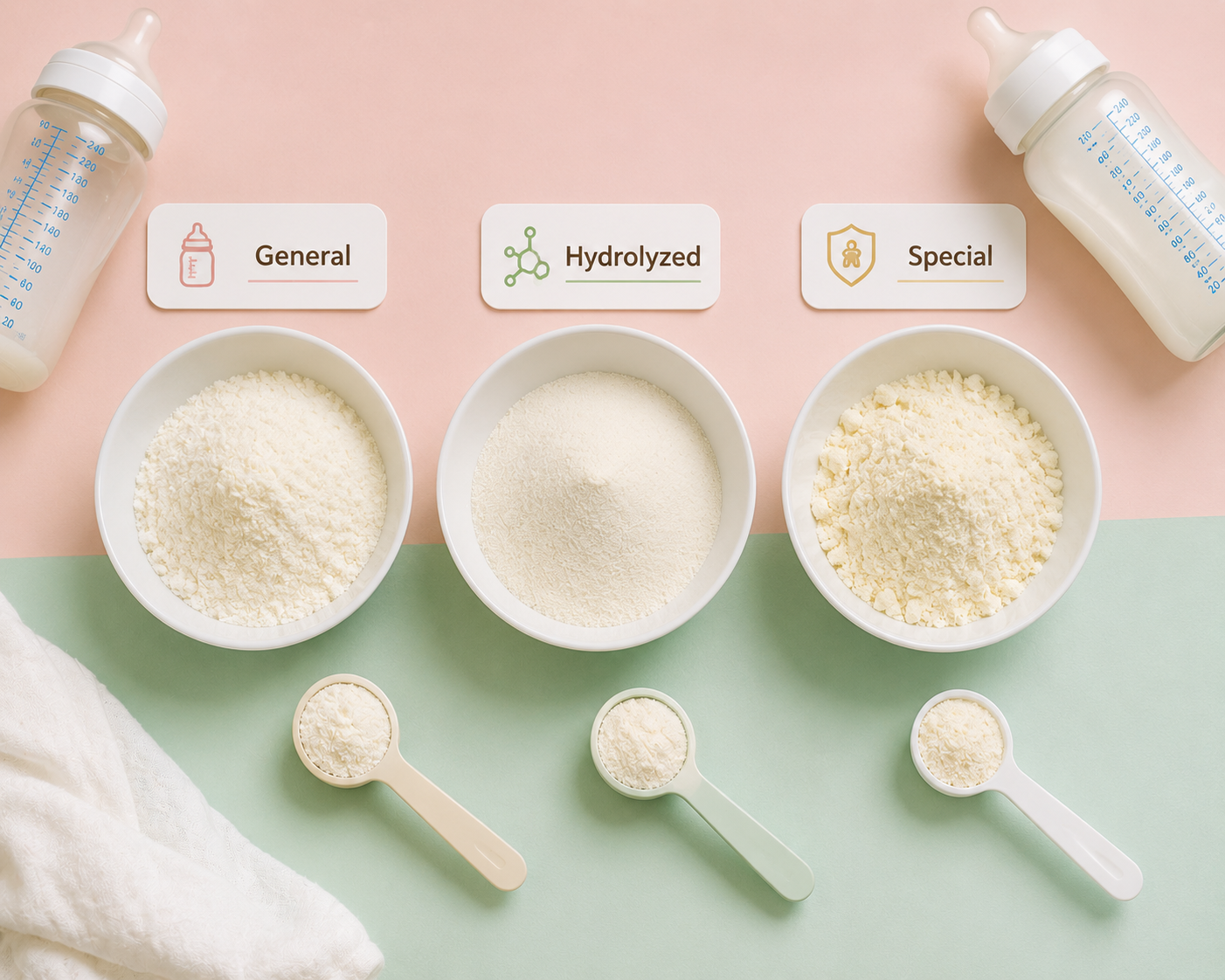
Baby formulas can be categorized into standard formula, hydrolyzed formula, and specialized formula. For healthy full-term babies, standard formula is usually the first choice. However, if you suspect allergies or digestive issues, it's best to consult a pediatrician before exploring other options.
When switching formulas, some may change immediately depending on the baby's condition. However, if there are no specific issues, a common method is to transition gradually over 5 to 7 days by mixing the current and new formulas. The most important indicators to watch during this time are the baby's stool condition, occurrence of spitting up, skin reactions, and overall comfort after feeding.
Guidelines by Situation
The right formula can vary depending on your baby's age and health. Consider the following criteria.
1. Standard Formula
Standard formula is the most common choice for healthy full-term babies. It can be used as a primary source of nutrition or alongside breastfeeding. Most babies adapt well to standard formulas.
However, since protein composition, fat structure, and the presence of probiotics or prebiotics can vary by brand, it's important to monitor your baby's digestion and bowel movements.
2. Hydrolyzed Formula
Hydrolyzed formula contains proteins that are broken down into smaller pieces. This is often considered if a baby has a sensitive digestive system or if a Cow's Milk Protein Allergy (CMPA) is suspected.
Note that this isn't necessarily "better" than standard formula for all babies. If you suspect an allergy, it's safest to consult a pediatrician first. Hypoallergenic formulas are recommended for use under medical supervision.
3. Specialized Formula
Specialized formulas are designed for specific medical needs, such as for premature babies, congenital metabolic disorders, or severe allergies. These are not general options; they should only be used based on medical necessity after consulting a specialist.
What to Look For
When choosing a formula, it's more important to see how well it fits your baby rather than simply looking for "the most premium ingredients."
Check for the following:
Whether the baby is excessively fussy after feeding
Frequency of burping or spitting up
Recurring constipation or diarrhea
Skin reactions like rashes or hives
Steady weight gain appropriate for their age
Ingredients like DHA, ARA, prebiotics, and probiotics may vary by product. Focus on your baby's overall reaction rather than one specific ingredient.
Signs That a Change May Be Needed
If the following symptoms recur, you may need to check if the formula is a good match for your baby:
Repeated severe vomiting after feeding
Persistent diarrhea or constipation
Blood-streaked stools
Skin rashes or hives
Extreme fussiness or trouble sleeping after feeding
Noticeably slow weight gain
If these symptoms occur, instead of switching between various formulas on your own, it's best to record the symptoms, feeding amounts, and stool conditions, then consult a pediatrician.
Comparison of Formula Types
Type | Key Features | Best For |
|---|---|---|
Standard Formula | The most basic preparation | Healthy full-term babies, general or mixed feeding |
Hydrolyzed Formula | Proteins broken down into smaller units | Suspected allergies or sensitive digestion |
Specialized Formula | Tailored for medical conditions | Premature birth, metabolic disorders, severe allergies |
Example Transition: The 7-Day Method
If there are no severe allergies or medical restrictions, you can slowly switch by mixing the old and new formula.
Day | Current Formula % | New Formula % |
|---|---|---|
Day 1–2 | 75% | 25% |
Day 3–4 | 50% | 50% |
Day 5–6 | 25% | 75% |
Day 7 | 0% | 100% |
However, if you are switching due to a severe allergy or medical reason, always follow your doctor's specific instructions first.
Checklist After Switching
Checklist | Positive Signs | How to Check |
|---|---|---|
Digestion | Appears comfortable after feeding; less spitting up | Observe for 30–60 mins after feeding |
Stool | Color and frequency remain consistent | Check the diaper |
Skin | No rashes, hives, or redness | Check neck, face, belly, and bottom |
Growth | Steady increase in weight and height | Review growth chart at check-ups |
Seeking Professional Advice
If you notice severe vomiting, rashes, hives, bloody stools, or difficulty breathing after feeding, seek medical attention immediately. Symptoms like difficulty breathing, wheezing, or trouble swallowing may indicate a severe allergic reaction and require urgent care.
If symptoms persist or weight gain is slow while considering a formula change, it's safest to consult a pediatrician or a nutrition specialist before proceeding.
FAQ
Q1. Once I choose a formula, do I have to stick with it?
A. No. You can switch to a more suitable formula based on your baby's growth stage or digestive health. However, frequent changes can be hard on their digestion, so it's best to avoid changing too often without a specific reason.
Q2. Is hydrolyzed formula healthier than standard formula?
A. Not necessarily for every baby. Standard formula is sufficient for most healthy babies. Hydrolyzed formula is generally considered after professional consultation if an allergy or sensitivity is suspected.
Q3. Is organic formula better?
A. Organic formula uses ingredients that meet organic standards. However, "organic" alone doesn't guarantee it's the best fit for your baby. It's better to choose by looking at the ingredients, preparation method, and your baby's digestive reaction.
Q4. My baby's stool turned slightly green after switching. Is that a problem?
A. Stool color can change temporarily when switching formulas. If the baby is eating and sleeping well, and has no fever, vomiting, or blood in their stool, you can observe them for a few days. However, if the green stool persists or is accompanied by diarrhea, blood, or severe fussiness, please see a doctor.
Q5. Is it necessary to mix the formulas when switching?
A. If there are no adverse symptoms, many parents use the gradual mixing method over several days. But if the switch is for a medical reason—like a suspected allergy, bloody stools, or severe vomiting—you may need to switch immediately following your doctor's guidance.
Summary
Choosing a formula is less about "which one is objectively best" and more about "which one fits my baby best." Take it slow and observe your baby's digestion, stools, and skin reactions one step at a time.