Summer Storage Guidelines for Breast Milk, Formula, and Baby Food: How long can they stay at room temperature, in the fridge, and in the freezer?
How long can breast milk, formula, and baby food be kept at room temperature, in the refrigerator, or in the freezer? We have summarized the storage times and periods for all three in a comparative table. We also covered why leaving them out at room temperature is extra risky during the summer, along with the universal safety rules you should follow regardless of the type of food, all based on official guidelines.
When summer arrives, moments of wondering, "Is this still safe to feed?" increase significantly. From expressed breast milk and prepared formula to baby food cubes stocked in the freezer—it's confusing because the storage limits for room temperature, refrigeration, and freezing are all different for these three.
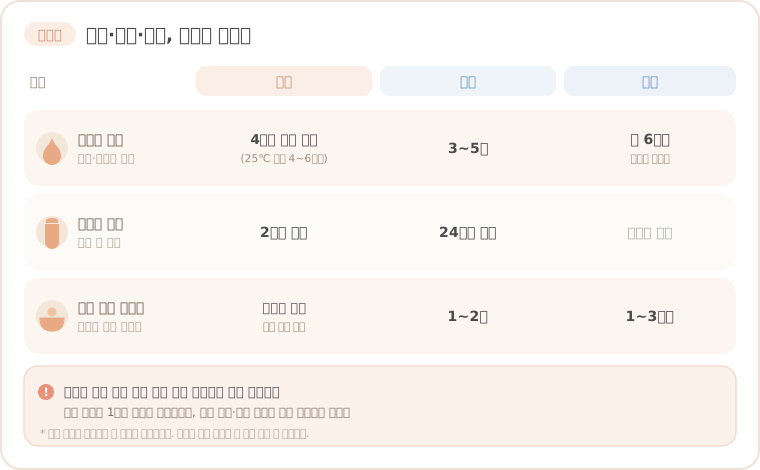
First, here is a quick overview of the general standards. Expressed breast milk generally lasts about 4 hours at room temperature, 3–5 days in the refrigerator, and up to 6 months in a home freezer. Prepared formula has a much shorter window: 2 hours at room temperature and 24 hours in the refrigerator. Any bottle the baby has already touched should be finished within 1 hour or discarded. Homemade baby food lasts 1–2 days in the fridge and 1–3 months in the freezer. These numbers are based on official guidelines from organizations like the Academy of Breastfeeding Medicine (ABM) and pregnancy/parenting portals.
However, these times are not a "guaranteed safety" window but rather the upper limits under ideal conditions. Especially in summer, bacteria multiply faster as room temperatures rise, so it is safer to keep room temperature storage times even shorter. Below is a table comparing all three at a glance, followed by summer precautions and common principles.
Breast Milk, Formula, and Baby Food: Room Temp, Fridge, or Freezer?
When grouped together, the differences in storage limits become clear. The figures below are approximate upper limits based on official standards and may be shorter depending on actual temperature and condition.
| Type | Room Temp | Refrigerated | Frozen |
|---|---|---|---|
| Expressed Breast Milk | 4–6 hours (around 25°C), 4 hours recommended | 3–5 days | Approx. 6 months (Home freezer) |
| Prepared Formula | Within 2 hours | Within 24 hours | Do not freeze |
| Homemade Baby Food | Serve immediately; do not leave out | 1–2 days | 1–3 months |
There is one crucial exception to remember: anything the baby has already started eating has a much shorter lifespan regardless of the table. A bottle that has been used should be finished within 1 hour, and any leftover formula or baby food touched by a spoon should be thrown away. This is because bacteria from the baby's saliva can multiply rapidly in the remaining food.
A Closer Look at Each Type
Since a table doesn't cover everything, let's briefly look at each one. Each type has slightly different storage points.
1. Expressed Breast Milk
Expressed breast milk is the most flexible at room temperature among the three. However, since it easily exceeds 25°C in summer, it’s safer to stick to the 4-hour recommendation. It lasts 3–5 days in the fridge and about 6 months in a home freezer. Slow thawing in the refrigerator is recommended, and once thawed, breast milk should never be refrozen.
2. Prepared Formula
Formula has the shortest room temperature window. The standard is 2 hours at room temperature and 24 hours in the fridge, but most importantly, a bottle the baby has touched must be finished within 1 hour. Therefore, preparing a fresh bottle for each feeding is the safest method rather than making multiple bottles in advance. Reheating leftover formula is also not recommended.
3. Homemade Baby Food
Homemade baby food lasts about 1–2 days in the fridge and 1–3 months in the freezer. It is convenient to portion it into single meals immediately after cooking, cool it quickly, and thaw only as much as needed. Thawed baby food should be consumed within the day, and leftovers should not be refrozen.
Why Should We Be Stricter in Summer?
Even the same food spoils much faster at room temperature in summer than in winter. Bacteria grow best at around 40°C, which unfortunately coincides with the lukewarm temperature babies prefer for eating. Therefore, breast milk, formula, or baby food left out in the summer heat can see a massive increase in bacteria in a very short time.
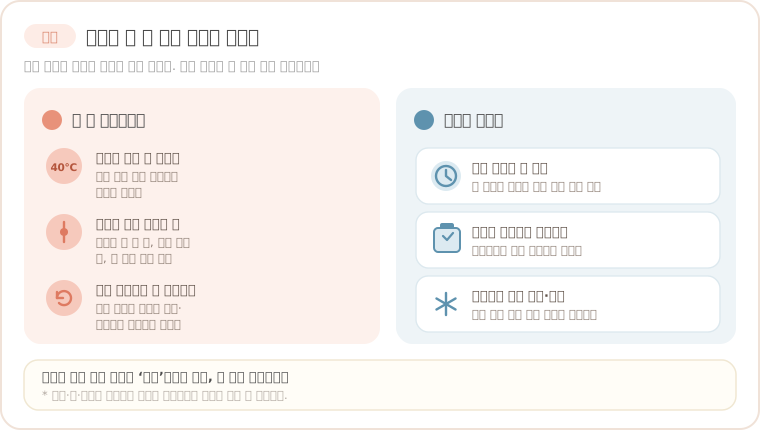
In summer, it’s better to be more conservative than the times listed in the table. Avoid rooms without air conditioning, sunny spots, or the inside of cars, where temperatures rise quickly. When going out, use an insulated bag with ice packs and refrigerate or feed the baby immediately upon arrival.
Additionally, food that has been left out at room temperature for a long time does not return to its original safe state just by putting it back in the fridge. Bacteria that have already grown are not completely eliminated by refrigeration or reheating. If you're unsure, it's best to follow the "when in doubt, throw it out" rule.
Common Principles Regardless of Type
There are basic principles that apply to all three. If you internalize these, you’ll stay safe even if you forget the specific numbers.
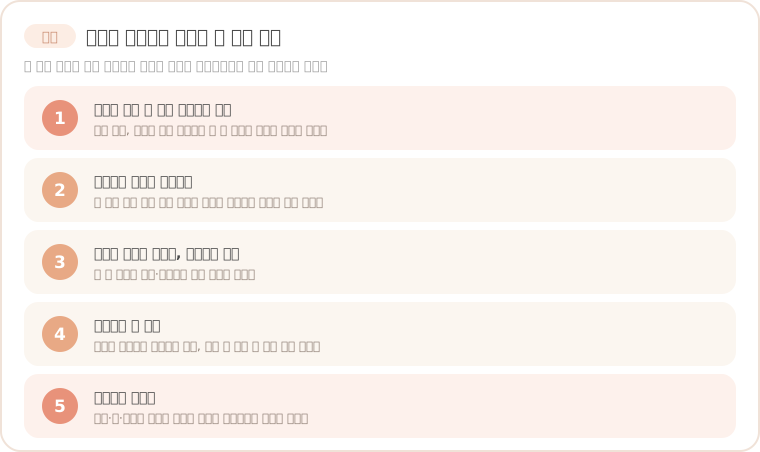
- Do not store anything the baby has touched. Leftover bottles or baby food touched by a spoon should be discarded due to bacteria from saliva.
- Portion and label with dates. Dividing meals and labeling them with the date reduces those "When did I make this?" moments.
- Freeze quickly in small amounts; do not refreeze. Never refreeze breast milk or baby food once it has been thawed.
- Reheat only once. Avoid repeated heating and cooling, and do not serve leftovers that have already been warmed.
- If in doubt, throw it out. If the smell, color, or texture seems off, do not feed it to the baby even if the storage time hasn't expired.
The habit of writing dates on portioned food is incredibly helpful. Keeping a record of what and how much your baby ate that day allows you to track storage management and feeding patterns together. By logging feeding and baby food records in Babyfolio, you can keep dates and amounts organized with photos, making it easy to show your pediatrician exactly what was consumed during a consultation.
When to See a Pediatrician
Even if you follow storage rules perfectly, babies can still get an upset stomach from spoiled food in the summer. If you see the following signs, it is safer to consult a pediatrician:
- Repeated diarrhea or vomiting after eating.
- Fever, unusual lethargy, or excessive fussiness.
- Signs of dehydration, such as significantly reduced urine output or dry lips/mouth.
- Blood or mucus in the stool.
- Inability to eat well and continued distress.
Young infants can become dehydrated very quickly if diarrhea or vomiting persists. If symptoms repeat or worsen, do not delay seeking medical attention.
Frequently Asked Questions
The breast milk or baby food from the fridge smells a bit off. Is it okay if I heat it up?
If the smell, taste, or color is different than usual, it is safest not to feed it, even if the storage time remains. Heating does not make spoiled food safe again. When in doubt, it’s best to discard it.
I accidentally left formula out at room temperature for too long. Can I just put it back in the fridge?
Formula left out for too long does not become safe again by being refrigerated. Bacteria that have already grown will not be fully eliminated by cooling or reheating. It's safer to make a fresh bottle.
The freezer is full, so I put breast milk in the door shelf. Is that okay?
The freezer door experiences temperature fluctuations every time it’s opened, making it less ideal for storage. It is recommended to keep breast milk and baby food deep inside where the temperature is more stable.
I have leftover thawed baby food. Can I refreeze it?
Baby food that has been thawed once should not be refrozen. Use thawed food within the day and discard anything the baby has touched.
Final Summary
Here is the big picture for summer storage: Expressed breast milk lasts ~4 hours at room temp / 3–5 days in the fridge / ~6 months frozen. Prepared formula lasts 2 hours at room temp / 24 hours in the fridge (1 hour if the baby touched it). Homemade baby food lasts 1–2 days in the fridge / 1–3 months frozen. The common rules for all are: discard leftovers, label with dates, and never refreeze.
Above all, remember these times are upper limits for ideal conditions, and it is safer to be stricter during the summer. If it looks or smells strange, throw it out, and if your baby shows symptoms like vomiting or diarrhea, consult a doctor. These two precautions alone will make your summer storage much safer.
References
Academy of Breastfeeding Medicine (ABM) Clinical Protocol #8
MotherSafe Korea
i-Sarang Pregnancy & Childbirth Portal
DoctorNow Health Info