When to start solids: If you see these signs, they're ready
When should I start solids? Is my baby ready to start now? We’ve put together a guide on how to check for readiness signals between 4 to 6 months, such as holding their head up, sitting with support, showing interest in food, and the decrease of the tongue-thrust reflex.

When your baby starts staring intently at the food you're eating, you might suddenly wonder, "Is it time to start solids?" With some saying "from 4 months" and others insisting "not until 6 months," it’s easy to feel confused about the right timing.
To give you the general rule first: starting solids usually happens between 4 and 6 months of age. The exact timing isn't determined by a calendar date, but by the readiness signals your baby shows. Even at 5 months, one baby might be ready while another might need a bit more time. Because every baby develops at their own pace, it’s hard to give a single "must-start" date.
In this article, we’ve put together a checklist of signs to help you see if your little one is ready to start solids. We'll focus on four key indicators: head control, sitting with support, interest in food, and the reduction of the tongue-thrust reflex. Details on what to feed and the specific order of ingredients will be covered in a separate follow-up guide.
When do babies usually start solids?
Most babies start solids between 4 and 6 months. By this stage, babies begin to need nutrients (especially iron) that are hard to get from breast milk or formula alone, and their digestive and swallowing functions have matured enough to handle solid food. However, this doesn’t mean you must start exactly at 4 months. The key is to observe your baby’s readiness within that 4-to-6-month window.

Rather than picking a fixed date, start watching your baby more closely around this time. When the readiness signals we discuss below begin to overlap, that’s likely the perfect starting point for your baby.
What are the signs that my baby is ready?
We generally look for the following four signs appearing together. It's more reliable to wait for multiple signals to overlap rather than rushing after seeing just one or two.
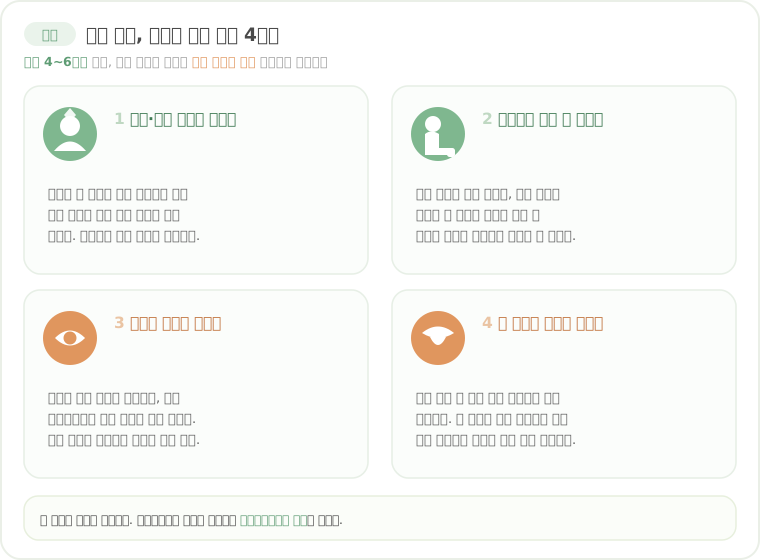
1. Steady head and neck control
The first sign is whether they can hold their head up steadily. To swallow food safely, a baby needs to be able to hold their head upright. If your baby can hold their head up without it tilting back when you hold them, they’ve met one of the basic requirements.
2. Can sit up with support
Even if they can’t sit perfectly on their own yet, check if they can maintain an upright torso when supported or placed in a baby chair. An upright, stable posture makes swallowing easier and reduces the risk of choking. It is safer not to feed solids while the baby is lying down or slouching backward.

3. Showing interest in food
If they watch you eat, mimic chewing motions with their mouth, drool, or reach for your food, they are expressing a desire to try it. This curiosity is a sign that they are mentally preparing to accept new eating experiences.
4. Decreased tongue-thrust reflex
Young infants have a reflex where they automatically push anything placed in their mouth back out with their tongue. This "tongue-thrust reflex" protects them by preventing them from swallowing things they can't handle. If this reflex is still strong, they will simply push the food back out when you offer a spoon. When this reflex fades, they will begin to accept the spoon without pushing it away—a sign they are ready to learn to swallow.
In addition to these four signs, you might notice that they have roughly doubled their birth weight or seem hungry soon after a full milk feed. These are helpful secondary references, but the main four signals should come first.
What if it’s too early or too late?
Just as important as the readiness signs is the timing: "not too early, not too late." There is a specific reason for that 4-to-6-month window.
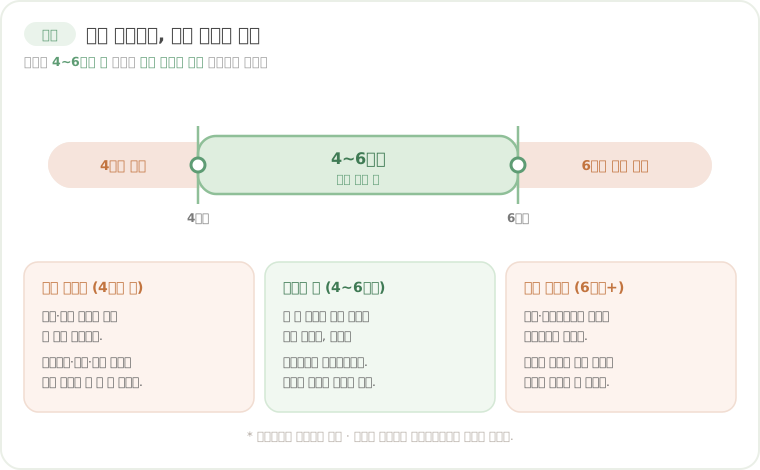
Starting too early (before 4 months) is not recommended. At this stage, a baby’s digestive and swallowing functions are not fully developed, increasing the risk of allergies, gagging, or choking, and putting unnecessary strain on their digestion. On the other hand, starting too late (well past 6 months) should also be avoided. Around this age, breast milk and formula alone may no longer provide enough iron, and the baby might miss the optimal window for practicing chewing and swallowing various textures.
The "right" answer isn't "the earlier, the better" or "always wait as long as possible." It’s watching your baby’s cues within that 4-to-6-month period. If your baby is in this age range and showing several readiness signs, that is their natural starting point.
Clearing up common misconceptions
There are many myths surrounding the start of solids. Here’s a quick table to clear up the most common points of confusion.
| Common Saying | The Reality |
|---|---|
| "You must wait until exactly 6 months." | Decide based on your baby's readiness signals within the 4–6 month window. It's not a rigid date. |
| "They need teeth to start solids." | Babies can start first foods (purees) using their gums. It has little to do with when their teeth come in. |
| "Earlier is better, so start before 4 months." | Before 4 months is too early. Digestion and swallowing aren't ready, which can be stressful for the baby. |
In the end, the standard isn't a single "month" number, but rather a combination of signals from your baby.
Once they’re ready, how should I start?
Even if they show all the signs, you don't need to feed them a lot on day one. One or two spoonfuls of thin rice cereal is plenty. Think of it as practice for getting used to a spoon and new textures rather than a full meal. Don't be discouraged if they spit it out or make a face—it’s all part of the learning process.
For a while, breast milk or formula will still be their main source of nutrition. Instead of cutting down on milk immediately, aim for a gradual balance. If you're worried about your baby refusing their bottle lately, you might find our article on reasons for formula refusal helpful.
For more details on which foods to introduce first and how to observe reactions to new ingredients, check out our guide on First Foods and Introduction Order.
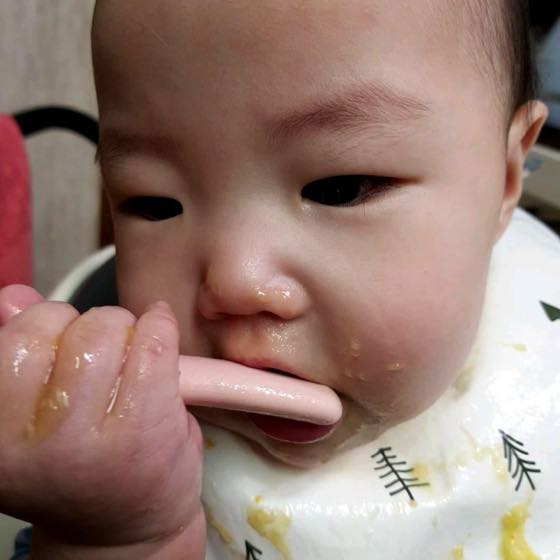
The start of solids is a memorable milestone in your baby’s growth. Keeping track of when they first tried a spoon and which foods they liked can be very helpful later. By using Babyfolio to log food records and photos, you can see their progress at a glance, and family members living far away can follow along and leave supportive comments.
When to consult a pediatrician
While most parents can decide the start date based on baby's signs, it’s best to consult a pediatrician in the following cases:
- If your baby was born prematurely. Timing should be based on their adjusted age rather than their birth date, and it’s safer to follow your doctor’s advice.
- If your baby is in the 4–6 month window but shows no readiness signals at all.
- If they frequently gag or have trouble breathing while eating.
- If there is a family history of allergies or if you are worried about reactions to specific foods.
- If the baby is underweight or has other health conditions that make the timing unclear.
In particular, if your baby’s skin color changes or they struggle to breathe while eating, stop immediately and seek medical attention. Since every baby is unique, it's always safer to have a professional assessment if you're unsure.
Frequently Asked Questions
My baby is 4 months old and shows all the signs. Can I start now?
4 months is the earliest edge of the window. If the signals are very clear, you can consider starting, but we don't recommend starting before 4 months. If you’re unsure, a quick chat with your pediatrician is always a good idea.
My baby is almost 6 months old but has no interest in food. Is it too late?
Babies develop interest at different rates. If they have other signs (head control, sitting with support), you can try offering a tiny spoonful of thin puree to see their reaction. If they still struggle or you're worried, seek professional advice.
Is the timing different for breastfed vs. formula-fed babies?
Readiness signals are more important than the feeding method. However, for breastfed babies, iron supplementation becomes especially important around 6 months, so you should ensure they get iron-rich foods. Check our follow-up article for specific food suggestions.
Do twins start on the same day?
Even though they share a birthday, readiness signals can differ. You should start based on each baby's individual cues; it's perfectly fine if one starts a bit earlier or later than the other.
In Summary
The core of starting solids is 'your baby’s signals' rather than just a 'month' number. When your baby is between 4 and 6 months old and shows signs like steady head control, sitting with support, interest in food, and a reduced tongue-thrust reflex together, they are likely ready.
Starting too early can be hard on their digestion, while starting too late can delay iron intake and chewing practice. Just remember: aim for the 4-to-6-month window, start light with a few spoonfuls of rice cereal, and consult a doctor for preemies or if you're ever in doubt. You've got this!
References
Korean Academy of Pediatrics, Guide on Timing and Readiness for Solids
I-Sarang Pregnancy & Childcare Portal, Starting Solids: Timing and Methods
Samsung Medical Center, Guide to Starting and Progressing with Solids
Yukacrew, Information on Readiness Signals for Solids