Baby night sleep between seasons: what room temperature is right — a by-age temperature and humidity chart
For a baby's night room, around 20-24°C and 40-60% humidity is the guide. From newborn to past the first birthday: a by-age temperature and clothing table, where to place the thermo-hygrometer, preparing for the dawn chill, and watching overheating.
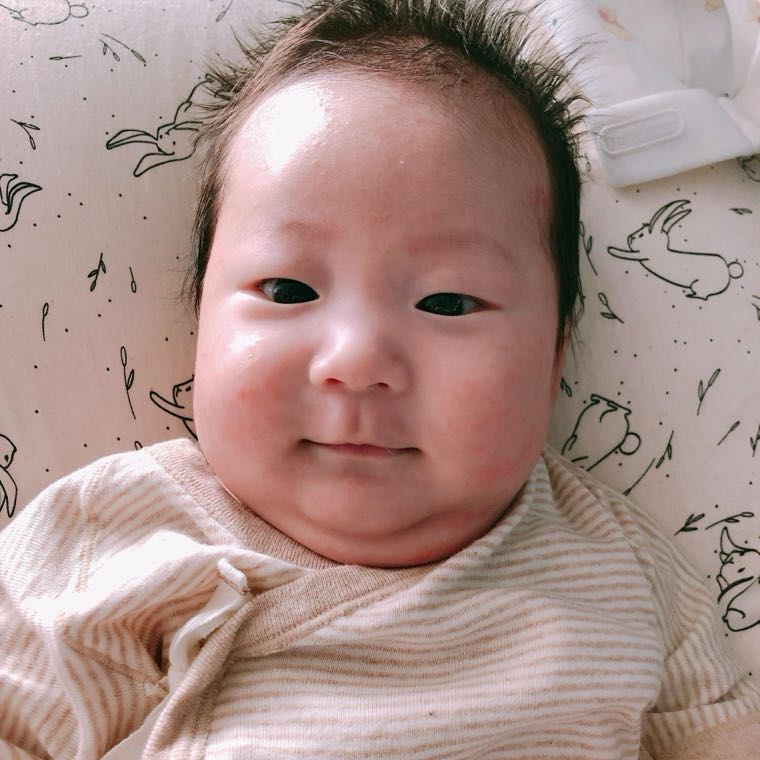
There's that time of year when short sleeves feel right during the day, but by dawn you find yourself pulling the blanket close. When the temperature swings widely between seasons, even adults struggle to get the bedding right, so a baby's room, when they can't yet regulate their own body temperature well, feels even trickier. Too warm and they toss and turn; too cool and they wake in the early hours.
Here's the short answer first: for a baby's nighttime room, around 20-24°C (about 68-75°F) with 40-60% humidity is a reasonable target. Sources describe it a little differently (some give a narrower 20-22°C), and above all, the temperature each baby finds comfortable varies from baby to baby. So rather than "this number is the answer," think of it as "the range to fine-tune around for your own baby."
Below, we'll lay this out in a by-age table, look at where to place a thermo-hygrometer so you know the temperature your baby actually feels, and how to prepare in advance for the early-morning chill. At the end, we'll also talk about why "just-right rather than warm" is the safer direction.
How warm and humid should the room be at night?
A comfortable temperature for a baby's sleep room is commonly suggested at around 20-24°C, with 40-60% humidity. If an adult wearing one thin long-sleeved layer feels "a little cool but not cold," that's close to this range. In between-season weather, aiming for the slightly lower, not-too-warm end within this range is often more comfortable for a baby.
You don't need to fixate on the numbers. The same 22°C feels muggy when humidity is high and cool when it's low, so temperature and humidity always go together. Below 40% humidity, the nose and throat dry out and nasal passages get sensitive; above 60% it turns damp and mold and dust mites tend to increase. Aiming between 40-60% helps you avoid both problems.
One thing worth remembering: more than the exact degree, how you combine clothing and bedding for that temperature affects what your baby actually feels. Even in the same 21°C room, a thick sleepsuit plus a blanket can feel like midsummer to a baby. That's why the table below pairs temperature with clothing combinations by age.
Temperature and clothing by age, in one table
The temperature itself doesn't change much with age; roughly within 20-24°C works for most babies. What actually changes is "what you dress and cover them in at that temperature." Younger babies are less able to regulate their own temperature, so in the newborn stage, overdressing is a more careful concern than underdressing.
| Age | Suggested room temp (approx.) | Humidity | Clothing / bedding tips |
|---|---|---|---|
| Newborn, ~0-3 months | 20-24°C (watch overheating especially) | 40-60% | A thin bodysuit with a light swaddle. Don't bundle in many thick layers. Adjust with thin clothing rather than thick blankets or bumpers |
| ~3-6 months | 20-23°C | 40-60% | A thin sleepsuit or a sleep sack (after outgrowing the swaddle). Once rolling begins, avoid loose bedding that could cover the face |
| ~6-12 months | 20-23°C | 40-60% | More active and sweatier now. Thin pajamas + a sleep sack, no blanket. If the back gets sweaty, drop a layer |
| 12 months and up | 20-22°C | 40-60% | They kick blankets off, so a sleep sack is practical. Thin pajamas with one sleep sack keeps them steady until morning |
The temperatures in the table are only a starting point. Rooms you don't check often (drafty ones, or sunny ones) can differ from the reading, so confirming your room's real temperature comes first. And the reason "watch overheating" is noted in the newborn row is that the habit of bundling thickly at this stage can be riskier than it seems. We'll come back to this in more detail later.
Where should the thermo-hygrometer go?
The most commonly missed detail is exactly where the thermo-hygrometer sits. In short: not at adult eye level or high on a wall, but at the height where your baby actually lies, close to the baby's body. Warm air rises and cool air settles low, so the temperature high on the wall and the temperature near the floor at the baby's spot often differ by 1-2°C.
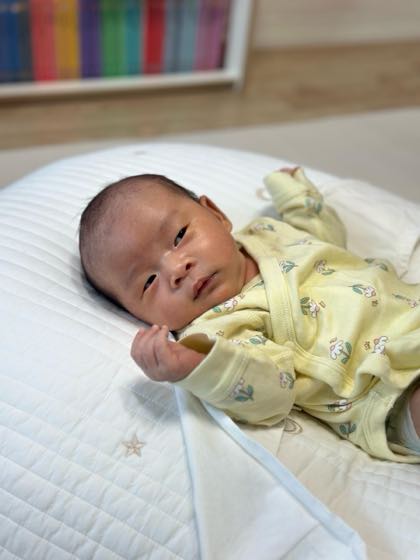
When choosing the spot, just avoid these three things.
1. Not right in front of a heater or fan heater
Near a heating appliance the reading runs much higher than the actual room, and matching that number leaves the baby's spot set too cool. Conversely, the device alone can heat up, making you think it's "warm enough" and overheat the whole room.
2. Not by drafty windows or doors
Cold air seeps through window gaps between seasons. Placed by a window, it reads lower than the baby's actual spot, so you may crank up the heat unnecessarily.
3. Not where AC or a circulator blows directly
Where air brushes past, the temperature fluctuates moment to moment and steady readings are hard to get. A little off the airflow, on the wall or beside the crib at the baby's body height, is better.
In short, at the height where the baby lies, one step away from airflow and heaters, is the most accurate. Just relocating it this way noticeably reduces the "I set it to 24°C, so why does the baby seem cold?" situations.
Preparing in advance for the early-morning chill
The key to between-season night setups is "set it based on dawn, not on bedtime." Many nights are cozy in the early evening but drop sharply around 3-5 a.m. So if you set it just right at bedtime, your baby may feel cool and wake during the very hours they should be sleeping most deeply.
That said, heating the room or piling on a thick blanket from the start isn't recommended. If it's too warm at bedtime, they toss and wake then, and the sweat can leave them feeling colder by dawn. Instead, try this approach.
- Keep it slightly cool at bedtime, but cover the early-morning chill with one layer of clothing. Thin pajamas plus a sleep sack means body temperature won't drop much even if the blanket gets kicked off.
- If you use heating, rather than blasting the room, gently offset just the 1-2°C dawn drop. If there's a timer, setting it to come on gently in the early hours is convenient.
- With floor heating, check by hand that the spot your baby touches directly isn't too hot. A hot back on a thin mat alone can make a baby feel warm.
Since you can't tend to them at dawn, a "clothing setup that doesn't rely on a blanket" is the most reliable. You're building a combination that holds up even when kicked.
How do you tell if your baby is too warm or too cold?
However well you set the numbers, the final call is made on the baby's body. Many parents feel the hands and feet and, finding them cool, add a layer, but a baby's hands and feet are naturally cooler than the rest, so they aren't a good gauge.
Instead, feel the torso, the nape of the neck, the back, the tummy, with the back of your hand. Warm and dry there means it's about right. A damp back or a sweaty nape is a sign of being too warm, so drop a layer; if even the torso is cool, add one then. A flushed red face or fussing for no clear reason are also common signs of being too warm.
Why is putting a baby to sleep too warm risky?
The one thing we most want to stress for between-season safety is not letting a baby sleep too warm. Worried about colds, you may want to bundle thickly and layer on blankets, but overheating is known as a factor that raises the risk of sudden infant death syndrome (SIDS), especially in young babies. Rather than "the warmer, the better they sleep," "a moderate temperature + thin clothing" is the safer direction.
So instead of overheating the room, we suggest staying within the 20-24°C range above and adjusting with one layer of clothing rather than thick bedding. Safe-sleep principles worth keeping in mind alongside this:
- Put the baby down on their back, flat, on a firm, flat surface. Even if you worry about a stuffy nose or spit-up, raising the upper body or laying them on an incline is not recommended. The body can slide and the posture collapse, which can be more dangerous. If the nose is very stuffy, easing it before sleep with saline drops and a nasal aspirator is safer.
- Keep thick blankets, pillows, bumpers, and cushions that could cover the face out of the baby's sleep space. A worn form like a sleep sack, instead of bedding, is safer.
- Rather than bundling thickly, dress thinly, adding just about one layer more than what feels comfortable to an adult.
- After putting them down, check the nape and back once; if sweaty, drop a layer.
Keep a record, and your baby's temperature comes into view
The suggested range is only a starting point, so the temperature your baby actually sleeps comfortably at only becomes clear after watching for a few days. One baby sleeps well at 22°C, another sleeps more deeply at 20°C. Trying to remember this by feel alone, you quickly lose track of what it was yesterday or how many times they woke.
In moments like this, jotting down the nighttime temperature and how often your baby woke helps. If you log the day's room temperature alongside sleep and wake times in a baby-tracking app like Babyfolio, within just a few days a pattern comes into view, "our baby wakes less around 21°C at dawn." Rather than hunting for one right number, use it to find your own baby's comfort zone.
Frequently asked questions
Q. Humidity keeps dropping below 40%, is that okay?
Between seasons and in winter, with heating on, indoor air dries out easily. Low humidity makes a stuffy nose or dry throat more likely, so hanging a damp towel or using a humidifier to hold 40-60% helps. Just don't point the humidifier directly at the baby's face, and change and clean the water daily to keep it hygienic.
Q. Can I put socks on for sleep?
If the hands and feet are especially cold and the room is cool, thin socks are fine. But rather than judging cold by cool hands and feet alone, check whether the nape and back are cool too. If the torso is warm and only the feet are cold, often you don't need socks.
Q. Temperatures differ by room, so which do I go by?
Go by the room where the baby actually sleeps, and within it, the temperature at the height where the baby lies. Even if the living room is warm, a drafty, cool nursery feels cool to the baby. Start by placing a thermo-hygrometer at the baby's height in the sleep room.
Q. Can I run a fan heater all night?
You can, as long as it doesn't overheat the room. Just keep the airflow off the baby directly, and since it dries the air, mind the humidity too. Rather than running it strong all night, gently offsetting the dawn temperature drop reduces both overheating and dryness.
Q. The hands and feet are cold and I worry about catching a cold.
A baby's hands and feet are naturally cooler than the torso. Overdressing out of cold-worry over cool hands and feet can instead cause overheating. Judge by the torso, and if a fever appears or their condition noticeably changes, that's when to have them seen by a doctor.
To wrap up
A baby's night sleep between seasons isn't hard if you remember just three things.
- Room around 20-24°C, humidity 40-60%. But since it varies by baby and by source, fine-tune within this range for your own baby.
- Place the thermo-hygrometer at the crib height where the baby lies, away from heaters, windows, and airflow. That way you know the temperature your baby actually feels.
- Set it based on the early-morning chill, and don't overheat out of cold-worry. Overheating is a warning sign, so a moderate temperature + thin clothing + on the back, flat is safer than thick bedding.
Rather than straining for a perfect number, feel the nape and back to check, keep a record for a few days, and find your own baby's comfortable temperature, that's plenty.