Food Poisoning or Gastroenteritis While Breastfeeding: How to Cope and Keep Nursing
Worried you'll have to stop nursing if food poisoning or gastroenteritis hits while breastfeeding? We walk through why it's usually safe to keep going, plus fluids and ORS to prevent dehydration, hand-washing hygiene, cautions on medicine, and the signs to get checked without delay.
When a spoiled meal or something like raw fish in the summer leaves you with an upset stomach, the worry that comes first often isn't your own discomfort but "is it okay to nurse in this state?" When diarrhea and vomiting pile on together, you may hesitate over whether to stop nursing or pump and dump, afraid the germs might pass into your milk.
Let's start with the big picture. Common food poisoning and viral gastroenteritis usually get better on their own over time, and in these cases it's usually considered safe to keep breastfeeding. And the heart of care isn't "stopping the diarrhea quickly" but "preventing dehydration." Just holding onto these two points can ease some of the panic in the moment.
This article walks through why it's usually fine to keep nursing, what to take care of and in what order when you're unwell, and on the other hand the signs that mean you shouldn't tough it out alone and should get checked without delay — step by step.
I have gastroenteritis while breastfeeding. Should I stop nursing?
To put the conclusion first: for common food poisoning or gastroenteritis, it's usually considered safe to keep nursing rather than stop. The germs and viruses that cause food poisoning or gastroenteritis mostly tend to stay in the mother's gut, so it's uncommon for them to pass straight to the baby through breast milk.
In fact, there can be a helpful side. The antibodies your body makes as it fights those germs are carried in your breast milk to your baby, and they can help protect your baby from the same illness. So stopping nursing when you're sick isn't necessarily the better choice for your baby.
Of course, that doesn't mean there's no route for germs to reach your baby at all. It's just that the pathway tends to be hands and contact rather than breast milk. Since germs spread through the hands you use after the toilet and the hands that touch your baby, the hand-washing hygiene we'll talk about later matters far more than stopping nursing.
Why does preventing dehydration come first?
What makes diarrhea and vomiting so draining is that your body loses water and electrolytes quickly. So the first priority in responding isn't "medicine to stop the diarrhea" but replacing the fluids you've lost. Diarrhea itself is your body's way of pushing out what's harmful, so rather than forcing it to stop, the basic approach is to prevent dehydration and let it pass.
For a nursing parent there's one more reason. When your body runs low on fluids, your milk supply can drop along with it. So diligently replacing fluids matters not only for your own recovery but also for keeping breastfeeding going. It helps to think of drinking even more often than usual precisely when you're unwell.
At this point, water alone may not be enough to replace the electrolytes you've lost, so it helps to also use oral rehydration solution (ORS). The idea is to sip a pharmacy ORS product a little at a time, often. Gulping a lot at once can make you throw it back up, so the trick is a mouthful or two, frequently.
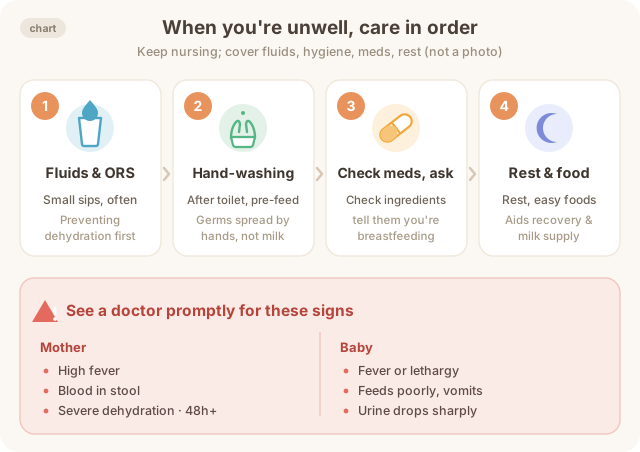
Responding when you're unwell, put in order
When you're not sure what to do first, setting an order makes it feel less urgent. As in the table below, work through it one step at a time in the order fluids → hygiene → deciding on medicine → rest. We've included why each step matters and what to watch out for.
| Step | What | Why / what to watch |
|---|---|---|
| 1. Fluids / ORS | Water and ORS in small, frequent sips | Preventing dehydration comes first. A mouthful or two often, rather than a lot at once |
| 2. Hand-washing / hygiene | Wash hands with soap after the toilet and before touching your baby | Germs often spread through hands and contact, not breast milk |
| 3. Medicine | Check the ingredients and ask a pharmacist/doctor before taking anything | Be careful about taking anti-diarrheals or antibiotics on your own. Always mention you're breastfeeding |
| 4. Rest / food | Rest without pushing yourself; start with easy-to-digest food once your stomach allows | Helps recovery and keeping your milk supply. No need to force yourself to fast |
1. Water and ORS, small sips often
This is the very first and most important step. As mentioned, preventing dehydration is the core, so drink water and ORS in small, frequent sips. When vomiting is severe, getting even a mouthful or two down often is easier than drinking a lot at once and throwing it back up. If your urine turns darker or noticeably decreases, it can be a sign you're low on fluids, so pay a little extra attention to replacing them.
2. Block the route with hand-washing
When it comes to protecting your baby, this step is far more powerful than stopping nursing. Because germs usually spread through hands and contact, simply washing your hands thoroughly with soap after the toilet and before touching your baby or nursing can greatly reduce the risk of passing them on. Using separate towels and dishes helps too.
3. Check ingredients and ask before taking medicine
This part is worth approaching especially carefully. Some medicines can be used while breastfeeding, while others contain ingredients that call for caution, so for any medicine, check the ingredients and ask a pharmacist or doctor before taking it. Anti-diarrheals in particular can actually get in the way of your body expelling what's harmful, so it's safer to ask than to take them on your own. When you ask, be sure to mention that you're breastfeeding. That way you can be guided to something suitable.
4. Rest well, and eat once your stomach allows
For your body to find the strength to recover, rest is part of care too. If you can, get some help and lie down even briefly, and once your stomach settles a little, try easy-to-digest foods like rice porridge or thin gruel, a little at a time. There's no need to force yourself to fast. Eating well and resting well also helps bring your milk supply back.
Should I pump and dump? Sorting out common myths
A few of the worries parents most often have when they're unwell are, it turns out, usually things you don't need to do. Let's go through them one by one.
- "I have to stop nursing" — For common food poisoning or gastroenteritis, it's usually considered fine to keep going. The germs stay in the mother's gut, and the antibodies pass through the milk to actually help the baby.
- "I have to pump and dump" — Usually unnecessary. Because germs rarely pass through breast milk, there's little reason to throw away perfectly good milk.
- "I should take anti-diarrheals first" — Preventing dehydration comes first. Be cautious about taking anti-diarrheals on your own, and only after asking.
- "All medicines are dangerous" — It depends on the ingredient. Rather than avoiding everything, it's better to check, ask, and find something you can use.
In short, what you need when you're unwell isn't "stopping nursing" but "keeping nursing while taking care of fluids and hygiene." Some parents rush to stop nursing out of worry, only to struggle later to rebuild a dwindling supply, so it's worth thinking twice before deciding in a hurry.
If you see these signs, get checked without delay
Most food poisoning and gastroenteritis gets better over time, but if you see the signs below, don't tough it out alone — get checked without delay. Keep an eye on both yourself and your baby together.
| If the mother has these signs | If the baby has these signs |
|---|---|
| A high fever | A fever, or unusual lethargy |
| Blood in the stool (bloody stool) | Feeding poorly and vomiting repeatedly |
| Dizziness with severe dehydration suspected, enough to sharply reduce urine | A noticeable drop in urine (diaper) output with dehydration suspected |
| Diarrhea or vomiting lasting more than 48 hours | Ongoing diarrhea or vomiting with weak responsiveness |
High fever, bloody stool, and severe dehydration in particular can be signs of something beyond a simple upset stomach. And if your baby develops a fever, becomes lethargic, or has a sharp drop in urine while you're unwell, it's safer to have your baby checked too. If something feels clearly different from usual, having it checked rather than putting it off brings peace of mind and keeps you from missing the right moment.
Frequently asked questions
Can I drink sports drinks?
They can help with thirst, but store-bought sports drinks are high in sugar and their electrolyte balance differs from rehydration products, so they may fall short for the dehydration of severe diarrhea or vomiting. If you're worried enough about dehydration, an ORS from the pharmacy is a better fit.
Can I nurse after taking medicine?
It depends on the medicine. So the safest approach is to tell your pharmacist or doctor that you're breastfeeding before taking anything and be guided to a suitable medicine and dosage. Rather than deciding on your own, it's best to check with them.
I'm scared of passing it to my baby. What can I do?
The surest prevention isn't stopping nursing but hand-washing. Washing thoroughly with soap after the toilet and before touching your baby, and using separate towels and dishes, can greatly reduce the risk of passing it on.
How should I eat?
There's no need to force yourself to fast. Once your stomach settles, start with easy-to-digest foods like rice porridge or thin gruel, a little at a time. Eating well and replacing fluids helps recovery and keeps your milk supply.
To sum up
Even if you come down with food poisoning or gastroenteritis while breastfeeding, in common cases it's usually considered safe to keep nursing rather than stop. That's because the germs stay in the mother's gut while the antibodies pass through the milk. The core isn't stopping the diarrhea but preventing dehydration, so you're set if you replace water and ORS in small frequent sips, protect hygiene with hand-washing, use medicine only after checking ingredients and asking, and rest well — in that order.
Pumping and dumping, or stopping nursing in a hurry, is usually unnecessary. That said, if the mother has a high fever, bloody stool, or severe dehydration, or it lasts more than 48 hours, or if the baby develops a fever, becomes lethargic, or has a sharp drop in urine, get checked without delay. You're surely working hard to care for your baby even while unwell — but if you eat well, rest well, and work through it one step at a time, it will usually pass without trouble.