What to check when you're worried about your newborn's formula intake, feeding intervals, and weight gain
We have put together a guide on what to check when you're worried about your newborn’s formula intake, feeding intervals, and weight gain. From the amount of formula by month to the number of diapers, weight gain, and when to consult a doctor, new parents can easily find all the information they need.
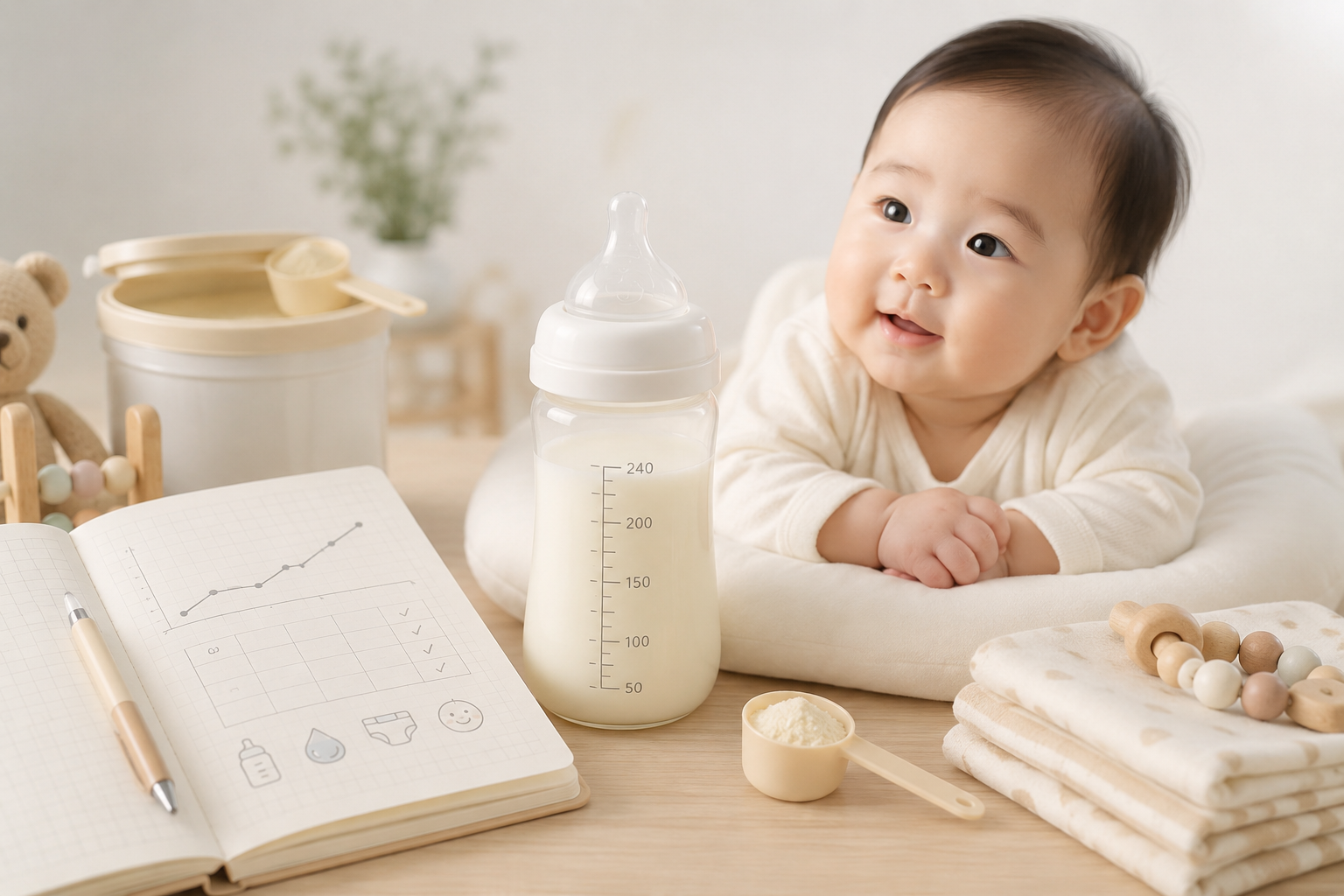
Worried about your newborn's formula intake, feeding intervals, or weight gain?
After your baby is born, questions like "How much should I feed them at once?", "Are the feeding intervals too short?", and "Is the weight increasing steadily?" naturally keep popping up.
Especially during the newborn stage, babies eat and wake up frequently, and the amount they consume can vary slightly from day to day. Therefore, rather than looking at formula intake alone, it's important to monitor feeding intervals, diaper counts, weight gain, and your baby's overall condition together.
To start with the basics, newborns typically feed 8 to 12 times a day at roughly 2 to 3-hour intervals. However, since every baby has a different feeding pace and capacity, it's better to observe your baby’s hunger cues and growth trends rather than strictly following a fixed chart.
What is an appropriate amount for newborn formula feeding?
Formula intake can vary based on days since birth, weight, and the baby's digestive state. Please use the table below as a general reference.
Period | Avg. Amount per Feeding | Daily Feedings | Feeding Intervals |
|---|---|---|---|
0–1 week | Approx. 30–60ml | 8–12 times | 2–3 hours |
2 weeks–1 month | Approx. 60–90ml | 7–9 times | 2.5–3 hours |
1–2 months | Approx. 90–150ml | 6–8 times | 3–4 hours |
3–4 months | Approx. 120–180ml | 5–7 times | 3–4 hours |
5–6 months | Approx. 160–220ml | 4–6 times | Around 4 hours |
These figures are just average examples. Even at the same age, the required amount can vary depending on weight, activity level, and growth rate.
If your baby seems content after feeding, has enough wet diapers, and shows steady weight gain, it's generally a sign that they are feeding well.
Is it a problem if the feeding interval is too short?
Sometimes newborn feeding intervals may feel short, around 1 to 2 hours. Especially in the early days, their stomachs are small, making it difficult to take in a lot at once, so they may want to eat frequently.
However, if they seem hungry every hour, remain fussy after feeding, or if weight gain is slow, check the following:
Is the amount consumed per feeding too small?
Is the bottle nipple size too small or too large?
Are they swallowing too much air during feeding?
Are spitting up, vomiting, diarrhea, or constipation occurring repeatedly?
Do they still look hungry even after feeding?
Is weight gain slower than the average growth curve for their age?
A short feeding interval isn't always a problem. However, if you see concerning signs when looking at intake, weight, and diaper counts together, a consultation with a pediatrician is recommended.
Criteria to check if weight gain seems slow
Newborns may lose a little weight during the first few days after birth. After that, they should recover and show a gradual upward trend.
When checking if weight is increasing well, it's more important to look at the overall growth trend rather than daily numbers. This is because the interpretation of weight can change based on height, head circumference, birth weight, and feeding patterns.
Check if the feeding amount is sufficient if the following signs are present:
Appears hungry even after feeding
Diapers are not sufficiently wet
Urine is dark in color
Baby seems lethargic or difficult to wake
Weight remains stagnant or decreases
Frequently leaves formula unfinished or takes an excessively long time to feed
Repeated spitting up or vomiting
Especially in the early stages, it is safest to check the growth curve with a doctor at the hospital rather than judging weight gain concerns on your own.
Please check the diaper count as well
Diaper count is just as important as formula volume and weight. Wet diapers are a key reference signal when confirming if your baby is getting enough to eat.
Usually, a few days after birth, there should be several wet diapers a day. The urine color should ideally be clear or light yellow.
In the following cases, it's necessary to check for insufficient intake or the possibility of dehydration:
Noticeably few wet diapers
Urine is dark and has a strong odor
Lips or mouth appear dry
Baby is more lethargic than usual
Few or no tears when crying
The soft spot (fontanelle) on the head appears sunken
If you notice these symptoms, it's best to consult a medical professional without delay.
When you're unsure whether to feed more
If your baby smacks their lips or sucks their hands after eating, you might wonder, "Should I give more?" It could be a hunger cue, but it could also simply be a sucking reflex.
They may want more if you see these signs:
Keeps searching for the bottle when it's removed
Smacks lips or turns their head to find the bottle
Fusses restlessly while sucking on hands
Becomes hungry again shortly after feeding
Conversely, they have likely had enough if they show these signs:
Turns their head away
Pushes the bottle away
Feeding pace slows down significantly
Closes mouth and stops sucking
Body relaxes and they appear comfortable
Rather than forcing a finish, it's better to adjust formula feeding by observing the baby’s hunger and fullness cues.
It's much easier to see when you record intake and intervals
Since newborns feed many times a day, it’s hard to remember exactly "When was the last time they ate?", "How many ml did they take this time?", or "Have the feeding intervals shortened lately?"
By recording feeding times and amounts, you can more easily understand your baby’s daily routine. Especially when worried about weight gain, looking at several days of feeding records helps during hospital consultations.
Babyfolio is a parenting record app where you can manage baby photo sharing, growth tracking, and feeding intervals all at once. By leaving records of feeding times and volumes, it's easy to check the baby's feeding patterns and document changes alongside growth photos.
When a hospital consultation is necessary
In the following situations, it is recommended to consult a pediatrician rather than just adjusting feeding amounts at home:
Weight continues to decrease or barely increases
Noticeably few wet diapers per day
Baby is constantly lethargic or difficult to wake
Persistent vomiting
Diarrhea or bloody stools
Extreme fussiness every time they feed
Adverse reactions like rashes, vomiting, or diarrhea after changing formula
Feeding intervals are excessively short or long
Even small changes in a newborn's feeding can feel significant. When in doubt, the safest approach is to consult an expert based on your recorded data.
FAQ
Q1. Is a 1-hour feeding interval too short for a newborn?
In the early stages, intervals can be short because they can't eat much at once. However, if they are hungry every hour or weight gain is slow, please check the feeding amount, bottle nipple, and digestive state.
Q2. If my baby cries after drinking formula, does it mean they're still hungry?
Not necessarily. Besides hunger, they may cry due to the need for a burp, gas, sleepiness, colic, or a desire to be held. Check feeding amounts along with diapers and weight gain.
Q3. Should I increase the formula amount immediately if weight gain is slow?
Rather than an immediate increase, it's best to look at the overall feeding pattern, diaper count, and growth curve. If weight gain remains slow, we recommend consulting a pediatrician.
Q4. is it a problem if they leave some formula unfinished?
Leaving a little once or twice is common. However, if they frequently leave a large amount, take an excessively long time to eat, or show slow weight gain, it's good to investigate the cause.
Q5. Do I have to keep a feeding log?
It's not mandatory, but it helps a lot during the newborn stage. Recording intake, intervals, diapers, and weight changes makes it easier to understand your baby's patterns and convenient to explain during consultations.
Summary
It’s important to judge newborn formula intake and intervals by looking at the baby's hunger cues, diaper counts, and weight gain trends together rather than by a single fixed number. If you notice any concerning changes, keep a record and consult your pediatrician.