A Complete Guide to Managing Newborn Heat Rash: From Symptoms and Causes to Effective Care tactics
Learn about the exact symptoms, causes, and effective treatments for newborn heat rash. We’ve put together everything from how to distinguish heat rash from other types of rashes to when you should consult a specialist.
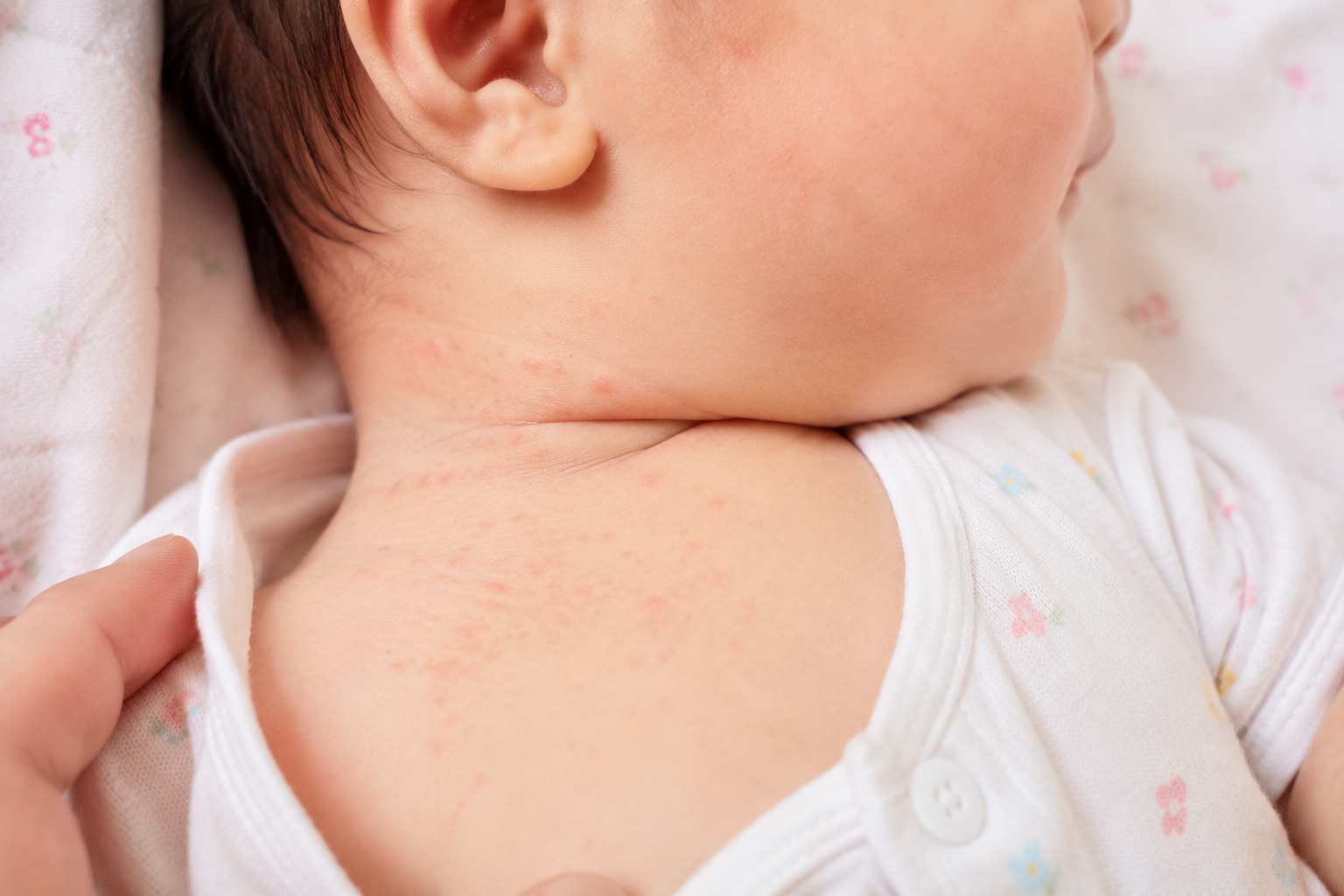
A sudden red rash on your baby’s skin—could it be infantile seborrheic dermatitis (taeyeol)? While it’s a common skin condition that almost any newborn can experience, it can be quite starling when you see it for the first time. Here’s a guide to understanding the exact symptoms, causes, and how to properly care for it. Let's take a look step-by-step.
Symptoms and Causes of Taeyeol
Taeyeol occurs when a baby's sweat glands become blocked due to prolonged exposure to hot and humid environments. Small, red millet-like rashes or transparent blisters mainly appear in skin folds such as the neck, armpits, and groin. In severe cases, red spots can spread widely.
The cause is quite simple: excessive sweating combined with poor air circulation or wearing too many layers of clothing that raises body temperature. Since newborns have immature sweat gland functions, they are more prone to these heat-related rashes than adults.
Checkpoints for Different Situations
If you suspect your baby has a heat rash, check these three things first:
1. The Shape of the Rash
It is usually red and small, and may feel itchy or prickly.
2. Presence of Fever
The rash itself doesn't typically cause a fever, but the baby's body temperature may rise if they are overheated.
3. The Baby's Overall Condition
Usually, this condition doesn't affect how well a baby eats or sleeps. If your baby has a fever, seems lethargic, or is unusually fussy, it might not be a simple heat rash, and you should consult a pediatrician.
Key Tips: Effective Management
The core of management is keeping the skin cool and dry. Maintain an indoor temperature of 22–24°C (71–75°F) and humidity between 40–60%. Dress your baby in thin, breathable cotton and change diapers frequently.
Keep baths luke-warm and short (5–10 minutes), then gently pat the skin dry with a towel. For moisturizing, mild ointment-type moisturizers are better than heavy lotions. Applying greasy products to the rash can further clog the sweat pores.
Keep your baby's nails trimmed short to prevent them from scratching or picking at the area.
Distinguishing Between Rashes
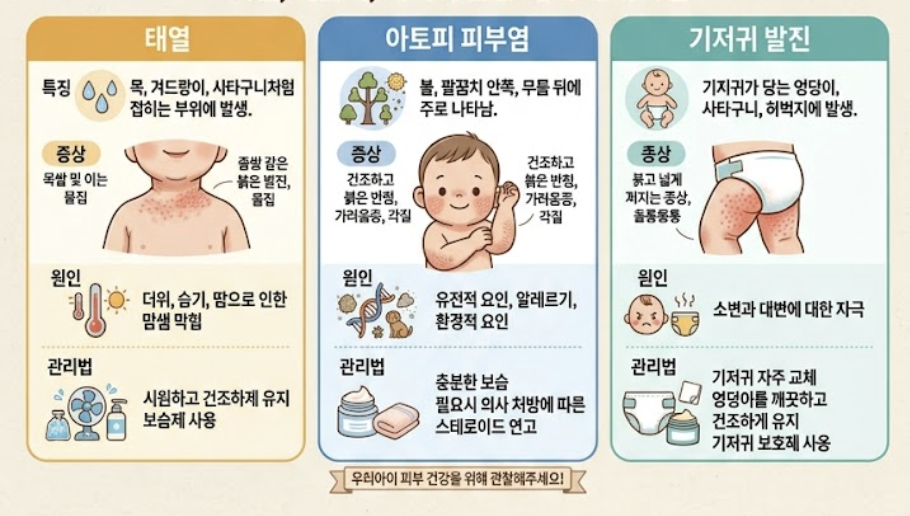
Category | Heat Rash (Taeyeol) | Atopic Dermatitis | Diaper Rash |
|---|---|---|---|
Location | Neck, armpits, groin | Cheeks, elbows, knees | Area in contact with diaper |
Appearance | Small red bumps or blisters | Dry red patches, flaking | Widespread redness, bumpy |
Main Cause | Heat, humidity, sweat | Genetics, environment | Contact with urine/feces |
Care | Keep cool, moisturize | Moisturizing, steroids if needed | Change diapers often, barrier cream |
Step-by-Step Care Guide
Care Stage | Specific Actions |
|---|---|
Immediate Relief | Apply a cooling patch or cool damp cloth for 1–2 mins |
Daily Routine | Bathe twice daily in lukewarm water and apply moisturizer |
Prevention | Change clothes after going out and wipe away sweat |
Factors that Worsen the Rash and Solutions
Aggravating Factor | Solution |
|---|---|
Excessive Layering | Dress in thin, light layers |
Synthetic Fabrics | Choose 100% pure cotton clothing |
Staying in Diapers too Long | Change diapers every 2–3 hours |
Over-moisturizing | Apply a small amount of ointment type |
When to Seek Professional Help
If there's no fever and your baby is playing and eating well, home care is usually sufficient. However, see a pediatrician if:
Pus or discharge oozes from the rash area.
The baby has a fever over 38°C (100.4°F) or seems lethargic.
The condition doesn't improve after 3–4 days of home care.
The rash spreads extensively or you suspect a different condition.
If necessary, a specialist may prescribe antibiotic or steroid ointments.
FAQ
Q1. Do I have to apply moisturizer to a heat rash?
While moisturizer doesn't "cure" the rash itself, applying a small amount of a light ointment-type moisturizer helps protect the skin barrier. Be careful not to apply too much, as it can block the sweat pores further.
Q2. Can I use baby powder?
It is not recommended. Powder can mix with sweat and clog the glands, worsening the rash. It’s more effective to change clothes or keep the environment cool to manage moisture.
Q3. Is it contagious?
Not at all. Since it isn't caused by bacteria or a virus, it cannot be passed on to others.
Q4. How long does it usually last?
It usually subsides within 2–3 days once the environment is improved. If it lasts longer than a week or keeps recurring, consult a doctor as it might be atopic dermatitis or another issue.
Summary
The most effective way to manage your baby’s skin is to keep it cool and dry. Don’t forget breathable clothes, appropriate room temperature, and regular diaper changes. Babyfolio from Jejememe is always here to support your baby's healthy growth!