From what temperature is a baby's fever? Normal temps and thresholds by site
A baby's normal temperature and fever threshold differ by where you measure. We lay out the thresholds for rectum, ear, forehead, and armpit, how mild fever, fever, and high fever are grouped, and cautions for under 3 months.
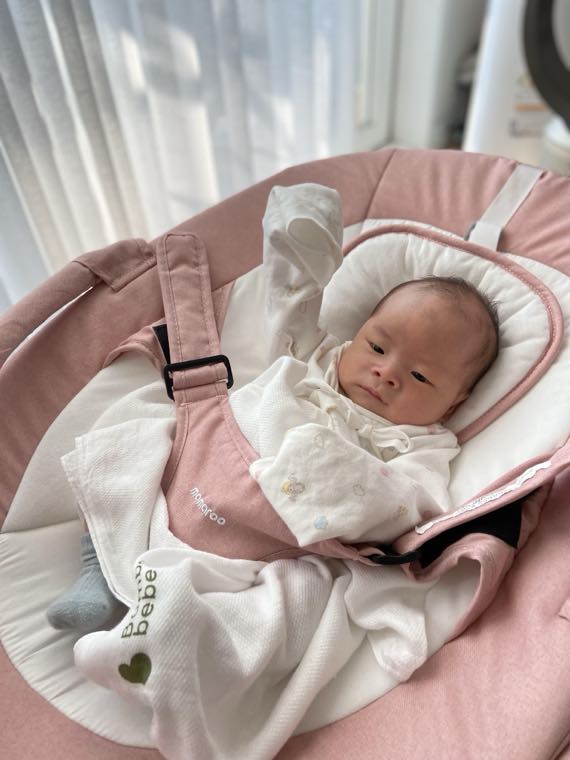
At night your baby's forehead feels unusually warm, so you reach for the thermometer — but even after seeing the number, you hesitate: "Is this a fever?" And because every spot gives a different reading, it feels even more confusing.
Here's the big picture first: a baby is generally considered to have a fever at 38.0°C (100.4°F) or higher. But that number is based on sites close to the body's core temperature, like the rectum or the ear. Places that read lower, like the armpit, use a slightly different threshold for the same condition.
One exception is worth remembering up front. If a baby under 3 months old is 38.0°C or higher, it's safest to have them seen right away, even without other symptoms. At this age it's hard to tell from the outside what's causing the fever. In this article we'll lay out thresholds by site and how mild fever, fever, and high fever are usually grouped, along with the situations where you should hurry regardless of the number.
From what temperature is it a fever?
Generally, a baby is considered to have a fever when the core temperature is 38.0°C or higher. Readings from the rectum or the eardrum (ear) come closest to this. Our bodies rise a little during the day and dip toward dawn, moving up and down by about half a degree even within a single day, so it's hard to draw one hard line and say "fever starts here." It usually works better to look at whether the 38.0°C mark has been passed together with how your baby seems.
There's a common misunderstanding: judging that warm hands and feet mean a fever and cool ones mean all is well. But the temperature of the hands and feet is strongly swayed by the surrounding temperature and circulation — in fact, early as a fever climbs, the hands and feet can turn cool. To gauge a fever, feel the trunk — the belly, back, or forehead — rather than the hands and feet, and when it's unclear, checking with a thermometer is more accurate.
Normal temperature and fever thresholds by site
Even for the same baby, the number changes depending on where you measure. It reads higher closer to the inside of the body and lower nearer the skin's surface, so there's roughly a 0.3–0.5°C gap between sites. The table below shows the approximate normal range and fever threshold for four commonly used sites. Sources vary a little, so treat it as a reference.
| Site | Normal range (approx.) | Fever threshold (approx.) | Notes |
|---|---|---|---|
| Rectum | 36.6–38.0°C | 38.0°C or higher | Closest to core temperature and accurate; recommended for assessing young infants |
| Ear (eardrum) | 35.8–38.0°C | 38.0°C or higher | Fast and easy; angle and earwax cause errors |
| Forehead (infrared / temporal artery) | 35.5–37.8°C | 38.0°C or higher | Non-contact and easy; affected by sweat, wind, and room temperature |
| Armpit (axilla) | 34.7–37.2°C | 37.2°C or higher | Safe and simple; reads low, with more variation |
Looking at the table, only the armpit has a slightly lower threshold. Because it measures at the skin surface outside the body, it tends to read lower than the actual core temperature, so even passing around 37.2°C is enough to look into a possible fever. Some sources use 37.5°C as the mark. The rectum, ear, and forehead, being close to core temperature, generally use 38.0°C as the line.
At home, most people reach for ear or forehead thermometers — they're convenient and quick. Still, for a very young baby or when you get an ambiguous number, taking the same site again or cross-checking with the armpit can help you decide.
How are mild fever, fever, and high fever divided?
Depending on how high the temperature is, people often group it into mild fever, fever, and high fever. The ranges below are approximate, based on core temperature.
| Category | Temperature (approx.) |
|---|---|
| Mild fever | 37.5–38.0°C |
| Fever | 38.0–39.0°C |
| High fever | 39.0°C or higher |
That said, this grouping is only a rough scale. A higher number doesn't necessarily mean more danger, and a mild fever isn't automatically reassuring either. For example, even above 39°C a baby who plays and feeds well can often be watched and cared for at home, while a baby under 38°C who is limp and barely responsive may need closer attention. So along with the number, it matters just as much to look at how your baby is doing right now.

Why does the temperature go up and down?
It's fairly common for the temperature to be briefly elevated without a real fever. Right after crying, after playing hard for a while, after being bundled up under a blanket for a long time, or just after coming in from the heat, the body can be warmed for a moment and read high. Other reasons like vaccination or teething can also make a mild fever rise and fall.
So if the first reading is ambiguously high, it helps to take off a layer, wait about 15–20 minutes, and measure again once your baby is settled. A real fever tends to read similar or higher on re-measuring, while a temporary rise has often come back down. Rather than being alarmed by a single number, watching the trend over time is far more accurate.
Is a fever always a bad thing?
A fever itself is closer to a sign that the body is fighting an infection. It raises the temperature to create an environment where viruses and bacteria are less active, and helps immune cells move more easily. So a fever alone isn't cause for great alarm, and how well your baby is weathering it becomes a more important signal than how high it climbed.
If your baby drinks water, breast milk, or formula well, plays or smiles when the fever eases a little, and makes eye contact and responds, you can often care for and watch them comfortably at home. But this "okay to watch" has clear exceptions. The situations below are safer to have seen promptly, regardless of the number.
When care is needed regardless of the number
Most fevers pass with care at home, but if any of the following apply, it's best to seek care promptly no matter what the temperature is. They're gathered in one section so you can check back when needed.
1. Under 3 months old and 38.0°C or higher
This is the first thing to remember. At this age it's hard to judge the cause of a fever from the outside, and though rare, a serious infection is possible, so it's safest to have them seen right away even without other symptoms. Under 1 month, it's especially better not to delay.
2. Limp or weakly responsive
If they barely wake when you try to rouse them, make less eye contact, seem unusually droopy, or keep going slack, look into it regardless of how high the fever is. The same goes for crying so hard and inconsolably that nothing settles them.
3. Not feeding well or signs of dehydration
If they refuse to feed or drink, urinate noticeably less often (a diaper dry for a long time), have dry lips and mouth, and produce few tears when crying, these can be signs of dehydration. Fluids are lost more easily during a fever, so watch a little more closely.
4. Seizures or abnormal breathing
A febrile seizure — stiffening or trembling with clouded consciousness — and breathing trouble such as gasping or wheezing are signs that need care right away. If it's a first febrile seizure, it's especially worth getting checked at a clinic.
5. High fever that continues, or a fever lasting several days
If a high fever over 39°C won't come down, a mild fever lasts more than 3 days, or it keeps dropping and rising again, get advice. The same applies when other symptoms like a rash, vomiting, or a bad cough come along. Infections that cause fever call for slightly different responses depending on the type, which we cover in more detail in telling apart baby flu, cold, and COVID symptoms.
What's written here is general guidance, so if you're worried about how your baby seems, it's safest to contact your pediatrician anytime — even if it doesn't fit this list exactly.
Keeping a temperature log at home makes it less confusing
When a fever hits, "what time it was and how high" and "when you gave medicine" get fuzzy faster than you'd expect — even more so after measuring several times overnight. Jotting down the time and temperature and when you gave a fever reducer, each time, makes it easy to see at a glance whether the fever is climbing or falling, and to work out how long until the next dose is due. Being able to tell the clinic exactly "it rose from this time to this temperature" is a big help too.
With Babyfolio you can record the temperature together with the time and a symptom note, which helps you retrace how the fever rose and fell in order. Whether on paper or in an app, more than the method, the act of leaving a note each time is what's most useful in managing a fever.
Frequently asked questions
If the hands and feet are warm, does that mean a fever?
It's hard to judge from the hands and feet alone. They're strongly affected by the surrounding temperature and circulation, and early as a fever climbs they can even turn cool. Feel the trunk — the belly, back, or forehead — and when it's unclear, checking with a thermometer is more accurate.
Can I trust an ear thermometer?
It's used a lot because it's fast and easy, but the number can shift with the angle you insert it and with earwax. Errors are especially likely in young infants with narrow ear canals. If you get an ambiguous value, take the same ear again or cross-check with the armpit.
If a mild fever lasts several days, should we go to the doctor?
If your baby feeds and plays well, you can watch, but if even a mild fever lasts more than 3 days or keeps returning, it's worth getting advice. Check too whether other symptoms are present alongside the fever.
Is a fever after vaccination held to the same threshold?
A mild fever in the day or two after a shot can be a common reaction. But if a baby under 3 months is 38°C or higher, a high fever continues, or they turn limp, care is needed regardless of the shot. We've laid out caring for a post-shot fever in caring for a fever after vaccination.
To sum up
- A baby is generally considered to have a fever at 38.0°C or higher by rectum, ear, or forehead, and from around 37.2°C by armpit. The threshold differs by the site you measure.
- Mild fever, fever, and high fever are only a rough scale — your baby's condition matters more than the number as a signal.
- If a baby under 3 months is 38°C or higher, or there's limpness, feeding refusal, dehydration, seizures, or a persistent high fever, have them seen regardless of the number.