Baby cries at every bath? Try these: from wrapped baths to routines
Babies who cry at every bath are usually cold, unsettled, or anxious. We cover wrapped baths, water temperature, washing order and timing, and a consistent routine to wash a crying baby more comfortably.
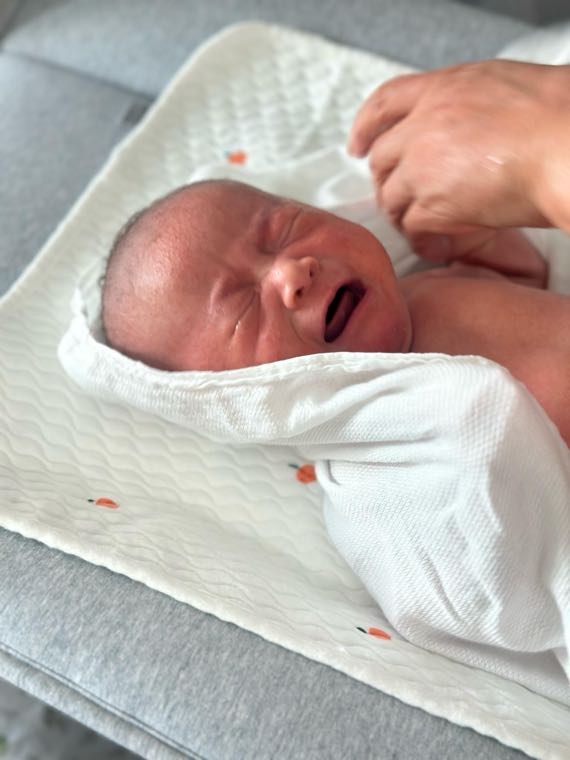
The moment you get the bath water ready, your baby is already wailing, and the evening bath starts to feel like a battle. You know they need washing, but holding a crying baby leaves you on edge, and it's easy to blame yourself and wonder "Am I doing something wrong?"
First, you can let yourself relax a little. Babies usually dislike baths because they're cold, because water is unfamiliar and scary, or because the floating feeling makes them anxious. It's less about pain and more that the sensations are still new. So for many babies the crying eases a lot when you wrap them in a thin swaddle and lower them slowly, get the water temperature just right, wash from the feet up with the face last, and keep it short with a similar routine each day.
In this article we go in order through why babies dislike baths, six ways to reduce crying, actions that actually backfire, and the signs that mean it's time to see a pediatrician. That said, every baby's temperament and reactions differ, so not every method will work the same for your baby, which we'll say upfront. If the bathing method itself is still new to you, newborn bathing before and after the cord falls off is a helpful companion read for the basic flow.

Why does my baby cry at every bath?
There's rarely just one reason a baby dislikes baths. It's usually a reaction from temperature change, unfamiliarity, anxiety, and timing overlapping, so knowing the cause helps you see what to adjust.
Suddenly cold: If the air feels cool the moment you undress them, the baby is startled by the temperature change and cries. It's one of the most common reasons for bath-time crying.
Water is unfamiliar and scary: The sensation of water itself isn't familiar yet, so the feeling on the body can register as a threat.
Anxiety from floating: Sliding and floating in the water feels unstable to a baby, like there's nothing to hold on to.
Water splashing the face or head: A sudden splash to the face or head easily startles them into crying.
Overlapping with hunger or sleepiness: Adding a bath to an already cranky time makes the crying bigger.
Remembering a bad experience: If the last bath was scary, just the sound of water or the setup can make them tense up in advance.
Working through which of these fits your baby makes it easier to decide which of the methods below to try first.
Six ways to wash a crying baby more comfortably
The key is to reduce the anxiety and cold the baby feels, and make things predictable. Try the six below one at a time and find the combination that suits your baby.
1. Start with security through a wrapped bath
Gently wrap your baby's body in a thin swaddle or gauze towel and lower them slowly into the water. When the body is wrapped, the floating feeling and the startle reflex in the water ease, and many babies feel much more secure. Open just the part you're washing, wash it, and cover it again; this eases cold and anxiety at the same time. It's especially worth trying first for a baby who cries hard out of fear of water.
2. Get the room and water temperature right first
Cold is a very common cause of crying, so just getting the temperature right can greatly reduce it. Before the bath, warm the room to about 24–27°C in advance, and set the water to 37–38°C, about body temperature. After filling, check the temperature with your inner forearm or wrist. The wrist and inner arm are more sensitive than fingertips, making it easier to judge hot versus lukewarm. Water that's too hot risks burns, so if it feels warm-hot, always adjust it again.
3. Feet first and slow, face last
Rather than plunging the body in quickly, let the feet touch the water first, slowly. Easing in from below reduces the startle. It's usually more comfortable to save the face and head for last, using as little water as possible. Many babies fear water splashing the face, so keeping the head to a light rinse at the end can help reduce crying.
4. Avoid hungry or sleepy times
Washing at a good-mood time is already half the battle. Avoid times when they're hungry or sleepy, and right after a feed, and pick a window when the baby is awake and in a decent mood. Bathing at a similar time each day helps the baby learn to predict "it's washing time now," which tends to reduce resistance.
5. Make eye contact, talk, and keep it short
Throughout the wash, making eye contact and gently talking or singing helps the baby feel less anxious. Handing them a favorite bath toy can also help redirect their attention. Above all, keep the bath short. Right now, helping the baby feel "a bath isn't scary" matters more than getting them perfectly clean.
6. Build a same-flow routine every day
Building the same order each day, like bath → moisturizer → feed → sleep, lets the baby predict what comes next and eases anxiety. The very sense of predictability gives a baby a lot of reassurance. It won't change overnight, but repeating the same flow for a few days helps many babies grow gradually more comfortable.
Bath-crying soother, at a glance
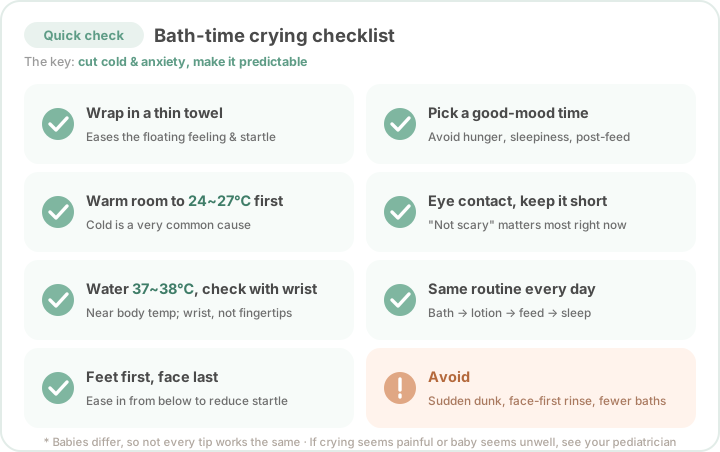
When the many options feel confusing, use the table below to quickly check "what to confirm and what to avoid."
Item | Try this | Avoid |
|---|---|---|
Security | Wrap in a thin towel and lower slowly | Plunging in bare, suddenly |
Room temp | Warm to 24–27°C in advance | Undressing in a cool room |
Water temp | 37–38°C, check with wrist | Hot water, in without checking |
Order | Feet first, face and head last | Pouring water on the face first |
Timing | Good-mood time, similar each day | Hungry, sleepy, right after a feed |
Finish | Eye contact, keep it short | Holding and washing long despite crying |
These actually backfire
Sometimes the things we do to stop the crying quickly end up making baths scarier. Here are three common misconceptions worth flagging.
First, plunging the body in quickly to finish fast despite the crying. It may be faster in the moment, but the baby learns "baths are scary" and may cry even harder next time. Wrapping and lowering slowly is often the faster path in the end.
Second, cutting the number of baths first. There are of course stages when daily bathing isn't necessary, but the core of the crying is usually temperature, pace, timing, and wrapping rather than frequency. Cutting only the frequency without adjusting the method may leave the next bath just as hard.
Third, rinsing the face first because they fear water. Many babies fear water touching the face most, so it's generally more comfortable to save the face and head for last, with minimal water.
See your pediatrician if you notice these
Most bath-time crying gets better little by little with the methods above, but the signs below can mean something other than simply disliking baths. In that case, rather than judging on your own, it's safer to see your pediatrician.
Crying that is severe every time, as if in pain, even when soothed
A particular part of the body hurts especially when it touches water, or the baby pulls away
Rash, a sore, or discharge on the skin, or pain when touched
Repeatedly touching the ear or crying hard when lying down, suggesting something like an ear infection
Unrelated to the bath, seeming unwell, such as more limp than usual, feeding poorly, or a fever
If there's a rash, a sore, or an area you suspect is painful, having it checked at a visit is more reassuring than just guessing at the cause.
Safety musts for every bath
When you're focused on soothing, two safety points are easy to miss, so keep them at all times.
Never leave the baby alone in the water, even briefly. If you need to grab a towel or an item, hold the baby and move together even for that short moment. Drowning can happen in an instant even in shallow water.
Check the water temperature every time. Rushing makes it easy to skip the temperature check, but hot water risks burns. Make it a habit to check with your wrist or inner forearm each time you fill the water.

Frequently asked questions
How long can I keep doing the wrapped bath?
There's no fixed cutoff. Once a baby gets used to water and seems comfortable, you'll often naturally start washing without wrapping. If your baby is still anxious, it's fine to keep wrapping; if they find being wrapped confining, open it up little by little to help them adjust.
I've tried everything and they still cry. What am I doing wrong?
It's not necessarily that you did something wrong. Temperaments differ, and some babies take longer to get used to water. Repeating the same flow over days to weeks often brings gradual improvement, so try not to rush. That said, if the crying seems painful or their overall condition looks off, consult your pediatrician.
How short should the bath be?
There's no exact time, but when your baby is struggling, it's best to quickly wash just the necessary areas and finish short. Right now, building the experience that "a bath isn't scary" comes before getting perfectly clean. Once your baby starts to feel comfortable with water, you can lengthen it little by little.
We bathe every evening. Is washing at night okay?
There's no set time of day. Just avoid times when the baby is hungry or sleepy, and bathing at a similar time each day helps set a routine. If the bath actually wakes the baby up and disrupts sleep, moving it earlier is one option.
To sum up
Babies usually dislike baths because they're cold, it's unfamiliar, and they're anxious. So try to wrap them in a thin towel and lower slowly, set the room to 24–27°C and water to 37–38°C, wash from the feet up with the face last, and keep it short with a similar flow each day at a good-mood time. It's best to avoid plunging them in or rinsing the face first even when they cry.
Above all: never leave the baby alone in the water and check the water temperature every time, and if the crying seems painful, a specific spot hurts, or their condition looks off, consult your pediatrician. Keep just these two in mind, and the daily bath will gradually get a little easier, for your baby and for you both.