Slow Head Control or Rolling: Is It a Delay, and When to See a Doctor?
Worried your baby is slower at head control or rolling than others? Pace varies a lot from baby to baby, and being a little late is usually normal variation. But a check is needed when a baby barely lifts the head at 4 months, or has no head control and no attempt to roll at 6 months, or shows abnormal muscle tone, asymmetry, eye-contact problems, or regression. We cover checkups, pediatric consults, early intervention, and corrected age for preemies.

When babies the same age are already rolling but yours can barely hold up the head, even a few photos can make your heart sink. "Is she just a slow starter, or is something wrong with her development?"—the thought keeps circling. Every parent at this stage worries about it at least once.
First, some reassurance. Gross-motor milestones like head control and rolling vary quite a lot in pace from baby to baby. Being weeks ahead or behind at the same age is common, so being a little late doesn't often lead straight to a problem. There's no need to panic based on comparison with the baby next door alone.
That said, "just a slow starter" and "a sign worth checking" should be viewed separately. The signs below are not diagnostic criteria but a reference list of things worth checking once with a pediatrician or a well-baby visit. If something is unclear or on your mind, rather than deciding alone and putting it off, going through it together with a professional is the most reassuring. When a baby needs support with development, earlier detection and earlier intervention help.
Pace really does differ from baby to baby
The first thing worth remembering about gross-motor development is that the timing has a wide range. When head control or rolling is mastered can differ by weeks to months from baby to baby. So it's hard to say flatly, "at X months a baby must do this."

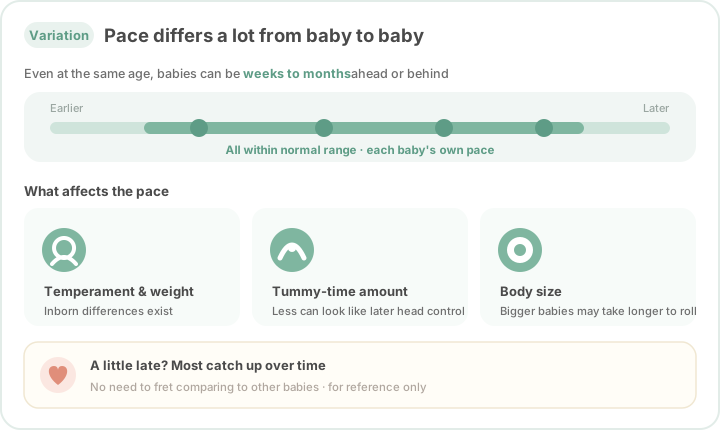
Even at the same age, pace changes with a baby's temperament, weight, and how much tummy time it has had. A baby who had little tummy time has had fewer chances to use the neck and back muscles, so head control can look a bit late; a bigger baby may take longer to roll. These differences usually catch up over time, so there's no need to watch anxiously day by day.
If you're curious about roughly when head control and rolling appear and how wide that window is, we cover it in detail in Head control and rolling: development timeline by month. Here, rather than "timing," we'll look at "which signs mean a check is worthwhile."
So which developmental signs are worth checking?
Even taking wide variation as a given, if you notice the signs below, it's better not to brush them off as "just slow" and to check once. This is not a diagnostic chart but a reference list. One or two brief signs don't mean there's a problem; use them as a basis for a consult when they're clear or several overlap.

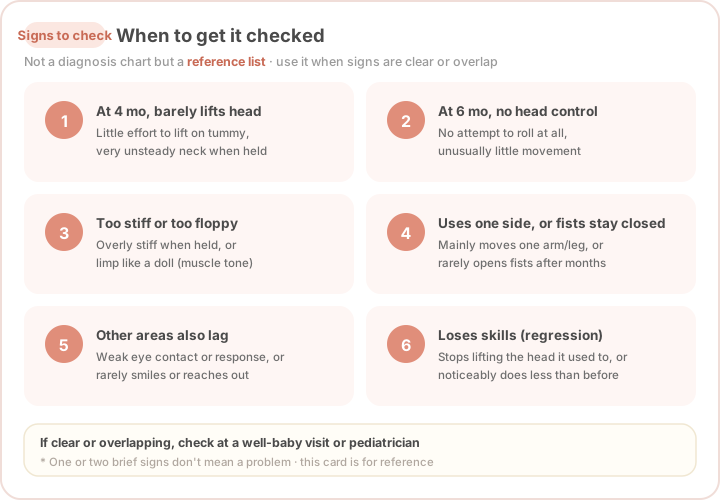
1. At around 4 months, barely lifting the head
If there's almost no effort to lift the head when placed on the tummy, or the neck is still very unsteady when held, it's worth a check. At this stage, you'd generally expect to see strength gradually coming into the neck.
2. At around 6 months, no head control and no attempt to roll at all
If a baby still can't hold the head properly, or shows no attempt to roll and unusually little movement, that's closer to a sign worth checking. Not having "completed" rolling yet and showing no attempt at all should be viewed a little differently.
3. Being too stiff or, conversely, very floppy
If the body is excessively stiff and rigid when held, or conversely limp like a doll, it may be a sign related to muscle tone. If the feeling when you pick your baby up is quite different from other babies, make a note and mention it at a consult.
4. Using only one side, or keeping the fists always closed
Mainly moving one arm or leg and not using the other side much (asymmetry), or keeping the hands tightly fisted and rarely opening them even after several months, are also signs to check. Watch whether both sides are used evenly.
5. Other areas—like eye contact or response to sound—lagging too
If, beyond gross motor, a baby also doesn't make eye contact well, doesn't respond to sound, rarely smiles, or doesn't reach for objects, watch more closely. Signs overlapping across several areas is especially when a check is needed.
6. Regression—losing skills the baby once had
A head that used to lift well suddenly not lifting, or once-present behaviors noticeably decreasing—regression is a sign worth checking regardless of timing. If development that was moving forward feels like it's going backward, don't delay; seek a consult.
For preemies, use corrected age
For babies born earlier than their due date, development should be viewed by corrected age rather than the actual birth date. Corrected age is age recalculated from the due date. For example, if a baby was born 2 months early, at 6 months of age you'd look at development as you would for a 4-month-old.
So a preemie appearing later than peers in head control and rolling is often natural once you account for corrected age. If something still concerns you even by corrected age, consult a pediatrician, mentioning how many weeks early the baby was born.
When should you see a pediatrician or go for a checkup?
The most confusing part is "can I watch at home, or should I get it checked?" It's hard to say flatly, but when the signs above are clear or several overlap, and when it stays on your mind, that's the time to get a check.
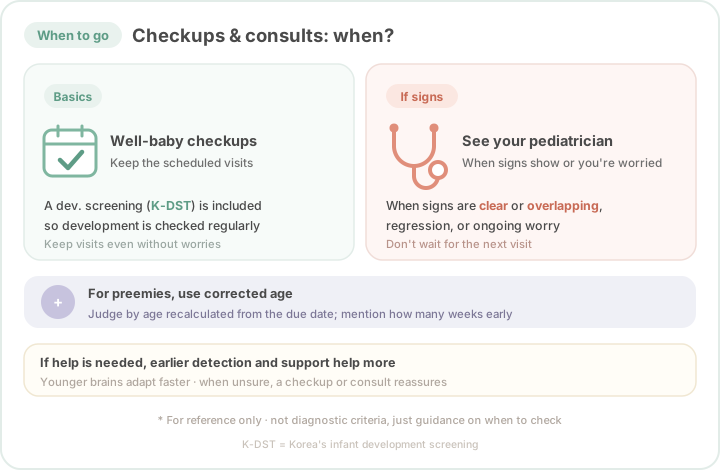
The most reassuring foundation is well-baby checkups. Korea's well-baby checkups include a developmental screening questionnaire, the K-DST. Keeping them on schedule lets you review your baby's development regularly. If a checkup flags something to look at more closely, it can lead to further developmental assessment or the support needed. So even without particular worries, it's good to keep to the checkup schedule.
The table below separates "situations you can usually watch" from "situations where a check is recommended." Treat it as a guide to help you decide, not an absolute rule.
| Situation | Usually okay to watch | A check is recommended |
|---|---|---|
| Head control / rolling timing | A few weeks behind peers but steadily progressing | Barely lifts the head at 4 months, or no head control and no attempt to roll at 6 months |
| Movement | Uses arms and legs evenly and grows more active | Unusually little movement, or uses only one side |
| Muscle tone | Feels similar to peers when held | Excessively stiff or very floppy |
| Other development | Eye contact, response to sound, and smiling grow together | Weak eye contact or response, or losing skills (regression) |
Above all, when a baby needs support with development, earlier detection and earlier intervention help the baby more. That's because the younger the age, the greater the brain and body's capacity to learn and adapt. So rather than only repeating "let's watch a little longer," when things are unclear it's often the choice for your baby to confirm with a checkup and a consult. If you keep steady records with photos of your baby's growth and development, it becomes much easier to notice changes or regression and to explain them at a visit.
Frequently asked questions
My baby is about a month behind peers—should I see a doctor?
A gap of about a month is often within normal variation. What matters more is whether, besides being slow, other signs appear together—abnormal muscle tone, asymmetry, or eye-contact and response issues. If there are no other signs and your baby is steadily progressing, you can watch and raise it at the next well-baby visit; if it's on your mind, checking with a pediatrician before then is fine too. Babies differ, so when unsure, a consult is recommended.
Does more tummy time help head control and rolling?
Gradually increasing tummy time while awake and safely supervised is said to help build neck and back strength. However, tummy sleeping is not recommended, so always put your baby to sleep on its back. If you're unsure about how or how long, it's good to ask together at a checkup.
Until when should preemies be viewed by corrected age?
Corrected age is often said to be worth using up to around 2 years of age. That said, it varies with the baby's gestational age at birth and condition, so how long and how to view it is best decided in consultation with a pediatrician.
The checkup said "let's watch a little longer," but I'm still worried.
Even if you were told to watch, if new signs appear afterward or you sense regression, don't wait for the next checkup—see the doctor again. The changes a parent senses by watching every day are important information. Asking for another check when worry continues is not an overreaction.
In summary
Gross-motor milestones like head control and rolling vary widely in pace from baby to baby, so there's no need to worry in advance just because your baby is a little behind peers. Still, a check is needed when signs are clear or overlap—barely lifting the head at 4 months, no head control and no attempt to roll at 6 months, or abnormal muscle tone, asymmetry, eye-contact problems, or regression. Please remember these signs are a reference for a consult, not a diagnosis.
The basics are keeping well-baby checkups on schedule and, if something is on your mind, consulting a pediatrician. For preemies, judge by corrected age, and if a baby needs support, the earlier you check, the more it helps. Between reassurance (usually normal variation) and safety (check if signs appear), when it's hard to judge alone, going through it together with a professional is the most reassuring approach for both baby and parent.