Myths about teething: are high fever and diarrhea really its fault?
It’s easy to blame a high fever, diarrhea, or vomiting on teething, but the symptoms teething causes are more limited than you’d think. We lay out the risks of home remedies like amber necklaces, benzocaine gel, and homeopathic tablets, the myths about pain relievers, and safe care and when to see a doctor — based on official guidance.
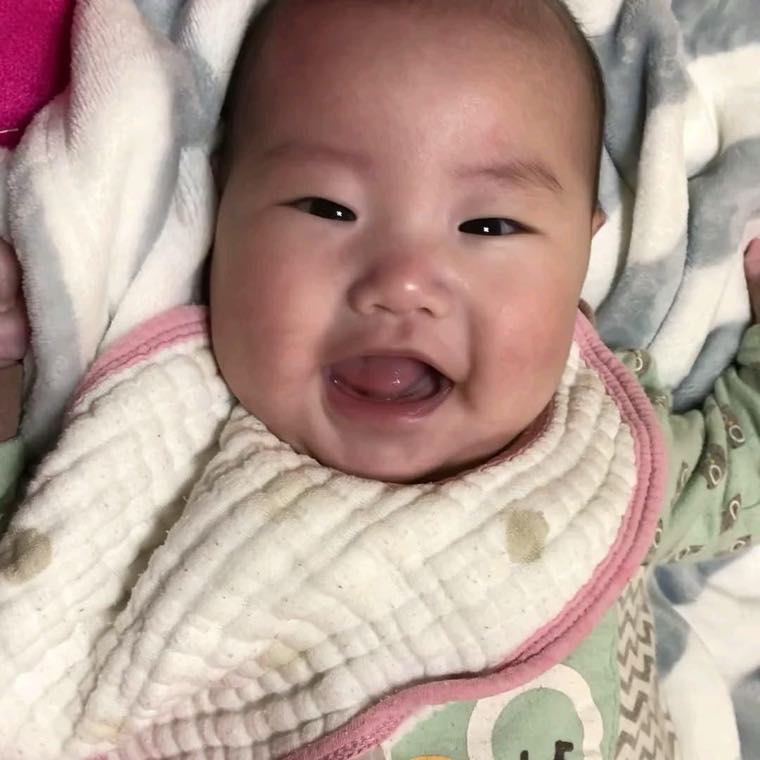
When your baby is unusually fussy, drooling, with gums that look swollen, you naturally think, "Ah, a tooth must be coming in." Then when a fever and even diarrhea show up, it's easy to chalk all of it up to teething too. But this is exactly where misunderstandings tend to creep in.
Let's start with the big picture. Teething does make babies uncomfortable — but it is generally not thought to cause noticeable whole-body symptoms like a high fever, diarrhea, or vomiting. What teething can bring is more drool, wanting to bite on things, swollen gums, and mild fussiness. If your baby seems more distressed than that, it may be worth suspecting another cause — an infection in particular — rather than teething.
Below, we'll walk through common myths about teething one by one, along with misconceptions about home remedies that can be risky and about pain relievers, plus the safe things you can do at home and the moments when a doctor's visit is needed.
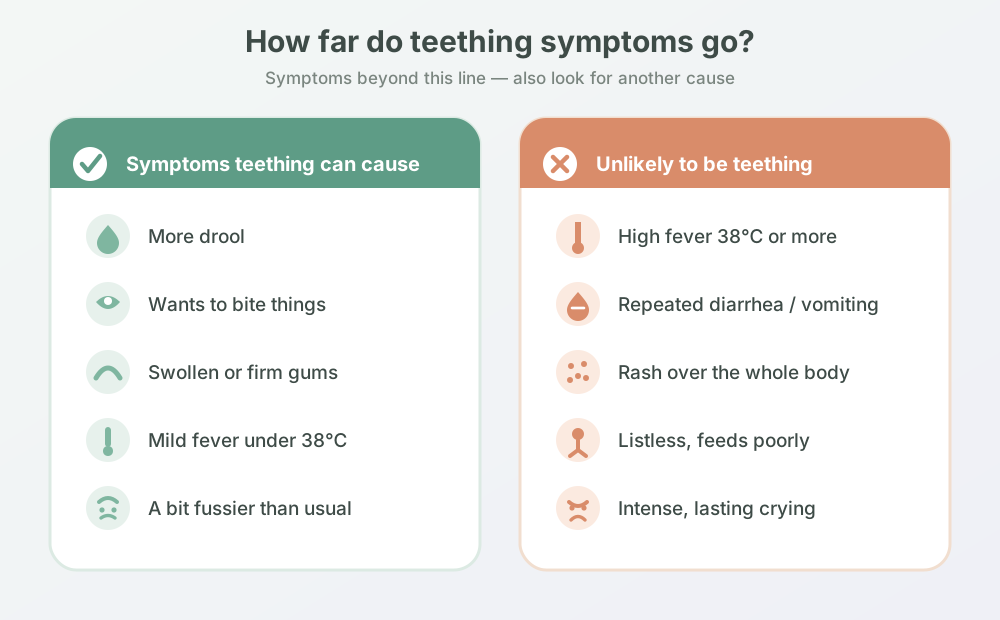
How far do teething symptoms actually go?
The symptoms you can attribute to teething are generally on the mild side: more drool than usual, constantly bringing hands or toys to the mouth to bite, gums that turn red and swollen or feel firm, and a bit of fussiness from that discomfort. A low-grade fever — a slightly raised temperature under 38℃ (100.4℉) — may come along too.
The key point here is that teething doesn't tend to go beyond "mild discomfort." The American Academy of Pediatrics also says there isn't clear evidence that teething causes symptoms like a high fever, diarrhea, vomiting, or a body-wide rash. So if your baby shows symptoms beyond this, it's worth checking whether it simply overlapped with a tooth coming in and there's another cause present too.
The overlap between the teething window and the window when infections are common is another reason the misunderstanding builds up. Babies usually start teething around 6 months, which is also when the immunity passed on from mom fades and they're frequently exposed to various infections. So the experience of "a fever came while teething" easily turns into "teething caused the fever."
| Symptoms teething can cause | Symptoms unlikely to be teething |
|---|---|
| More drool | High fever of 38℃ or more |
| Wanting to bite on things | Repeated diarrhea / vomiting |
| Swollen or firm gums | A rash spreading over the body |
| Mild fever under 38℃ | Listless, feeding poorly |
| A bit fussier than usual | Intense, lasting crying |
Myth 1: A high fever, diarrhea, and vomiting are all from teething
This is the most common myth. It's easy to think teething caused a fever and an upset stomach, but a high fever of 38℃ or more, or repeated diarrhea and vomiting, are not considered teething symptoms. If these are present, first look at the possibility of an infection like a cold, gastroenteritis, or an ear infection alongside it.
The biggest concern is missing the moment care is actually needed while brushing it off as "probably teething." If the fever tops 38℃, diarrhea or vomiting repeats, or your baby is listless and feeding poorly, it's safer not to attribute it to teething and to have a pediatrician check the cause. For how to tell teething from an infection by the symptoms, we go into more detail in how to tell teething apart from a cold or infection.
Myth 2: Intense fussiness and crying all night are all teething
Discomfort from teething is generally mild, so it's thought to be uncommon for it to reach the point of crying so hard the baby can't bear it or being unable to sleep all night. So fussiness or crying that is stronger and longer-lasting than usual may be hard to explain by teething alone.
If your baby barely settles no matter how you soothe them, seems noticeably droopier than usual, or cries in a way that's clearly different from normal, look at whether there's another source of discomfort rather than assuming teething. "Teething" is a convenient explanation, but the important thing is not to let that convenience make you miss other signals your baby is sending.
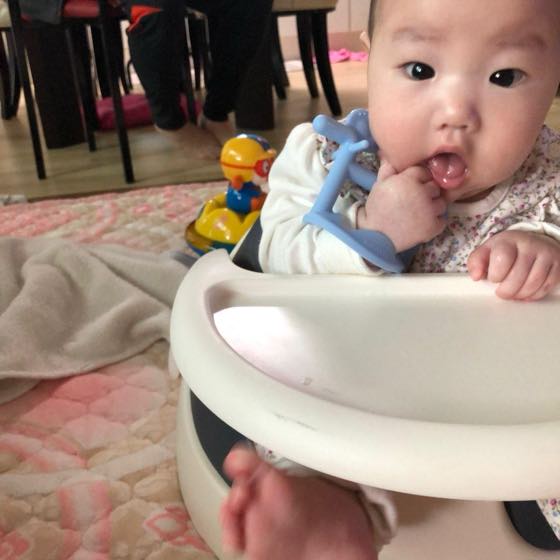
Myth 3: Amber necklaces or teething gels and tablets help
When teething looks hard on your baby, the urge to do something makes you go looking at various products. But some commonly used home remedies don't help and carry safety problems that official agencies have warned against. Let's look at three.
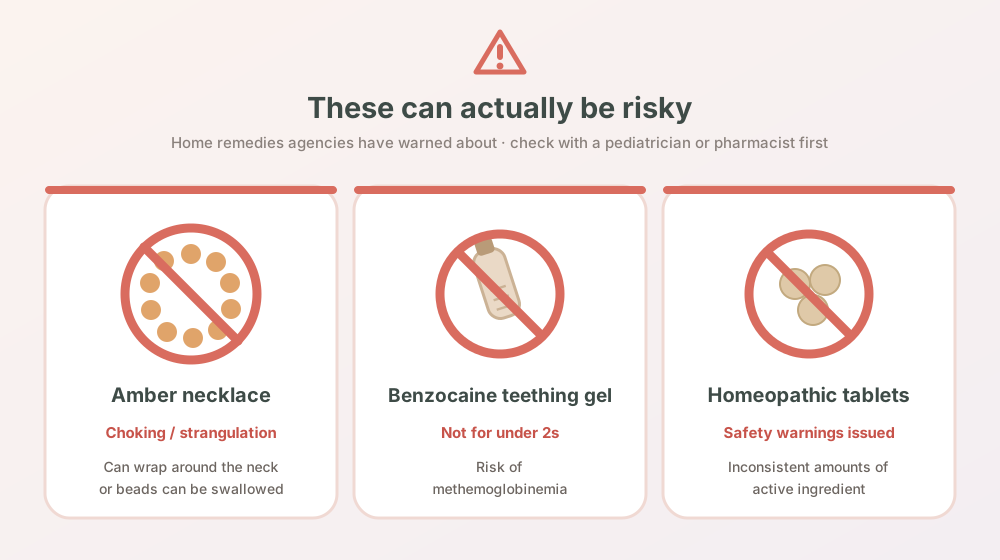
1. Amber necklaces carry a choking and strangulation risk
There's a claim that putting an amber necklace on a baby eases teething, but there's no clear evidence it works. On the contrary, the American Academy of Pediatrics warns that placing anything around a baby's neck is itself dangerous. It can wrap around the neck and strangle while sleeping or playing, and if the beads break, the baby can swallow them and choke. So whether for teething or not, we don't recommend putting necklaces on a baby's neck or wrist.
2. Benzocaine teething gels are contraindicated for infants
Some teething gels that numb the gums contain benzocaine. The U.S. FDA has warned against using benzocaine gum products in infants under 2. Rarely, they can lead to a serious condition called methemoglobinemia, in which the blood can't carry oxygen properly. Don't use numbing gum products on your own — check the ingredients and the eligible age range with a pediatrician or pharmacist first.
3. Homeopathic teething tablets have also had safety warnings
Homeopathic teething tablets that you give by mouth are easy to assume will help too, but the U.S. FDA has issued safety warnings on some homeopathic teething products, citing issues such as inconsistent amounts of active ingredient. Since their effectiveness isn't well established and their safety isn't confirmed, check the ingredients and approval status before use and consult a pediatrician.
Teething products can't be trusted just because "lots of people use them." For products you apply, give by mouth, or place around the neck, the habit of checking ingredients and safety with a pediatrician or pharmacist before use is what protects your baby.
Myth 4: Either hold off on pain relievers entirely, or give plenty
Two opposite myths exist side by side about pain relievers. One is "it's best to hold off on medicine as much as possible," and the other is "they're really struggling, so it's fine to give plenty." Both have points to be careful about.
When your baby is really struggling, an age-appropriate pain or fever reliever can be used. But which medicine, how much, and when depend on your baby's age and weight, so you must follow the guidance of a pediatrician or pharmacist. Increasing the dose on your own, splitting adult medicine, or stacking multiple medicines is dangerous. On the other hand, making a clearly distressed baby simply endure it isn't the answer either. When you're unsure, asking a pediatrician or pharmacist is the safest choice.
So what can you do?
Instead of products whose effectiveness isn't confirmed, you can ease your baby's discomfort plenty with safe, evidence-based methods. Here they are.
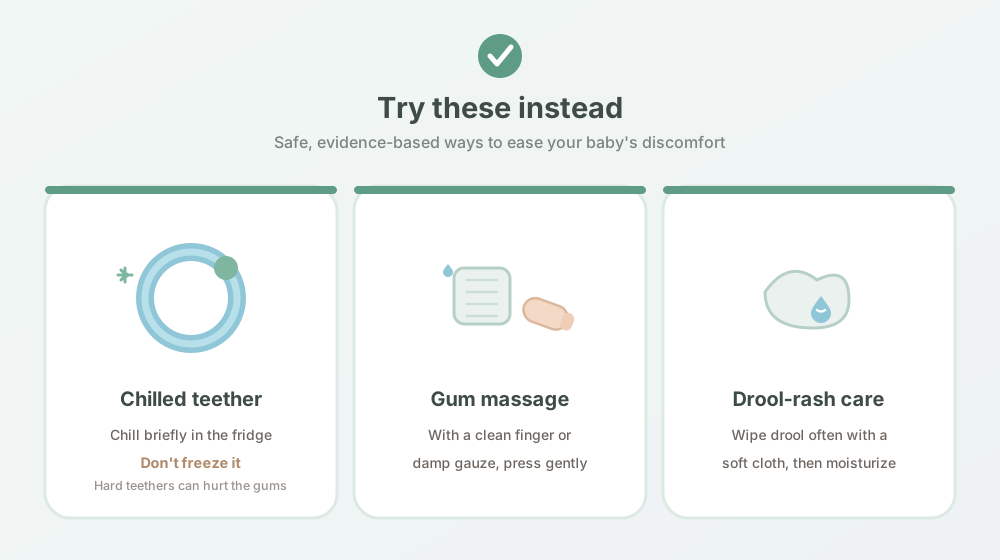
1. Offer a chilled teether
A teether cooled briefly in the fridge helps calm swollen gums. But a teether frozen hard can hurt the gums, so avoid freezing it, and check that there are no small parts the baby could swallow and that the seams are sturdy.
2. Massage the gums with a clean finger or damp gauze
After washing your hands well, gently press and massage your baby's gums with a finger or a clean piece of gauze dampened with water — it can ease the discomfort. Babies often find it surprisingly soothing.
3. Wipe and moisturize drool rash
During teething, more drool makes drool rash likely around the mouth, chin, and neck. Wipe drool often with a soft cloth, and moisturize so the skin doesn't get raw.
If your baby has started solids, a chilled soft food can help too — but here as well, always check that it's in a form with no risk of choking while swallowing.
When to skip the "it's teething" and see a doctor
Even if you think it's teething, if you see the signs below it may be another cause, so have a pediatrician check.
- A fever of 38℃ or higher
- Repeated diarrhea or vomiting
- Listlessness with poor feeding or signs of dehydration
- Intense fussiness or crying that won't settle no matter how you soothe
In particular, if a baby under 3 months has a fever, see a doctor right away without delay. For a fever at this age, the sooner the cause is checked, the better. Rather than putting it off with "it's probably the teeth," checking with a visit when these signs are present is more reassuring for you and safer for your baby.
Frequently asked questions
Some babies do get a fever while teething — is it all infection?
A slight low-grade fever under 38℃ can accompany the teething period. But a high fever of 38℃ or more is hard to see as teething. If the fever is high or lasts a while, don't write it off as teething — have the cause checked with a visit.
My baby is teething and not eating well. Is that okay?
Sore gums can make a baby eat less than usual. But if they eat noticeably little, show signs of dehydration, or seem listless along with it, it may be another cause, so it's best to consult your pediatrician.
Should teething gels be avoided entirely?
It depends on the ingredients. Products with a numbing agent like benzocaine are not recommended for children under 2. Which product is okay to use and whether it's safe for your baby should be checked with a pediatrician or pharmacist before use.
When do teeth usually come in?
Generally around 6 months, but babies vary a lot, and coming in earlier or later is common. A slightly different timing isn't really something to see as a problem.
To sum up
Teething does make babies uncomfortable, but its symptoms — more drool, swollen gums, a low-grade fever, mild fussiness — are more limited than people think. Chalking up a high fever of 38℃ or more, diarrhea, vomiting, or intense crying to teething can mean missing the moment care is actually needed.
Because amber necklaces carry a choking and strangulation risk, benzocaine gels come with a warning that they're contraindicated for infants, and homeopathic tablets have had safety warnings, these home remedies are hard to recommend. For pain relievers, use age-appropriate ones and always follow a pediatrician's or pharmacist's guidance on dose and timing. Instead, you can ease your baby's discomfort with safe methods like a chilled teether, gum massage with damp gauze, and moisturizing drool rash.
And when there are signs like a fever of 38℃ or higher, repeated diarrhea or vomiting, or listlessness — and especially if a baby under 3 months has a fever — don't write it off as teething; see a doctor right away. Keeping just this in mind will go a long way.