Complete Baby Travel Packing Guide | A Category-by-Category Checklist for Trains and Planes
Heading off on your first trip with your baby and not sure what to pack? We've pulled together a category-by-category checklist — feeding, diapers, sleep, health, getting around, play, and documents — plus the things people forget and tips for carry-on, all in one place.
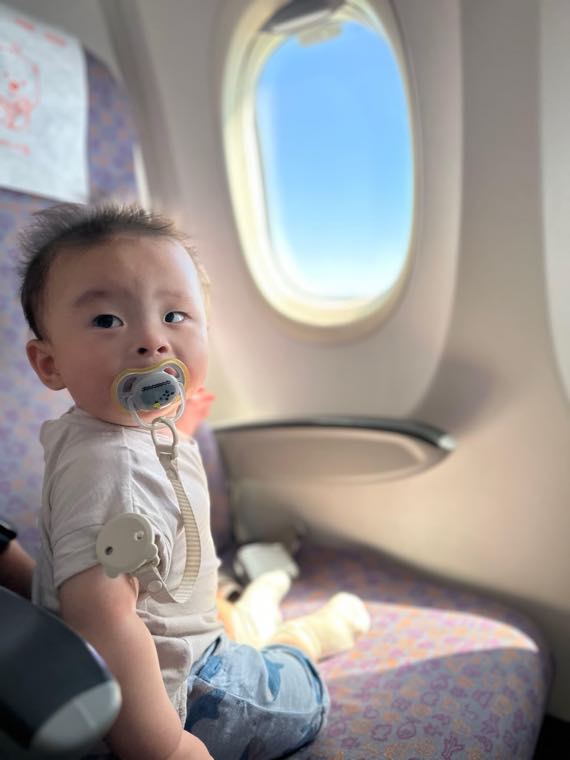
The day you first head somewhere far with your baby, as exciting as it is, you end up standing in front of your luggage for ages. Leave out even one thing and you're stuck once you get there, so it's hard to know what to pack and how much.
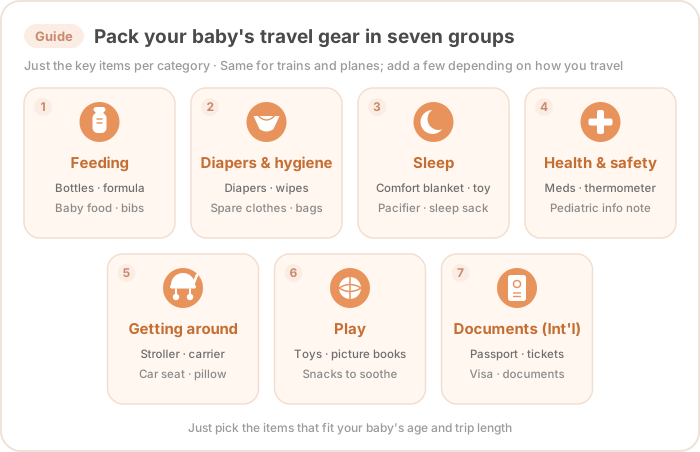
The surest approach is to group your things by type. Feeding, diapers and hygiene, sleep, health and safety, getting around, play, and documents. When you split things into categories like this and fill each one in, the items you'd normally wave off with "surely I wouldn't forget that" come into view too. Whether by train or plane, the basics you pack are almost the same — you just add a few things depending on how you travel.
In this article, we've put together a category-by-category packing list, a checklist you can see at a glance, and the things people forget most often. Go through it one by one before you leave and fill up your bag.
Packing by category means fewer things left behind
The reason a baby's luggage feels like so much is that the types are all mixed together. A diaper between the bottles, a toy next to that. Once it's mixed like this, you can't remember what you packed. First decide on the big groups, and pack each group into its own pouch or zip bag. It gets much easier.
There are seven basic groups. Food (feeding and meals), diapers and hygiene, sleep, health and safety, getting around, play, and — for international flights — documents. We'll fill each one in below, in that order. From each category, just pick and pack what fits your baby's age and the length of your trip.
Start with food — feeding and mealtime supplies
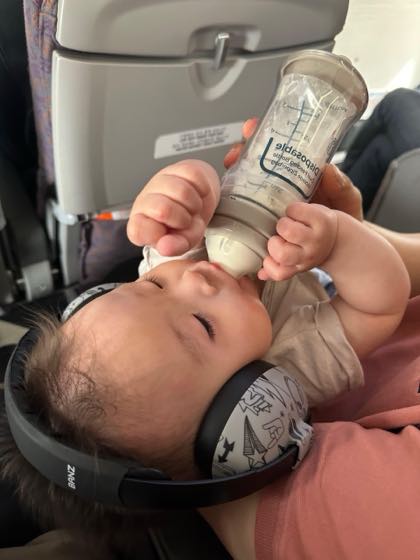
A baby crying with hunger mid-journey is the hardest situation to handle, so it puts your mind at ease to pack plenty of feeding supplies. Liquids especially are often hard to buy on the go, so having extra matters.
- Bottles and spare nipples (number of feeds + 1–2)
- Formula (portioning it out per feed makes it easier to prepare on the go)
- A thermos or formula pot (for warm water)
- If breastfeeding, a nursing cover, breast pump, and milk storage bags
- If your baby has started solids, baby food, snacks, and a baby spoon
- Bibs and a handkerchief
- A straw cup or water bottle
Pack plenty of diapers and hygiene items
Pack a little more diapers and wipes than the amount that feels like "this should be enough." Delays and having to change more often than expected are bound to come up. Estimate your daily use, then add extra for travel days and you'll feel secure.
- Diapers (expected daily amount + extra, especially generous on travel days)
- Wipes (one large pack + a small one within reach)
- A portable changing mat
- A few sealable plastic bags (for used diapers and soiled clothes)
- Hand sanitizer, and 2–3 changes of clothes (in case of spit-up or leaks)
- A thin wrap or blanket (for air conditioning and temperature changes)
Don't forget the sleep items that help them rest
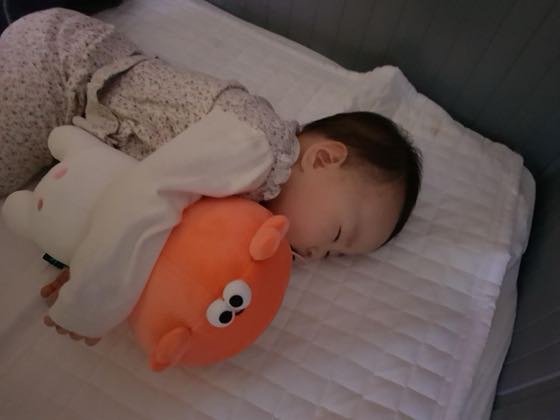
It's common for babies to sleep poorly in unfamiliar places. Bringing even one thing that's always with them at home helps your baby feel a bit more settled, thanks to the familiar smell and feel.
- The swaddle they usually use, or a comfort blanket or stuffed toy
- A sleep sack or a thin blanket
- A pacifier — if your baby uses one, it can also help ease that plugged-ear feeling during takeoff and landing
- A portable blackout item if you need to block light
Here's how to prepare health and safety items
It's best to be careful about health-related items when traveling. Medicine especially follows one principle — stick to what you normally use rather than stocking up.
- Everyday medicine: Pack only around the everyday medicines your baby normally uses. Avoid buying new medicine ahead of time and giving it on your own judgment just because you're traveling; if you're worried about a situation where medication might be needed, it's safer to consult your regular pediatrician before you leave.
- Thermometer: One, to check whether a fever comes on suddenly.
- Bandages and antiseptic supplies: A small amount, for minor scrapes.
- Sunscreen: From 6 months of age, prepare it following the usage guidance shown on the product. For younger babies, shielding from the sun with thin clothing, a hat, and shade is more recommended.
- Health information: Having your baby's name, date of birth, any underlying conditions, current medications, and info on pediatric clinics or emergency rooms near your destination ready as a note or photo helps when things get urgent. Within the country, it's good to bring your baby's health-insurance card (or the information).
When it comes to medicine, rather than deciding based on this article alone, consulting in advance with the medical provider who knows your baby's condition is the most accurate way.
Pack items that make getting around easier
This is the part that varies a bit by how you travel. Bringing a stroller and a carrier — one or both, to suit the situation — makes getting around much smoother.
- A stroller (on the train, fold it and put it in the luggage area; on the plane, you can usually use it up to the boarding gate and then check it)
- A carrier (handy in the airport or station, since it keeps both your hands free)
- A car seat (if needed)
- A neck pillow or a thin cushion
How strollers and car seats are handled on a plane varies by airline and by the time period, so it's best to check when you book. In some cases you can install a car seat in the cabin if you buy a separate seat, and how strollers are checked differs from airline to airline too.
If you're traveling by train, knowing about seat choices and facilities like nursing rooms and multipurpose rooms in advance makes it much easier. If you're taking a train with your baby, check the seats and facilities ahead of time in Taking the train with your baby — which seats are best and what facilities there are.
Pack a few play items to ease the boredom too
When travel time is long, babies get bored and fussy easily. Just packing a few small favorites can be a big help at the crucial moment.
- 1–2 favorite toys (quiet ones)
- Cloth books and picture books
- A new snack, or one your baby especially likes (for soothing)
- Stickers or simple play items (for a slightly older baby)
For international flights, check documents first of all
Documents are what make departure impossible if you forget them, so for international flights we recommend starting here. Some take time to issue, so check as soon as you decide on the trip.
- Your baby's passport (check the expiration date)
- Flight tickets and boarding-related documents
- Any visa or documents required by your destination
- Depending on the situation, proof of your guardian relationship (such as a family relationship certificate) — requirements differ by country and airline, so check in advance
The checklist at a glance
Crossing items off one by one as you fill your bag cuts down on forgotten things dramatically. Use only the items that fit your baby's age and the length of your trip.
| Category | What to pack | Check |
|---|---|---|
| Feeding & meals | Bottles and spare nipples, portioned formula, thermos, (if breastfeeding) nursing cover and storage bags, baby food and snacks, bibs | ☐ |
| Diapers & hygiene | Diapers (extra), wipes, changing mat, sealable plastic bags, hand sanitizer, 2–3 changes of clothes | ☐ |
| Sleep | Swaddle, comfort blanket/stuffed toy, sleep sack, pacifier, blackout item | ☐ |
| Health & safety | Everyday medicine, thermometer, bandages, sunscreen (6 months+), health and pediatric info note | ☐ |
| Getting around | Stroller, carrier, car seat (if needed), neck pillow | ☐ |
| Play | 1–2 toys, picture books, soothing snacks | ☐ |
| Documents (int'l) | Passport, tickets, visa and supporting documents | ☐ |
Train vs. plane — what's different to pack?
The basics are almost the same, but you only need to think differently about two things. Trains tend to have more relaxed luggage rules, so it's easy to fold a stroller and set it in the luggage area, and it's easier to get up from your seat to soothe your baby along the way.
For planes, you need to know the carry-on rules in advance. Liquids are usually restricted at security, but baby formula, breast milk, and baby food can be brought as an exception in the amounts needed for the trip (declared and inspected separately at security). The exact allowances and procedures vary by airline and by the time period, so check before booking and departure.
These are the ones people forget most
Even experienced parents easily overlook some things. What actually leaves you stuck isn't the big items but the small, trivial ones.
- Sealable plastic bags: The classic case of being stuck with nowhere to put used diapers and spit-up or soiled clothes.
- A change of clothes (for the adult too): When your baby spits up or leaks, the parent's clothes get wet too. A thin top or so.
- Portioned formula and warm water: It's often hard to get the water temperature right at your destination.
- Pacifier and comfort items: It's common to be up all night just because this one thing is missing.
- Health and pediatric info note: Looking for it when things get urgent is already too late. Do it as a photo in advance.
- Charger and power bank: Between taking photos and checking maps, the battery drains fast.
Frequently asked questions
For a trip of a few days with my baby, how many diapers should I pack?
We recommend estimating your daily use and adding extra for travel days. If you can buy the same product at your destination, another option is to take plenty for just the travel period and restock there. That said, the brand or size may not suit your baby, so secure at least the travel-day amount of what you normally use.
I need to prepare formula on the plane — can I get hot water?
On most airlines, you can get warm water if you ask a flight attendant. That said, the temperature and how it's provided differ by airline, so it's best to ask in advance with some time to spare, along with your portioned formula. Check the exact method with the airline you booked ahead of time.
What do I do if my baby's ears hurt during takeoff and landing?
Having them suck or swallow something in the moment when the pressure changes during takeoff and landing can help ease that plugged-ear feeling. That's why many people time a feed or offer a pacifier around takeoff and landing. If your baby is struggling badly or fusses for longer than usual, ask a flight attendant for help, and if they keep struggling afterward, get them seen.
I want to travel light — what should I definitely bring and what can I get locally?
Be sure to bring the things that suit only that baby, like a pacifier and comfort items, everyday medicine, and portioned formula. On the other hand, things you can buy anywhere — like diapers, wipes, and regular snacks — you can pack just for the travel period and restock locally.
To wrap up
The key to packing for a trip with your baby is grouping things by type. Bundle them into these seven groups — feeding, diapers, sleep, health, getting around, play, and documents — and fill each one in, and you'll leave far fewer things behind.
Whether by train or plane, the basics are almost the same, and for a plane you just need to check the carry-on rules and how strollers and car seats are handled before you book. Keep medicine to what you normally use, and don't forget to prepare sunscreen from 6 months of age following the product's guidance. Prepare by crossing off the checklist above one item at a time, and your mind will feel much lighter on the day you set off.