Can I Eat Sashimi and Sushi While Breastfeeding? A Q&A of Moms' Most Common Worries
You avoided sashimi and sushi in pregnancy, but can you eat them while breastfeeding? We answer moms' most common worries one at a time, from why pregnancy and breastfeeding differ, to whether you can nurse right after eating, to how much to mind mercury, alongside a low-mercury vs. watch-it fish guideline table.
After holding off on sashimi and sushi all through pregnancy, one of the first thoughts after giving birth is often, "Can I finally eat it now?" And yet, standing in front of the sushi counter, you hesitate again. What if bacteria pass into my breast milk? Is the mercury a problem? Is it okay to nurse right after eating? The worries pile up one after another.
Here's the short answer first: while breastfeeding, fresh sashimi and sushi are usually fine. That's because the reasons you avoided them in pregnancy and your situation while nursing are a bit different. That said, it doesn't mean anything goes, no strings attached; a few conditions apply, mainly freshness and how you're feeling.
So in this article, we'll walk through the worries moms ask about most, one at a time, in a Q&A format. Why pregnancy and breastfeeding are different, whether you can nurse right after eating, and which fish to watch and how much when it comes to mercury.
Can I really eat sashimi and sushi while breastfeeding?
Yes, if it's fresh, it's usually fine. Many hospitals and experts tend to advise that during breastfeeding you can eat sashimi and sushi relatively freely. They don't treat it as a food you must avoid the way you did in pregnancy.
Still, the "if it's fresh" condition is worth keeping in mind. When raw fish loses freshness, problems like food poisoning or Vibrio can arise, so what matters far more than the sashimi itself is how fresh it is and how hygienically it was handled. It's not that sashimi is fine but sushi isn't; the one thing they share is that freshness is the key.
I avoided it in pregnancy, so why is breastfeeding different?
This is the part that confuses people most. "I held back so much during pregnancy, there's no way it's fine now that I'm nursing," you might think. But your body is in a different situation during pregnancy versus breastfeeding.
During pregnancy, you're careful with sashimi and sushi because if uncooked food causes food poisoning, it could directly affect the baby in the womb. While breastfeeding, on the other hand, you can use needed medications relatively freely if you do get sick, and as we'll discuss later, food-poisoning bacteria don't tend to pass easily into breast milk. That's why hospitals often place fewer restrictions during breastfeeding than during pregnancy. Pregnancy information and breastfeeding information get mixed up, and it's easy to assume "nursing must be off-limits too," but these two can usually be thought of separately.
Is it okay to nurse right after eating?
This is another worry that comes up a lot. If you nurse soon after eating sashimi, won't the bacteria go straight to the baby? The bottom line is that you usually don't need to worry about it too much.
Bacteria like those behind food poisoning, or Listeria, mostly stay in the mother's gut, and passing to the baby through breast milk is rare. So even if a mom nurses right after eating sashimi, that alone rarely exposes the baby to bacteria. What's actually worth minding is the mother's own condition. If mom gets an upset stomach and feels unwell, caring for the baby and nursing itself becomes harder.
If you're wondering whether you can keep nursing when you get an upset stomach after eating sashimi, we've put together more detail by situation in Can I keep breastfeeding with an upset stomach or food poisoning?
I'm worried about mercury. Which fish, and how much?
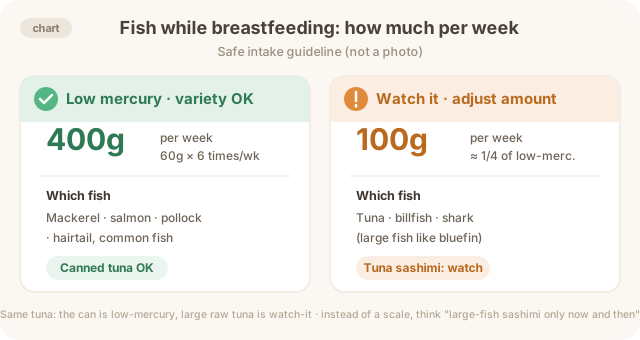
Mercury is something worth keeping in mind whether you're pregnant or breastfeeding. But it doesn't mean "you should stop eating fish"; it's about adjusting which fish and how much you eat. Most fish are low in mercury, so eating a variety actually helps with nutrition. The only thing to watch the amount on is a few kinds of large fish.
Here's a rough guide to fish intake, put into a table.
| Category | Which fish | Weekly guideline |
|---|---|---|
| Low mercury — variety is good | Common fish like mackerel, salmon, pollock, and hairtail; canned tuna | About 400g (roughly 60g x 6 times a week) |
| Watch it — adjust the amount | Tuna species, billfish (marlin/swordfish), and shark (large fish like bluefin tuna) | About 100g |
The tricky one here is tuna. Canned tuna is on the low-mercury side, so you can eat it relatively generously, but the large tuna served as sashimi at a sushi restaurant (tuna species) falls on the "watch it" side. Same tuna, different type, in effect. On a day you eat both kinds, keeping common fish and canned tuna to around 125g and tuna, billfish, or shark to around 30g lets you enjoy it within the guideline. You don't need to weigh things every time; remembering "large-fish sashimi only now and then" is enough.
How do I check freshness, and when is it best to skip it?
The most important thing with sashimi and sushi is the freshness we mentioned. The basics are eating at a place with quick turnover and good hygiene, made from fresh ingredients received that day. If the color looks dull, the smell seems off, or it looks like it's been sitting out at room temperature for a while, it's better to skip it that day.
And on days like these, switching to something cooked is the easier, more reassuring choice.
- When mom isn't feeling well or is very worn out
- When you're prone to infection or feel your immunity is low
- When it's a place whose hygiene is hard to trust, or you're not sure the ingredients are fresh
On days like these, rather than insisting on raw, enjoying cooked fish or another dish lets you eat well without the worry. It's not that you should hold back on sashimi, but that it's okay to choose based on how you feel.
Wouldn't it be safer to cut out fish entirely?
After hearing about mercury, you might think "I'll just cut out fish," but that's actually a bit of a shame. Fish provides good protein and nutrition for breastfeeding moms and babies, so rather than cutting out low-mercury fish, including a variety is what's recommended.
So instead of "to eat fish or not," you can usually think of it as "which fish and how much." Just adjust the amount of large-fish sashimi, and eat low-mercury fish across the board. With a guideline like this, you can enjoy sashimi and sushi comfortably while still getting the nutrition.
When to check with a professional
In most cases, fresh sashimi and sushi are unlikely to be a big problem while breastfeeding, but in situations like the following, rather than deciding on your own, it's reassuring to ask your OB-GYN or pediatrician.
- When mom develops severe abdominal pain, vomiting, or diarrhea after eating sashimi and feels unwell
- When you have a chronic condition or lowered immunity and will be eating raw fish frequently
- When the baby shows something unusual, such as repeated vomiting, severe fussiness, or a fever, unlike their usual self
- When you're worried the baby seems to have a repeated reaction after a particular food
Especially if mom feels very unwell or the baby is clearly different from usual, it's best not to put it off and to get it checked. If it persists or seems severe, check with your pediatrician.
Frequently asked questions
Can I treat salmon sushi or shrimp sushi the same as sashimi?
Yes, the basic principle is the same. If it's fresh and hygienically handled, it's usually fine, and freshness being the key is the same too. Salmon is on the low-mercury side, so there's less to worry about with the amount. That said, uncooked seafood of any kind can upset you if it loses freshness, so that's the one thing to keep an eye on together.
My baby is fussy the day after I ate sashimi. Is the sashimi to blame?
It's hard to say the sashimi is the cause. Babies get fussy for many overlapping reasons, such as hunger, sleepiness, or how they're feeling, and it varies from baby to baby. But if a similar reaction repeats on each day you eat a particular food, we'd suggest recording what you ate and how the baby was for a few days to watch the pattern, and bringing it up at a check-up if you're worried.
Is it okay to eat a lot at once, like at a sushi buffet?
At a place with fresh food, enjoying a single meal's worth is usually fine. But eating a lot of the sashimi you want to watch for mercury, like large tuna (tuna species) or billfish, in one sitting is best kept modest for the sake of managing the amount. Focusing on low-mercury fish makes it less of a burden.
It'd be safer to hold off on sashimi until I stop breastfeeding, right?
Not necessarily. As we saw, fresh sashimi and sushi are usually fine while breastfeeding, so you can enjoy fresh ones on days you feel good. Rather than forcing yourself to hold back for a long time, minding just the freshness and amount is more realistic.
To wrap up
You avoided sashimi and sushi in pregnancy out of concern that food poisoning could reach the baby in the womb, but while breastfeeding the situation is different. Food-poisoning bacteria mostly stay in the mother's gut and don't tend to pass into breast milk, and you can use medications relatively freely if needed, so fresh ones are usually fine. Even nursing right after eating rarely exposes the baby to bacteria on its own.
Instead, do mind freshness and hygiene carefully, and on days you feel unwell or your immunity is low, choose something cooked. With mercury, it's not about cutting out fish but adjusting only the amount of large-fish sashimi, and low-mercury fish are actually good to include in variety. If you have symptoms that worry you, rather than guessing on your own, check with a professional. That plate of sashimi you've been holding off on: as long as the conditions line up, you can usually enjoy it with peace of mind.