Easier Baby Burps | Feeding Positions & Bottle Angles for Less Swallowed Air
No matter how much you pat, the burp won't come and it wears you out every time. One step ahead of the burping technique, we've laid out breast and bottle feeding positions, bottle angles, and feed-flow tips that help your baby swallow less air — easing both the burping load and the spit-up itself.
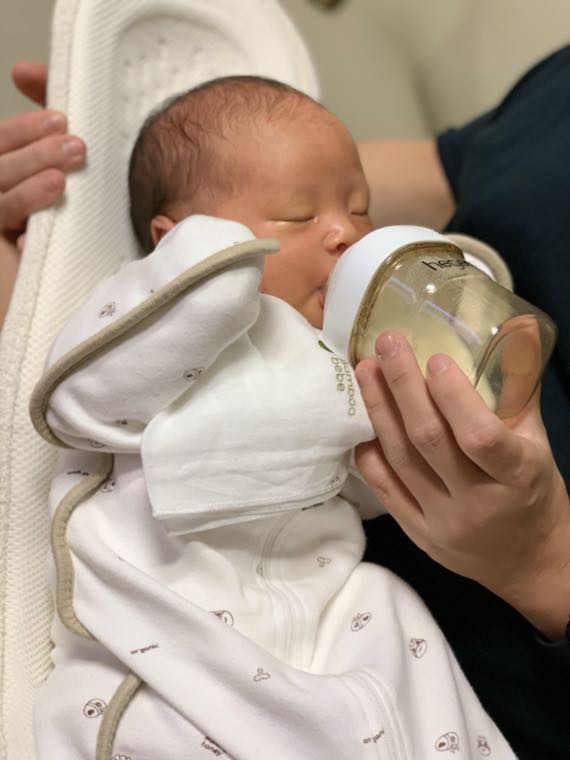
When every feeding ends with you holding your baby upright on your shoulder and patting their back for minutes on end with no burp coming, it's genuinely exhausting. As you keep wondering "why won't it come out," getting the burp out can start to feel like a bigger job than the feeding itself.
But the reason a burp is needed in the first place actually comes down to the air swallowed along with the feed. As your baby drinks, they take in a little air along with the milk or formula, and when that air pools in the stomach it feels uncomfortable — and in some cases it can lead to spit-up. So just as much as the knack for getting a burp out, helping your baby swallow less air to begin with is the more fundamental approach. When there's less air going in, there's less burp to bring up, and the spit-up load eases too.
In this article, one step ahead of the burping technique, we've laid out prevention tips for swallowing less air across breastfeeding, bottle feeding, and the flow of a feed. We've also included how to bring up a burp when it still won't come, along with the signs that mean it's worth checking in with a doctor.
A hard-to-get burp usually means a lot of air went in to begin with
Let's start with how it works. A baby burps because they swallow air while feeding. Shallow latching at the breast, air mixing in at the bottle nipple, or gulping down a feed after crying from hunger all lead to swallowing more air. The more air that pools in the stomach, the bigger the burp that's needed — and the harder it is to bring up.
So rather than leaning only on patting hard to get the burp out, shifting your focus toward reducing the air that goes in during the feed itself tends to make things much easier. You can't remove air entirely, but when your baby swallows less, both the burp to bring up and the spit-up get lighter. For reference, burping is usually something babies gradually grow out of around 4 to 6 months, as they get better at handling air on their own — so these prevention habits matter most up to around that time.
How to help your baby swallow less air while breastfeeding
The key while breastfeeding is a deep, snug latch. When the baby takes only the nipple in a shallow latch, a gap forms between their mouth and the breast, making it easy for air to leak in. When the latch goes deep enough to include the areola (the darker area around the nipple) and the lips flange outward for a snug seal, there's less room for air to get in.
Position plays a part too. Turning your baby's body toward you so tummy faces tummy, and holding them in a slightly upright position with the head a touch higher than the body, helps any swallowed air rise up more easily. If you hear loud smacking sounds or milk leaks from the corners of the mouth as they latch, it may be a sign of a shallow latch. In that case, gently break the latch and try again with a deeper latch the moment your baby opens wide.
How to help your baby take in less air while bottle feeding
With bottle feeding, just minding the angle and the flow speed can make a real difference in swallowed air. Let's go through it step by step.
1. Tilt so the nipple stays full of milk
If you hold the bottle too flat, the milk won't fill all the way into the nipple, and your baby ends up sucking milk and air together. Tilt the bottle enough so that the milk fills the nipple hole and neck, so your baby isn't taking in air.
2. Use a flow rate that suits their age
If the nipple hole flows too fast for your baby's age, milk rushes out and can cause choking or gulping that lets air in too. If it's too slow, your baby may swallow more air while sucking hard. If your baby often chokes mid-feed, dribbles milk from the corners of the mouth, or sucks so hard their face reddens, it may be a sign the flow doesn't suit them. Since the right flow varies from baby to baby, rather than any one product being the answer, the key is to find the pace your own baby feeds comfortably at.
3. Hold them half-upright and feed slowly (paced bottle feeding)
Rather than feeding your baby lying down, holding them in a half-upright position and feeding slowly at the pace they suck is called "paced bottle feeding." Your baby can pause and take breaks on their own, so they don't gulp it down, and that means they swallow less air. It helps even more to tilt the bottle slightly now and then to draw milk back from the nipple and give them a moment to rest.

The flow of a feed — before the gulping starts, take one pause partway
Even with a good position and angle, when the timing and flow of a feed are off, your baby swallows a lot of air. The most common case is waiting until your baby is crying inconsolably from hunger before feeding. Feeding while crying means gulping in air along with the milk. When you notice hunger cues like hands moving to the mouth or rooting motions, offer the feed calmly before it builds into crying. If hunger cues are hard to read, take a look at what to check first when your newborn cries — a 5-step order for help reading the signs.
Taking one pause partway through a feed helps too. With bottle feeding, stopping around the halfway point (roughly 50–60ml) to briefly bring up a burp before finishing lets you clear the pooled air early, so the rest goes more smoothly. With breastfeeding, you can naturally hold your baby upright and take a break when you switch to the other breast.
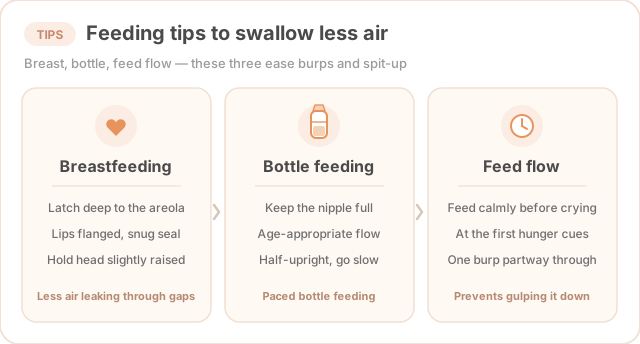
At a glance, here are the situations that lead to swallowing a lot of air and the tips to reduce it.
| When a lot of air gets swallowed | Try reducing it like this |
|---|---|
| Feeding with a shallow, nipple-only latch | Latch deep to the areola, lips flanged for a snug seal |
| Bottle held flat so air mixes at the nipple | Tilt enough so the nipple stays full of milk |
| Wrong flow causing choking or hard sucking | Use an age-appropriate flow, matched to your baby's pace |
| Gulping it down while lying flat | Hold half-upright and go slow with paced bottle feeding |
| Gulping after crying from hunger | Offer the feed calmly before crying, at the first hunger cues |
| Feeding it all at once so air piles up | Pause once partway (around 50–60ml) for a short burp |
If a burp still won't come, you don't have to force it
Even when you've minded swallowing less air, sometimes a burp just won't come. In that case, rather than patting hard to force it out, try a few minutes of holding your baby leaning upright against your shoulder and gently stroking their back upward from below, or sitting them on your lap with the upper body slightly forward and upright while you stroke their back. If it still doesn't come, it's often fine to hold them upright for a few minutes and then lay them down. If you'd like to know more about positions for bringing up a burp, take a look at how to hold your baby upright and bring up a burp when it won't come, and if you're wondering whether it's okay to put them down without burping, see is it okay to put your baby to sleep without burping.
That said, if you've tried all the prevention and burping tips and your baby still spits up often and forcefully, is very fussy and distressed along with the spit-up, or isn't gaining weight, it may not be a simple air issue. In that case, rather than just adjusting position at home, check in with your pediatrician. Repeated forceful, projectile vomiting, green-colored vomit, or vomit with blood in it also need prompt medical attention.
Frequently asked questions
No matter how I change position, no burp comes. Should I force it out?
A big burp doesn't have to come out every single time. On days your baby swallowed little air, there's little burp to bring up. If a few minutes of holding upright and stroking the back doesn't do it, rather than patting hard, it's often fine to hold them upright a little while and then lay them down. That said, if they spit up or fuss after being laid down, try holding them upright again to bring up a burp.
The flow doesn't seem to suit my baby — which nipple should I switch to?
It's hard to point to any one specific product, because the pace each baby feeds comfortably at is different. That said, if they often choke or dribble milk the flow may be on the fast side, and if they suck so hard their face reddens it may be on the slow side — so use the age guideline as a reference and adjust to find the flow your own baby feeds comfortably at. If it's hard to judge, a pediatrician or a lactation consultation can help.
My baby seems to swallow a lot of air even with breastfeeding.
A shallow, nipple-only latch lets air leak in with breastfeeding too. Check whether the latch goes deep to the areola, and whether your baby's lips flange outward for a snug seal rather than curling inward. Loud smacking sounds or milk leaking from the corners of the mouth can be signs of a shallow latch. If it stays difficult even after re-latching several times, a lactation consultation is one good option.
When I burp mid-feed my baby wakes up and won't feed. Do I have to do it?
A mid-feed burp isn't a must for every baby. If your baby feeds well and spits up little, there's no need to break the flow. That said, if they often spit up after feeds or keep fussing while feeding, a short pause around the halfway point can help. Watch your baby's response and find the approach that suits them.
To wrap up
A hard-to-get burp usually comes down to swallowing a lot of air during the feed. So just as much as the knack for getting it out, helping your baby swallow less air to begin with is the more fundamental approach. Latch deep to the areola for a snug seal at the breast; tilt the bottle so the nipple stays full of milk, use an age-appropriate flow, and feed slowly half-upright; offer the feed calmly before crying from hunger, and take one pause partway. Just getting this flow down makes the burping load and the spit-up noticeably lighter.
Of course, the right position and flow vary from baby to baby, and there's no way to prevent spit-up entirely. Finding what suits your own baby is a process of watching over a few days. Along the way, jotting a short feeding log in Babyfolio of how much your baby spat up on the days you changed the feeding position or bottle angle helps you see which approach reduced the spit-up, so you can find what suits your baby sooner. And if they still spit up often and forcefully or aren't gaining weight, rather than staying with position tweaks, checking in with your pediatrician is the most reassuring path.