What to Do When Your Newborn Grunts | Observe → Position → Tummy Massage → Doctor, Step by Step
When your baby is straining in the middle of the night, it's hard to know what to do first. We've laid it out in four steps — observe → comfortable position → tummy massage → signs to see a doctor. Watch when they're asleep, massage when they're awake and straining, and head to a doctor right away at a warning sign. We walk you through it in order so you won't fumble.

When your baby is straining and grunting hard enough to turn red in the face in the middle of the night, your half-asleep mind goes blank. Should I pick them up? Massage them? Take them to a doctor? Not knowing what to do first, you end up pacing helplessly.
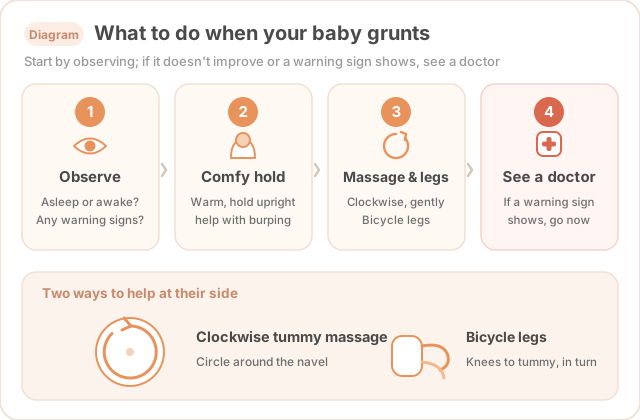
That's why deciding on an order ahead of time makes you far less flustered. Here's the big picture. ① Observe first → ② Hold in a comfortable position → ③ Help with tummy massage and leg exercises → ④ See a doctor if it doesn't improve or there are warning signs. From watching when they're asleep, to heading straight to care when there's a warning sign — let's walk through these four steps in order.
STEP 1. Observe first — asleep or awake, and any warning signs?
The very first thing to do isn't to touch, but to look. Check two things.
First, whether they're asleep or awake. If they're grunting with their eyes closed and squirming their arms and legs, there's a good chance they're in light sleep. In this light sleep (active sleep), which makes up more than half of a newborn's sleep, babies often twitch their faces, move their limbs irregularly, and make sounds. When this is the case, don't move on to STEP 2 — just watch for a few minutes. They usually settle back down on their own. If they're awake and straining and grunting to pass a stool, then you can go to the next step.
Second, whether there's a warning sign. If you see even one of the signs below during observation, don't move on to positioning or massage — go straight to STEP 4 (see a doctor).
- Lips or complexion turn blue or pale
- Stops breathing for more than 20 seconds, or breathes rapidly with the spaces between the ribs pulling in
- Green (bile-colored) vomit, or repeated projectile vomiting
- Bloody stool, fever, or limpness
Getting this first observation right alone helps you cut down on unnecessary intervention and not miss the moments that are truly urgent. When sounds and movements are hard to tell apart, take a look at A newborn's cries — how they differ from the sounds made in sleep as well.

STEP 2. Hold them in a position that eases them
If they seem awake and struggling, the next thing is to make their body comfortable. This is still the step before rubbing the tummy.
Just warming the tummy can release the tension. Many babies feel much better if you rub your hands warm and rest them gently on the tummy, or give a bath in lukewarm water. If you've just finished a feeding, hold your baby upright for about 5 to 15 minutes before laying them down to help with burping. Leftover air and discomfort in the stomach settle down, which helps reduce the grunting.
Here it's important to hold in a comfortable position that doesn't press on the baby's tummy. Rather than a position that forces them to strain, wrapping them into a slightly rounded curl so the legs gather naturally toward the tummy tends to settle them more. Helping your baby swallow less air during feeding in the first place reduces this discomfort itself — we've laid out the details in Feeding techniques that let your baby swallow less air.

STEP 3. Help with tummy massage and leg exercises
If positioning isn't enough, now it's time to gently help things move along. Two things are enough.
1. Clockwise tummy massage
Gently rub around the navel with your palm or fingers in a clockwise circle. It's the same direction the intestines move, so it helps with passing gas and stool. It's better to do this 30 minutes to an hour after feeding rather than right after, since pressing on a full tummy can make them spit up instead.
2. Bicycle legs
Hold both of your baby's legs and gently bend the knees toward the tummy one after the other, as if pedaling a bicycle. Light pressure on the tummy helps the intestines move and is good for passing gas too. If your baby dislikes it, don't force it — go gently, as if playing.
There's one thing to be careful about here. To get things out, stimulating the anus with a cotton swab or thermometer, or giving enemas habitually, isn't recommended. It may produce a result in the moment, but it can interfere with the process of your baby learning to pass stool on their own, leading them to rely on it. This straining and grunting to pass stool happens because the coordination between the tummy muscles and the anal muscles is still developing (infant dyschezia), and it usually resolves on its own around 3 months of age as babies get the knack of it. Until then, helping alongside them with just massage and leg exercises is enough.
STEP 4. When to stop and head to a doctor
If your baby is struggling badly even with the methods above, or you notice a warning sign you missed during observation, head to a pediatrician or emergency care without delay. The signs below are STEP 4 right away, regardless of order.
| If you see this sign | What to do |
|---|---|
| Lips or complexion turn blue or pale | Emergency care immediately |
| Stops breathing for 20+ seconds / difficulty breathing (rib retractions, over 60 breaths/min) | Emergency care immediately |
| Green (bile-colored) vomit / repeated projectile vomiting | See a doctor immediately |
| Bloody stool / fever / limpness / refusing to feed | See a doctor immediately |
In moments like these, a parent's gut sense that "something is different" is an important cue for judgment too. If something seems off, trust that feeling and get your baby seen. When you're worried about a specific symptom, rather than deciding from the order in this article alone, it's most accurate to talk it over with your own healthcare provider.

Logging which step brought relief makes next time faster
Even with the same baby, some days just warming and holding brings relief, and other days it's the tummy massage — it varies from baby to baby and from day to day. So briefly noting which step helped this time is useful.
Keeping these notes in Babyfolio means that the next time your baby grunts, you won't have to fumble from the start — you can try the step that worked right away. The time-of-day patterns of when it tends to happen come into view too, and it becomes easier to explain if you end up seeing a doctor. Logging doesn't replace judgment, but it cuts down on being flustered from scratch every night.
Frequently asked questions
Do I have to go all the way to STEP 3 even when they grunt in their sleep?
No. Making sounds and moving while asleep is a common sight in light sleep, so it's best to stop at STEP 1 and watch. Waking a sleeping baby to massage them actually gets in the way of them moving into deep sleep. STEP 2 onward is the order to apply when they're awake and struggling.
When is the best time for tummy massage?
It's better 30 minutes to an hour after feeding than right after, since pressing on a full tummy can make them spit up. Gently, clockwise around the navel, only as much as your baby seems comfortable with.
Are enemas and cotton-swab stimulation really off-limits?
Doing them habitually — not just once or twice in a pinch — isn't recommended. It can interfere with your baby learning to pass stool on their own, leading them to rely on it. If you want to help, warming them, tummy massage, and leg exercises, in that order, are enough.
What if they keep grunting even after I've done everything in order?
If they're passing soft stools and feeding and growing well, it's often infant dyschezia, and it's often fine to watch until around 3 months. That said, if the stool is hard or has blood in it, if it comes with fever, green vomit, or severe fussiness, or if they aren't gaining weight well, move on to STEP 4 and get them seen.
To wrap up
When your baby strains and grunts, just having an order in place makes you far less flustered. Observe (asleep or awake, warning signs) → comfortable position → tummy massage and leg exercises → see a doctor. If they're asleep, watch at STEP 1; if they're awake and struggling, help lightly with STEPs 2–3; and if you see a warning sign, it's straight to STEP 4.
Skip the forceful methods like enemas and anal stimulation, and help alongside your baby with warming, clockwise massage, and leg exercises. For most babies, it's a process that resolves on its own around 3 months of age. That said, if you see cyanosis, difficulty breathing, green vomit, bloody stool, fever, or limpness, get your baby seen right away regardless of order. If you'd like to know more about whether a newborn grunting in their sleep is really okay, take a look at A grunting, straining newborn — when to help vs. when to leave them be as well.