Newborn Head Asymmetry Self-Check | Normal Range by Month and Signs to See a Doctor
Your baby's head looks uneven — is this much okay to just watch at home? We cover telling positional from medical plagiocephaly, a head-shape self-check at home, what to do at each stage by month, and the signs it's worth checking with your pediatrician.
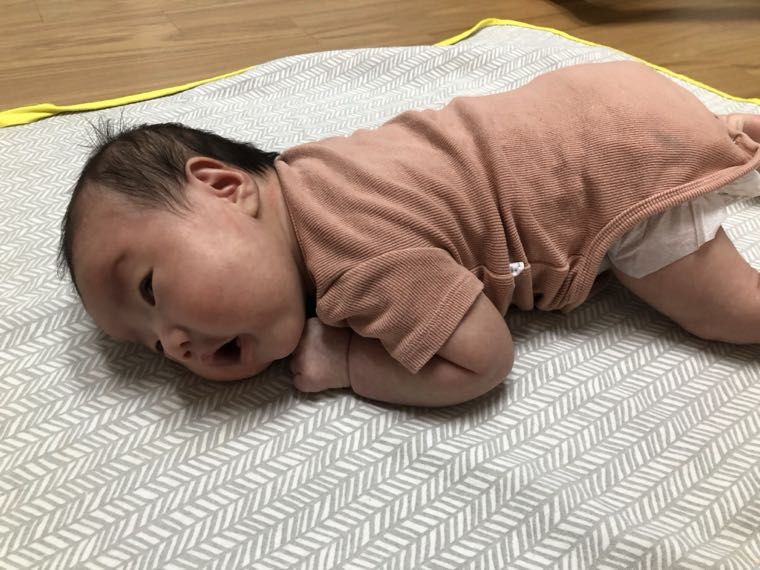
You lay your baby down, glance at their head from above, and one side of the back of the head looks unusually flat. Even when you turn them the other way, they keep rolling their head back to the same side. "Is this much of a difference okay? Is there something I should be doing right now?" — it's easy to feel anxious.
Here's something that may put your mind at ease first. Since babies started sleeping on their backs, positional head asymmetry — where one side of the back of the head gets pressed flat — has become very common. And this kind of posture-related asymmetry often improves just by changing your baby's position, as long as you don't miss the window. The hard part is that there's no clear number telling you how much asymmetry means it's time to see a doctor, which can make it feel more worrying. So let's walk through it step by step: a self-check you can do at home, what to do at each stage by month, and the signs that it's worth checking in with your pediatrician.
How much flattening is okay to watch at home?
Let's start with the big picture. Mild asymmetry caused by posture is common, and it often improves — especially when it's noticed within the first few months and you change your baby's position. On the other hand, if the asymmetry keeps getting more noticeable, or you also see signs of the neck tilting to one side, it's better to check in with a professional than to keep waiting.
A baby's head shape takes form largely as they grow. About 85% of skull growth happens within the first year. Put another way, the time before the first birthday is the best window for influencing head shape. So rather than panicking that "it's now or never," it helps to calmly keep up what you can do within this stage.
One thing worth being clear about: you can't draw a firm numerical line at home for what counts as "typical" versus "concerning." A self-check is for getting a sense of where your baby is, and for judging when it might be a good time to check in with a doctor. Telling apart whether there's a medical cause is a job for a professional.
Positional, or another reason? — first, tell two things apart
Head asymmetry is approached differently depending on the cause. It's easier to understand if you split it into the common positional kind and the rare medical causes.
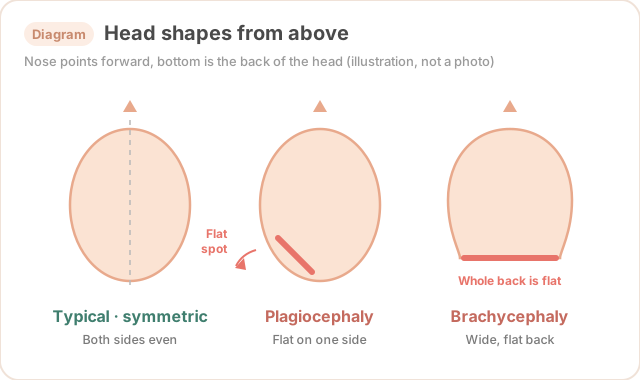
1. Positional plagiocephaly (the most common)
This is when one side of the back of the head gets pressed flat, because a baby often lies on one side or habitually turns their head one way. From above, the head can look pushed to one side, a bit like a parallelogram. As back-sleeping has become standard, this is the most commonly seen shape.
2. Brachycephaly (the whole back of the head is flat)
Rather than just one side, this is when the whole back of the head becomes flat and broad. It can appear in babies who always lie straight on their backs looking up at the ceiling. The cause is similar to positional plagiocephaly, but the area that gets pressed is different.
3. Medical causes (rare, but worth telling apart)
Sometimes the shape changes because of the bone itself rather than posture — for example craniosynostosis, where the skull's suture lines fuse too early. This is far rarer than the positional kind, but if the shape doesn't improve even when you change position, or the asymmetry is clearly visible in the forehead and face, this possibility should be checked. It's hard to judge by eye alone, so it's always distinguished through a medical exam.
One more thing worth watching for is when torticollis is also present. If a neck muscle shortens on one side and the head is always tilted the same way, the baby ends up lying on that side, which can cause or worsen asymmetry. Positional asymmetry and torticollis are often dealt with together.
A head-shape self-check you can do at home
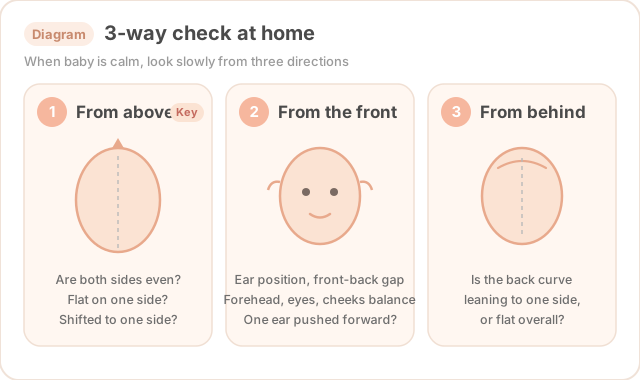
You don't need any special tools. When your baby is calm, look slowly from three directions.
- From above (the most important): Look down at the crown from over the top of your baby's head. Check whether the two sides of the back of the head are even, whether one side is flat, and whether the whole head looks pushed to one side.
- From the front: Facing your baby, look at the position of each ear and any front-back difference, both sides of the forehead, and the left-right balance of the eyes and cheeks. Whether one ear is pushed noticeably forward is a key point to check.
- From behind: Check whether the curve of the back of the head leans to one side, or looks flat overall.
These are also good things to watch for at the same time.
- Whether your baby always turns or lies with their head to the same side
- Whether they seem uncomfortable or quickly return when you turn them the other way
- Whether they often spend time with the neck tilted to one side (a sign of torticollis)
- Whether the asymmetry is more noticeable than it was a few weeks ago
Rather than judging from a single look, checking from the same direction every few days makes the direction of change easier to see.
What to do at each stage, by month
Head shape calls for slightly different priorities at different stages. Let's look at it in three broad periods. Below is a table summarizing the goal for each stage and what to keep an eye on at home.
| Age | Goal for this stage | Self-check at home | Worth trying now |
|---|---|---|---|
| 0–3 months | Notice flattening early | Observe from above, front, behind; whether they always lie the same way | Change lying and head direction; tummy time while awake |
| 4–6 months | Focus on posture care; consult if needed | Whether asymmetry persists or worsens; whether torticollis is present | Keep up posture care; see a doctor if it doesn't improve |
| 7–12 months | Ease the load as baby sits and moves | Degree of remaining asymmetry; face and forehead balance | Increase active time; decide next steps for any remaining asymmetry with a professional |
Let's unpack it a little more.
1. 0–3 months — noticing early is half the battle
At this stage, noticing the asymmetry early is a big help in itself. When it's caught before three months, it often improves just by changing your baby's position, since the skull is still soft. Frequently change the lying and head direction, and gradually build up tummy time while your baby is awake.
2. 4–6 months — focus on posture care, and consult if needed
This is the stage to keep up posture care steadily. If the asymmetry stays the same or even worsens around this time, it's better to have it checked at a pediatrics or rehabilitation clinic than to keep watching on your own. This period also overlaps with when helmet therapy — which we'll talk about later — is considered.
3. 7–12 months — the load eases as baby moves on their own
As your baby starts to sit, crawl, and move, the load that used to fall on just one side of the back of the head naturally eases. At this stage, giving them more active time helps. That said, how to view any remaining asymmetry varies from baby to baby, so it's best to decide the direction together with a professional for anything that concerns you.
Posture care you can try at home
Even without special equipment, simply changing directions in everyday life can help.
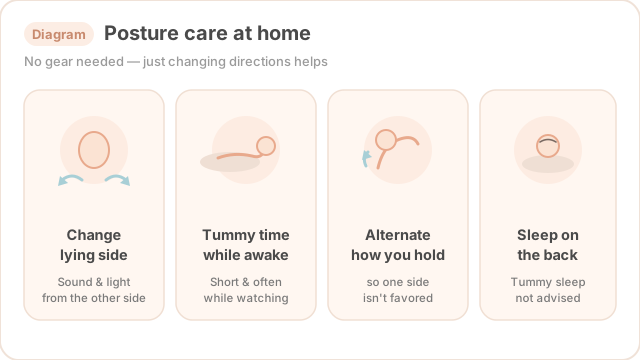
- Change the lying direction: If your baby keeps looking to one side while sleeping, change the crib position or the way you lay them down so their interest is drawn to the other side. Try having interesting sounds and lights come from the opposite side too.
- Tummy time while awake: When your baby is awake and you can watch them, give them short, frequent stretches of tummy time. It eases the pressure on the back of the head and helps build neck strength. If your baby keeps waking whenever you put them on their back, you might also find the baby who wakes when you put them down: building sleep habits helpful.
- Change how you hold them: When feeding or holding your baby, always using the same position sends stimulation to just one side. Alternate the direction.
- Sleeping position: Put your baby to sleep on their back (tummy sleeping isn't recommended), and balance things out by easing the pressure during awake time. If your baby was sleeping well but suddenly keeps waking, reading Wonder Weeks: when a good sleeper suddenly wakes and fusses together with this may help.
One note here: head-shaping pillows, such as donut-shaped ones, can't really be said to have a clear effect, and in some cases they're not recommended in a newborn's sleep environment. It's safer to talk with a professional before using one.
When is helmet therapy considered?
When posture care alone doesn't improve things enough, the next thing that comes up is a head-shaping helmet. Having a sense of the timing can ease the pressure.
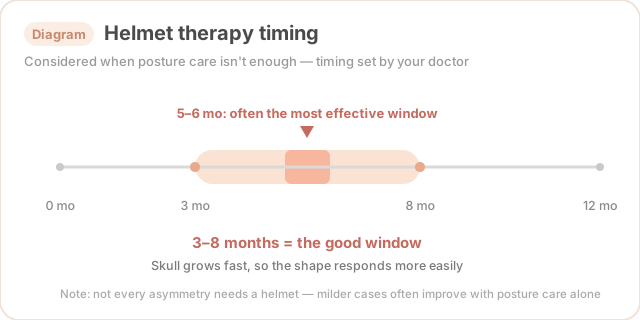
Helmet therapy is usually considered to fit best between about 3 and 8 months. Within that, around 5–6 months is often described as the window where you can most hope for results, because it's easier to shape the head while the skull is growing quickly. Conversely, well past this stage, growth slows and the effect is said to diminish.
That said, not every asymmetry needs a helmet. Milder cases sometimes improve with posture care alone, so rather than "a helmet first, no matter what," it comes first to judge based on your baby's condition. Whether a helmet is warranted, and when to start, is best decided through a medical exam.
Head-shape changes are easy to miss by eye alone
Looking at the head shape every day can actually make changes harder to notice, because today looks much like yesterday. That's why keeping photos from the same angle every few days to a few weeks makes it far clearer whether things are improving or worsening. Taking the front, top, and back — three directions — in the same position is a good approach.
Keeping this kind of regular record as growth photos in Babyfolio lets you compare head-shape photos from each stage in one place, and it's handy as a reference at medical visits too. A record doesn't replace a diagnosis, but it becomes an extra pair of eyes that helps you not miss the changes.
See a professional in these cases
Most positional asymmetry can be watched with posture care, but if you see the signs below, check in with a pediatrics or rehabilitation clinic.
- The asymmetry keeps getting more severe even when you change position
- The neck is tilted to one side, or turning it the other way is difficult (suspected torticollis)
- The asymmetry is clearly visible in the forehead and face, not just the back of the head
- The head shape changes suddenly, or the suture-line area feels or looks unusually raised
- There's no response to posture care even past 4–6 months
In particular, whether there's a medical cause is hard to judge at home. If any of these signs are present, or the worry continues, having a professional take a look — rather than just watching — brings peace of mind and helps you not miss the window.
Frequently asked questions
I'm worried about the flat spot — can I put my baby to sleep on their tummy? Sleeping on the back is what's recommended. If flattening worries you, rather than changing the sleep position, it's better to balance things out with tummy time while awake and by changing the lying direction.
Do head-shaping pillows (donut pillows) work? It's hard to say they have a clear effect, and in some cases they aren't recommended in a newborn's sleep environment. It's safer to talk with a professional before using one.
Once it's flattened, does it stay that way for life? Not necessarily. Much of skull growth happens before the first birthday, so caring for position during this stage often leads to improvement. That said, it varies from baby to baby.
I noticed it late — my baby is already 7 months. Is it too late? Please don't be too hard on yourself. It just means the approach shifts by stage. What you can do from where you are now varies from baby to baby, so it's best to decide the direction together with a professional.
To wrap up
Positional asymmetry, where one side of the back of the head gets pressed flat, is common and often improves when noticed early and you change your baby's position. At home, look from three directions — above, front, and behind — and check whether your baby always lies the same way and whether there are signs of torticollis. Within the pre-first-birthday window when the skull grows quickly, steadily keeping up changing the lying direction and tummy time is the key.
If the asymmetry keeps getting more severe, the neck tilts to one side, or the asymmetry is clearly visible in the forehead and face, that's when to check in with a pediatrics or rehabilitation clinic. A self-check isn't about reaching a verdict — it's a compass that helps you sense when it's a good time to get help.