Newborn Head Shape Care | Keep the Back of the Head Round Without Spending (Tummy Time & Position Routine)
Head shape care for newborns you can do at home, without a head-shaping pillow or helmet. Covers how to do tummy time, a routine for varying position and direction, safety precautions, and the signs that mean you should seek advice.
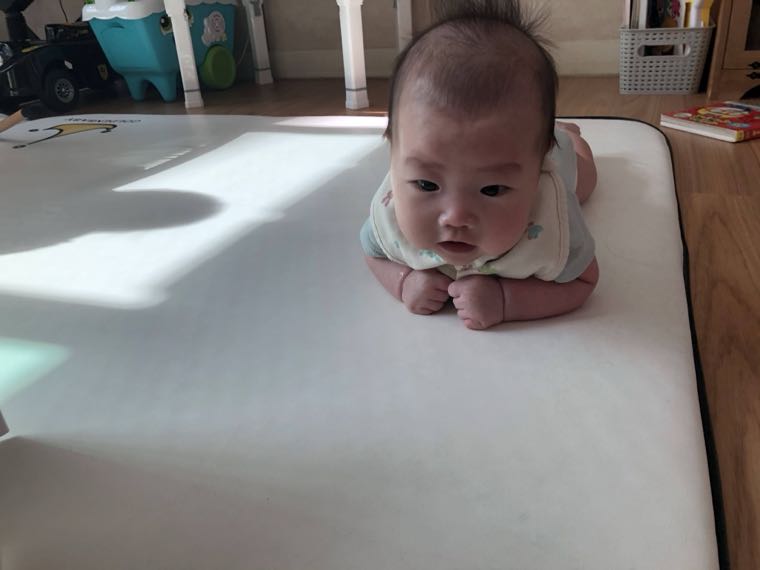
When you lay your baby down to sleep, one day you might notice that one side of the back of their head has gone a little flat, and it can be worrying. Search online and you'll find everything from head-shaping pillows to corrective helmets, but the prices make you hesitate.
Let's start with the reassuring part. Positional plagiocephaly, the flattening of one side from pressure, can often be prevented or improved at home simply by varying your baby's position, without spending anything. Especially if you catch it early, roughly before three months, position care alone may go a long way. The key is just one thing: keep the same spot from being pressed for too long by spreading the pressure around. Let's walk through how to do that, one step at a time, from tummy time to changing directions.
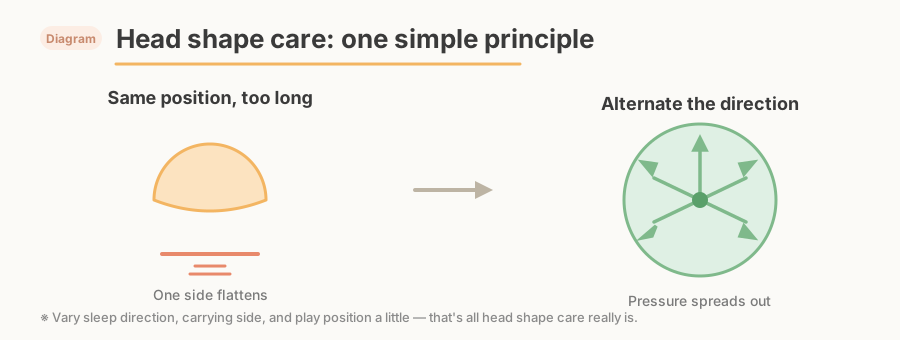
Why does only one side of the head flatten?
A baby's skull is still soft and growing quickly, so when one side is pressed for a long time, that area gradually flattens into the shape it's pressed against. This is called positional plagiocephaly. It tends to happen when a habit builds up of always lying the same way or turning the head to one side.
That's why the care principle is simple too. Keep any one spot from being pressed continuously by changing where the pressure falls, that's really all there is to it. Varying the sleep direction, the carrying side, and the play position spreads the pressure on the head across different places.
There's one thing worth distinguishing. Sometimes it's simply a habit of lying to one side, but sometimes it comes with torticollis, where the neck muscles tighten on one side and the head keeps tilting the same way. In that case, changing position alone may not correct it, so please be sure to check the "signs that you should seek advice" below.
Four things you can do at home
Here are four methods you can start today without spending money. Rather than doing just one, weaving several into daily life helps spread the pressure evenly.
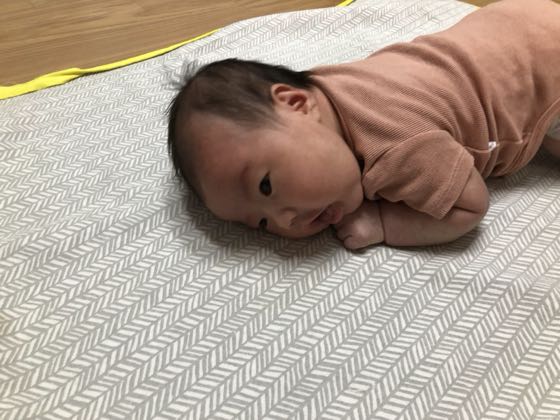
1. Tummy time — playing on the belly while awake
Tummy time is time your baby spends lying on their belly and playing while awake. While on their tummy, no pressure falls on the back of the head, and it builds neck and shoulder strength, which later helps them turn their head on their own. It's the most basic part of head shape care.
You don't need to do it for long from the start. In the early weeks, start with short sessions of about 3 to 5 minutes, 2 to 3 times a day, and as your baby gets used to it, gradually build up toward a goal of about 30 to 60 minutes total per day. If your baby dislikes it, splitting it into frequent 1 to 2 minute bits is fine too. How to do it safely is gathered separately below.
2. Changing the sleep direction and head direction
If your baby always sleeps with their head to the same side, gently encourage the pressed side to face up. Babies tend to turn their head toward sound and light. So if you reverse which way you lay them in the crib every few days, they'll naturally turn their head the other way toward something of interest, like a door or a window.
It's not about forcing the head around and holding it in place, but about changing the environment so your baby wants to look the other way on their own.
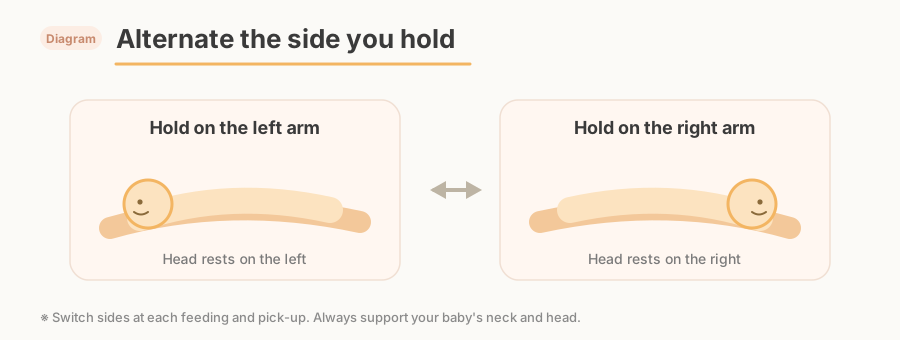
3. Changing the carrying side and feeding position
Alternating direction when you hold and feed helps too. Always holding with the same arm can make a baby's head tilt to one side. Alternating left and right when feeding, and switching sides when you pick your baby up, helps the neck move evenly on both sides.
When you change the feeding position, support the neck and head well so your baby's head doesn't fall backward.
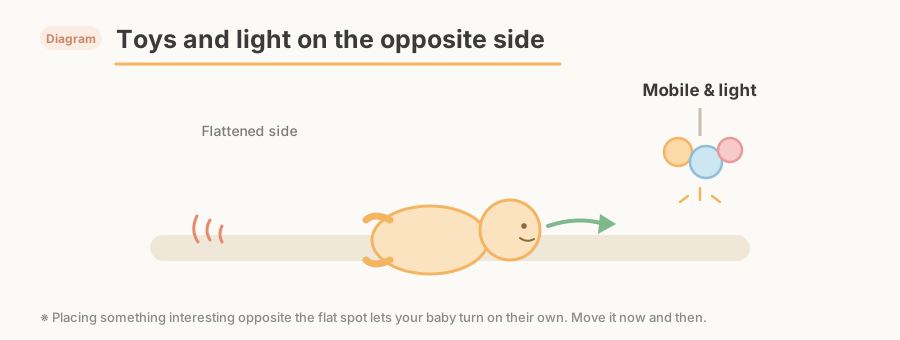
4. Drawing attention to the opposite side with toys and light
When your baby plays lying down, placing a mobile, a rattle, or a soft light on the side opposite the flat spot leads them to turn their head that way. Occasionally moving the point of interest, so they aren't looking the same way all day, helps spread the pressure on its own.
During awake play on their back, too, showing your face from the side opposite the flat spot and talking to them naturally draws the head that way.
All the methods at a glance
| Method | When | How | Don't forget |
|---|---|---|---|
| Tummy time | Awake and in a good mood | 2–3 times a day, from 3–5 min → 30–60 min | Caregiver watches close by |
| Sleep direction | Every few days | Reverse which way you lay them | Draw the head toward interest |
| Holding & feeding | Every feed and pick-up | Alternate left and right | Support the neck and head |
| Toys & light | Awake play time | Place opposite the flat spot | Move the spot often |
How to do tummy time safely
As effective as it is, you must follow the safety rules. Because it involves placing your baby face down, please keep these four without exception.
- Only while awake. Once your baby falls asleep, always place them on their back. Sleeping face down is linked to the risk of sudden infant death, so never leave your baby on their tummy while sleeping.
- A caregiver must keep watching close by. Don't step away even for a moment. If your baby buries their face in the surface or seems to struggle, turn them over and pick them up right away.
- Use a firm, flat surface. Soft bedding, cushions, or a sofa are dangerous because the face can sink in and breathing can be blocked. A floor with a thin mat or blanket is best.
- Avoid doing it right after a feed. Pressure on the belly can cause spit-up. Some time after a feed, when your baby is in a good mood, is better.
If your baby fusses badly, don't push it, just wrap up quickly. What matters is getting a little used to it each day, not doing it for a long time in one go.
Keeping a record makes the change visible
The head shape changes a little each day, so watching up close can actually make the change hard to notice. That's when photos taken from the same angle help. Regularly keeping a top-down view and a side view lets you see with your own eyes how much the pressed side has come back, which gives you the drive to keep going. Saving head shape photos by date in Babyfolio makes it easy to compare the before and after side by side.
When you should seek advice
Home care often helps, but if you see the signs below, have it checked at a pediatric or rehabilitation medicine clinic. These are moments when a professional's eye is needed rather than judging on your own.
- Even after changing position, the head keeps tilting to one side or doesn't turn well to the other side (torticollis may be present)
- Even as you keep up position care, the asymmetry keeps getting worse, or the position of the face and ears becomes noticeably skewed
- Past 3 to 4 months of age, the pressed area shows little change
- Along with the head shape, there are signs of slow development or other concerns
For severe asymmetry that doesn't settle with position care alone, a corrective helmet consultation is sometimes suggested around 3 to 8 months of age (especially 5 to 6 months). Whether it's needed is safest decided through a medical exam.
Frequently asked questions
Do I have to buy a head-shaping pillow? Opinions are divided on head-shaping pillows with a dip in the middle. Above all, laying a newborn on a soft pillow is not recommended because of the risk of suffocation and sudden death. For head shape care, changing the position and direction while awake comes before any pillow.
My baby is already six months old, is it too late to start now? Every baby is different, so it's hard to say for certain. That said, the effect of position care tends to be greater while the skull is growing quickly, so if you're worried, keeping up position care while having the condition checked once at an exam is a good idea.
Does head massage help? Massage that presses on the skull with your hands to change its shape is not recommended. A baby's skull hasn't hardened yet, so it shouldn't be pressed carelessly. Approach care through a position routine that spreads the pressure, rather than massage.
To sum up
One side of the head flattens because of staying in the same position too long. So caring for it isn't hard either. While your baby is awake, ease the pressure on the back of the head with tummy time, and spread the pressure by alternating the sleep direction, the carrying side, and where you place the toys. Do tummy time only while awake, watching close by, on a firm surface, and not right after a feed.
Keeping it up may help, but the pace differs from baby to baby. If the head keeps tilting to one side or the asymmetry gets worse, don't hesitate to talk with a pediatrician then.
If head shape care means you end up holding your baby more often, you might also find A baby who only sleeps when held: building sleep habits helpful. And if you're wondering about a cushion to use during play, it's worth reading Do you really need an anti-reflux cushion? as well.