Do newborn head-shaping pillows work? What pediatrics really says
Do head-shaping pillows really round out the head? We cover the evidence for the shaping effect, the suffocation risk during sleep, and what to do instead — positioning, tummy time, and when it's worth seeing a pediatrician.
When one side of your baby's head looks a little flat, it's easy to feel anxious. Search for it and one thing almost always comes up: the head-shaping pillow, sometimes called a doughnut pillow. And the promise that "just this one thing will round out the back of the head" leaves you wondering whether to buy it.
Let's start with the takeaway. There doesn't seem to be clear medical evidence that a head-shaping pillow actually reshapes the back of a baby's head. What matters more, arguably, is safety: using a soft pillow during sleep is generally not recommended because of the suffocation risk.
So does that mean there's nothing you can do when you're worried about head shape? Not at all. There are things you can try at home without spending money. Let's walk through the misunderstandings around head-shaping pillows, and then what may actually help.
Does a head-shaping pillow really round out the head?
The usual explanation is that resting the head in a dip in the center spreads out the pressure and helps the head take shape. But the evidence behind this shaping effect appears to be weaker than many assume.
A newborn's skull is still soft and grows quickly. A flat spot that developed from a habit of lying to one side often tends to improve on its own once the baby starts holding their neck up and changing position. What seems to matter most for head shape is not a pillow, but this growth and change in position.
Health authorities abroad take a similar view. The U.S. Food and Drug Administration (FDA) has advised against using pillows meant to shape the head, saying their effect is not proven and that they carry a risk of suffocation and infant death. This isn't a claim that any one product is bad; it's a general safety warning about this category of pillow.
To sum up: there isn't yet evidence to say for certain that a head-shaping pillow will round out the head, and on the safety side there's actually reason for caution. So before "should I buy one," the first thing to look at is the sleep environment.
Why isn't a pillow recommended during sleep?
The biggest reason is the risk of suffocation and sudden infant death syndrome (SIDS). If a baby who can't yet turn their head freely ends up with their face buried in something soft, a dangerous situation can arise.
So there are a few principles for baby sleep.
- Place babies under 1 flat on their back to sleep.
- The sleep surface is better firm and flat, not a soft mattress.
- Keep things like pillows, blankets, cushions, toys, and bumpers out of the sleep space.
In fact, one national review found that many infant sleep products on the market fell short of suffocation-risk standards. The softer and cozier a product looks, the more worth double-checking this point. For the same reason, if you're weighing whether to use a cushion during sleep, you may also want to read Do you really need an anti-reflux cushion?
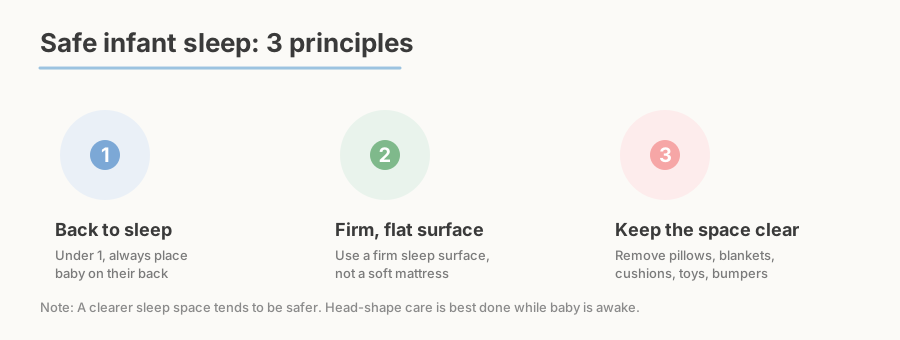
Just remember one thing. The clearer the sleep space, the safer it tends to be. However much you may want to lay something down or prop the head up out of concern for its shape, it's the safer direction not to do so during sleep. Caring for head shape is enough to do while your baby is awake.
So what can you do when you're worried about head shape?
The key is to ease the pressure that keeps falling on one side. Even without any special tools, simply paying attention to everyday positioning may help. Try it while your baby is awake and an adult is watching.
1. Alternate which way the head faces
Babies tend to turn toward the brighter side or the side where sound is coming from. So if you always lay them down the same way, the same side tends to get pressed. When you put your baby in the crib, try alternating the head-and-foot direction, and move the mobile or lighting around now and then.
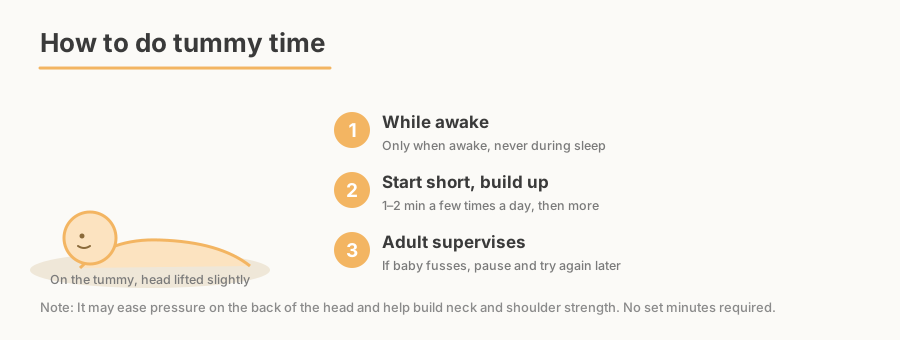
2. Do tummy time
This is a stretch of time while your baby is awake when you place them on their tummy on the floor. It eases pressure on the back of the head and helps build neck and shoulder strength. Start short, about 1 to 2 minutes a few times a day, and build up little by little as your baby gets used to it. There's no set number of minutes to reach; if your baby struggles, stop and try again later.
3. Increase holding time
While your baby is being held, there's no pressure on the back of the head. Simply alternating which side you hold them on during feeds, and changing position often so they aren't lying down for long stretches, can help reduce pressure building up on one side.
As you spend more time holding your baby while they're awake, you may find yourself worn out by a baby who wakes the moment you set them down. You may find it helpful to also read How to help your newborn build sleep habits.
Instead of a head-shaping pillow, what's worth doing?
Here's a quick comparison. We've laid out the methods that often come to mind when you're worried about head shape, alongside the direction that's actually recommended.
| Situation | Try this | Not recommended |
|---|---|---|
| During sleep | Back to sleep · firm surface · clear the space | Propping with a pillow or cushion |
| While awake | Tummy time · holding · changing direction | Lying in one position for long stretches |
| When worried about head shape | Positioning first · see a pediatrician if marked | Rushing to buy an expensive product first |
As the table shows, positioning comes before any method that costs money. This is a point pediatric specialists have emphasized, and it's advice commonly shared by doctors who deal with head-shape care.
If flat head is marked, should you see a doctor?
When one side is pressed and the head looks asymmetrical, it's called positional plagiocephaly. It appears in some infants, and when caught early it often improves with positioning alone. So in most cases it tends to be fine to watch at home while paying attention to positioning.
That said, when it's marked or doesn't improve with positioning, the picture changes. In that case, the evidence-based approach is not a pillow but a corrective helmet. It's understood to be more effective when started during the window when the skull grows quickly, roughly 3 to 8 months (especially 5 to 6 months). But a helmet is an approach that needs a professional diagnosis and prescription, so rather than deciding on your own, it's best to decide through a pediatrician or related care.
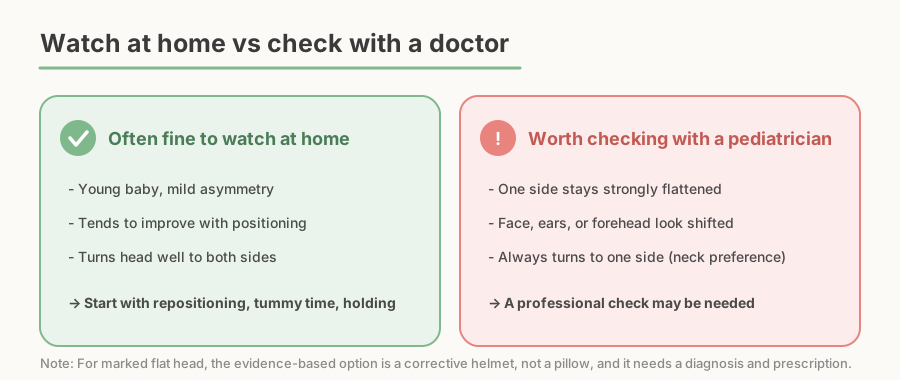
Let's separate out when it may be fine to watch and when it's worth checking. If your baby is still young and the asymmetry is mild, start with positioning; if over time one side stays noticeably pressed, or the face and ears start to look shifted, have a professional take a look.
Recording head shape in photos makes it less confusing
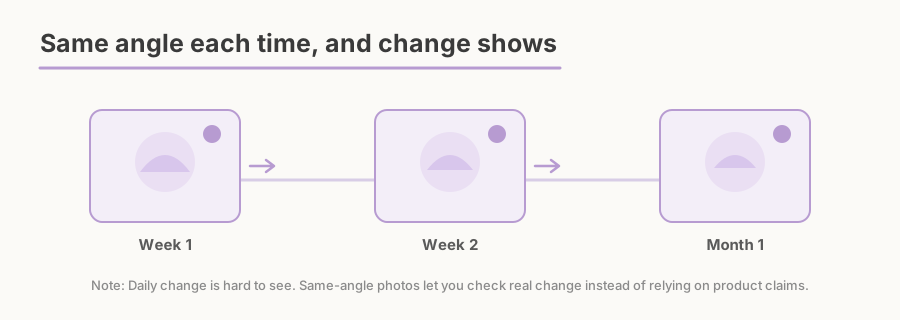
Head shape is hard to see changing for someone who looks at it every day. That makes it easy to be swayed by "we used a pillow and it got better," but without something to compare against, it's genuinely hard to judge.
This is where keeping photos from the same angle each week or month helps. If you record growth photos over time in Babyfolio, you can compare by eye whether the back of the head is actually changing, which helps you check your own baby's real change rather than leaning on a product's claims.
When it's worth getting checked
Most head flattening improves with positioning, but if you notice the signs below, it's worth seeing a pediatrician.
- Over time, one side stays strongly pressed.
- The face, ears, or forehead start to look asymmetrical and shifted.
- Your baby always turns to one side and can't turn the other way well (when torticollis is suspected).
- Beyond head shape, the crown looks unusually pointed or angular.
In cases like these, there may be another cause beyond a simple positioning habit, so a professional check is worthwhile.
Frequently asked questions
Isn't a pillow filled with buckwheat or millet a bit better? Whatever the filling, placing a pillow under a baby's head during sleep is not recommended in itself. Ahead of the material comes the principle of "keeping the sleep space clear."
One side has already flattened. Can it be reversed? The younger the baby, the more room there tends to be for improvement with positioning. That said, the degree varies from baby to baby, so if you're worried, it's a good idea to have a pediatrician check the current state.
How long do I need to pay attention to head shape? Once your baby holds their neck up well and starts rolling over and changing position on their own, one-sided pressure tends to ease. Until then, often it's enough to simply change position frequently while they're awake.
To wrap up
There isn't clear evidence for the shaping effect that a head-shaping pillow is said to have on the back of the head. And a soft pillow during sleep is not recommended because of the suffocation risk. Instead, a safe sleep environment comes first: back to sleep, a firm surface, and a clear sleep space.
If you're worried about head shape, positioning comes before any product that costs money, things you can do at home like changing head direction, tummy time, and holding. If even so one side stays strongly pressed or doesn't improve, that's when it's worth talking to a pediatrician. There's no need to rush. In most cases, this is something that gets better as your baby grows.