Recording Life With Twins — How to Keep Their Photos From Getting Mixed Up
With twins you're raising two babies at once, so keeping records feels especially heavy. Here's a calm take on keeping their photos unmixed, fair, and low-effort, using per-child albums and one-tap uploads.

When you're raising twins, the day slips by before you know where it went. You finish feeding one and the other starts crying; you finally get one down and the other wakes up. Trying to capture photos in the gaps, two hands never quite feel like enough.
Here's the gist first. The three challenges parents run into most with twin records are these: photos get mixed up so you can't tell later who was who, you worry one child is being photographed far more than the other, and you keep comparing the two babies' development. That's exactly why it pays to record them separately from the start, fairly, and with less pressure.
In this article we'll walk through why twin records feel especially heavy, and specific ways to keep the two babies' photos from getting mixed up. If you're thinking “I'm dumping everything into one folder right now, is that okay?”, this should be especially helpful.
Why twin records feel especially heavy
The biggest reason is that your hands are always split between two babies. While you're caring for one, the other's moment passes by, and by the time you lift the camera the expression is already gone. The windows for recording are far fewer than with one child. So the same worries keep coming back.
The first is that photos get mixed up. Especially when they're identical or look alike, just a few months later you start second-guessing: “Was this the first one or the second?” You knew for certain that day, but as time passes there comes a moment when even you can't tell them apart.
The second is the pressure to be fair. You wonder whether the camera has drifted toward one child, or whether one album will be full while the other looks empty when you open it later. Loving both babies equally, it's only natural to want the records to be even too.
The third is the anxiety that comes from comparing. With two babies born the same day side by side, you can't help noticing who rolled over first or who babbled first, even when you never meant to compare. We'll come back to this one separately later.
Twin records: a few habits that make it much easier
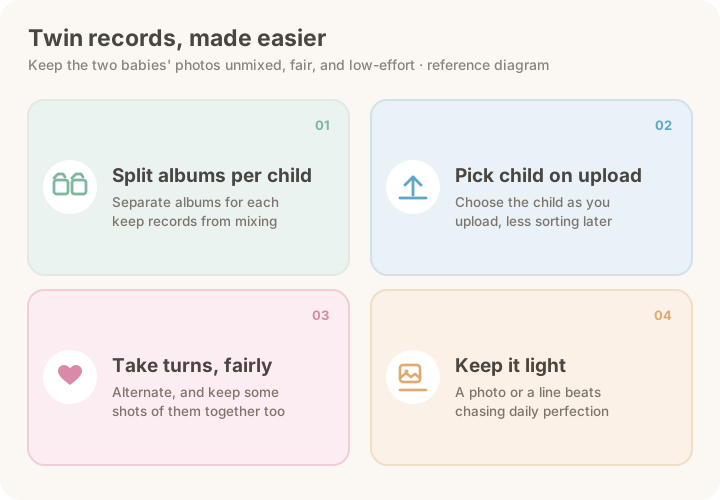
To sum up, there are four approaches: sort by child, pick the child as you upload, take turns fairly, and keep it light. The first two solve the mixing problem; the last two ease the pressure of keeping it up fairly over time.
1. Sort by child from the very start
The surest approach is to store each baby's records separately. Piling everything into one folder is easy for now, but later you end up retracing “who is this photo?” Giving each child their own place shrinks that worry from the outset.
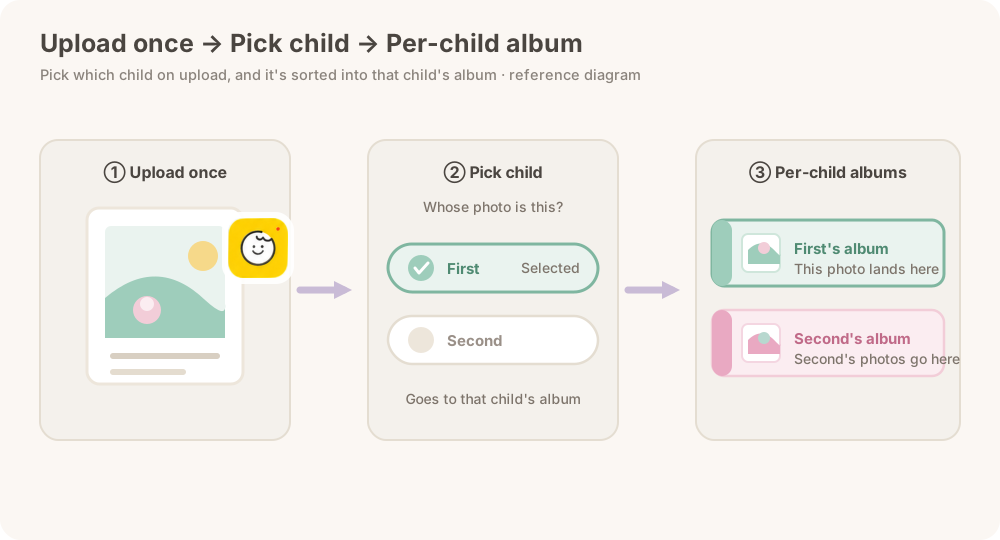
Babyfolio lets you create an album for each child, so you can keep a first-child album and a second-child album separately and sort each one's photos into their own. Because the two babies' records don't mix, you're less likely to wonder “whose photo is this?”, and it's easy to look back on just one child's growth later.
2. Upload once, and pick which child
On days when both babies' photos pile up at once, just sorting them feels daunting. In that case it helps to decide the child at the upload stage. This ties into the albums we just mentioned: because you can pick which child in a single upload, you can send each photo straight to that child's album as you upload. That cuts down on moving and separating things afterward.
If uploading photos itself feels like a chore, you can add them straight from the screen you're already looking at, without opening the app separately.
3. Be fair, and keep shots of the two together
A small habit helps you record both babies evenly. Consciously take turns: this baby today, that baby tomorrow. You don't need a perfect fifty-fifty, but even a little attention to not leaning one way fills both albums much more evenly over time.
It's also nice to occasionally keep shots of the two together. Moments of looking at each other, sleeping side by side, and other scenes only twins can give you. These become a record of the two babies' relationship, different from their individual albums.
4. Not perfect every day, even one photo or one line
Parents of twins are especially prone to burning out under the thought that “I have to record both just as carefully.” But keeping it up lightly with even one photo or one line lasts longer than aiming for perfect every day and giving up after a few.
On days too busy to write, even a short one-line note is enough of a record. For what and how to jot things down, we've gathered templates in easy baby-diary formats and examples.
Here's a table so you can take in everything so far at a glance.
| Worry | Try this | Why |
|---|---|---|
| I can't tell later whose photo it is | Sort into per-child albums | The two records don't mix |
| Sorting the piled-up photos is daunting | Pick the child on upload | Less need to move them later |
| Only one child gets photographed a lot | Take turns, and keep together shots | Both albums fill up evenly |
| Recording every day is too much | Even one photo, one line, lightly | You won't burn out, it lasts |
Not comparing, but at each one's own pace
Raising twins, there are many moments when you find yourself looking at the two side by side. So your eyes naturally go to who rolled over first, who got a tooth first. But even born the same day, the two babies' development and growth can move at different paces. It's common for one to go a little faster and the other a little slower.
So rather than making the record a contest of “who did it first,” we suggest keeping each baby's own ‘first’ in its own place. The day this one first smiled and the day that one first sat up may be different days, and each is a precious moment. Looking at each one's own flow instead of measuring them against each other eases the anxiety a bit and lets you see what's uniquely lovely about each baby.
Twins in particular are not rarely born earlier than their due date, so when looking at development some parents use corrected age rather than the birth date as a reference. If the pace of growth especially worries you, rather than judging on your own, see signs to watch when your baby's development seems delayed for how to look at developmental signs and when to seek advice, and if the worry continues, check with your pediatrician.
Frequently asked questions
Can't I just keep all the twins' photos in one folder?
For now that's the easiest. But over time it often gets hard to tell whose photo is whose, so sorting by child from the start saves you the trouble of retracing later. If they're already mixed, it's not too late to start sorting from now.
Do the two babies need exactly the same number of photos?
They don't have to be the same. Some days one child gets photographed more, other days it's the reverse. Just taking turns now and then so it doesn't lean heavily one way lets both albums fill up naturally and evenly over time.
I'm worried one baby seems to be developing more slowly than the other.
Even with twins the pace of development can differ, and for babies born early some use corrected age. Still, if the worry continues or there's a sign that bothers you, it's best not to judge on your own but to check with your pediatrician.
To wrap up
The challenges of twin records tend to come down to three: photos get mixed up and confusing, keeping it fair weighs on you, and you keep comparing. All three grow much lighter with small habits: sort by child from the start, pick the child on upload, and take turns keeping it even.
And above all, rather than comparing the two side by side, please look at them at each one's own pace. One photo, one line you keep today will become each baby's own story of growing up. Rather than straining for perfect, we hope you'll keep it up lightly, as much as you can today.