What to do at home when a baby has a fever, the order and signs to see a doctor
We lay out what to do at home when a baby has a fever, in order: clothing, fluids, lukewarm wiping, deciding on a fever reducer, and watching. Dose by weight, and we include the signs — like a high fever under 3 months — that mean going to the doctor right away.
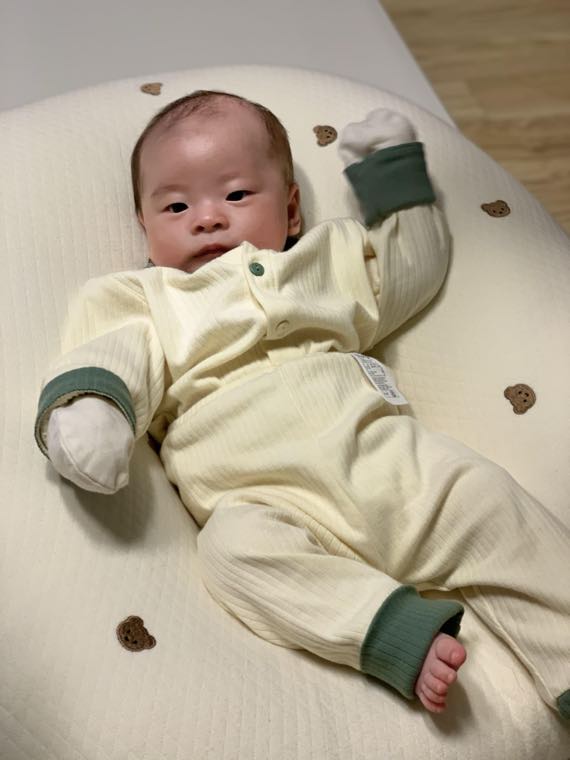
At night, when you touch your baby's forehead and it's hot, your mind goes blank. But what to do at home when a fever hits is simpler than you'd think. The order is: check the temperature → adjust clothing and room temperature → give fluids in small, frequent amounts → wipe with lukewarm water if needed → decide on a fever reducer if your baby is struggling → record and watch.
One thing to remember first, and your mind will ease a lot: a fever isn't the illness itself but closer to a sign that your baby's body is fighting an infection. So what we watch isn't a single number on the thermometer but how much your baby is struggling, and whether they feed and play well. Even above 38°C, if they play happily and drink water well it's not something to rush over; conversely, even when the number isn't high, if they're limp and won't wake, they need to be seen right away.
That said, if a baby under 3 months old has a fever of 38°C or higher, skip this order and get them seen right away. A fever at this age is, in itself, a sign that needs checking at a clinic. The steps below apply to older babies.
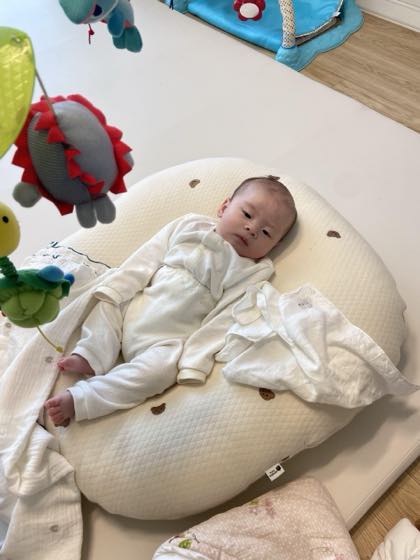
Step 1: reduce clothing and set the room temperature first
When a fever starts, first avoid bundling your baby up too much. Many people wrap them thickly thinking sweating brings the fever down, but heat can get trapped in the body and push the temperature higher instead. Dress them lightly in about a single thin layer, and keep the room neither too hot nor too cold.
However, when your baby is shivering with cold hands and feet — a "chill" — it's better to lay a thin blanket over them for a while. A chill is a sign the temperature is still rising, so forcibly stripping off all their clothes then can make them more uncomfortable. Once the shivering settles, lighten the layers again. There's one trick: adjust, moment to moment, toward whatever looks comfortable for your baby.
For reference, from what temperature counts as a fever varies a little by where you measured. If the thresholds by site are confusing, it helps to also read the fever thresholds by site article.
Step 2: give fluids in small, frequent amounts
What really matters during a fever is preventing dehydration. As the temperature rises, that much more water leaves the body, so just feeding well makes your baby far more comfortable. For a baby on breast milk or formula, offer it more often than usual, a little at a time. For a baby on solids, giving water or a baby rehydration drink in small, divided amounts works fine.
Rather than trying to give a lot at once, the trick is small amounts, often. Appetite drops sharply during a fever, so don't worry too much if they don't eat as much as usual. At times like this, drinking well comes before eating well. Whether the diaper is getting as wet as usual, and whether the lips and mouth are moist, are good gauges of whether fluids are enough.
Can I wipe them with lukewarm water?
You can, but only as a supporting measure. Gently wiping spots where large blood vessels run — the forehead, neck, armpits, and groin — with a lukewarm damp cloth leaves some babies feeling cooler for a while. The water just needs to feel lukewarm to the touch.
There are two things to keep to here. First, don't use cold or ice water. A sudden cold stimulus makes the body shiver and try to raise the temperature even more, backfiring. Second, never wipe with alcohol. Alcohol rubs were once recommended, but if alcohol is absorbed through a baby's skin there's a risk of poisoning or low body temperature, so it's no longer done.
And if your baby dislikes it and cries or struggles while you're wiping, stop right away. Forcing it on only tires them out more. It helps to think of lukewarm wiping as a "take it or leave it" support.
When and how do I decide on a fever reducer?
This is the step to be most careful with. To put the key point first, a fever reducer is used to help when your baby is struggling, more than for the fever number itself. Even with a fever, if they play and sleep well you don't have to give it; it's closer to something you use to make your baby comfortable when the fever leaves them limp, fussy, and unable to sleep.
Which fever reducers can I use?
The fever reducers commonly used for babies fall into two broad groups. Acetaminophen-type can be used from a relatively young age, while ibuprofen-type is generally recommended from 6 months of age. But which ingredient to use and when — especially the younger the baby — is safest not to decide on your own, but to discuss with a medical professional. As mentioned, for a baby under 3 months the rule is to be seen first, before giving a fever reducer yourself.
How is the dose decided?
This is where people get confused most. The dose of a fever reducer is decided by the baby's "weight," not "age." Even at the same age, weights differ a lot, so dosing by age alone can be too much or too little. Follow the weight-based guidance printed on the product's instructions and the guidance of a medical professional for the exact amount; this article won't set a specific dose or a figure like a number of milliliters. The basis differs from baby to baby, and asserting one carelessly is dangerous. When unsure, telling the pharmacy or pediatrician your baby's weight and having them confirm is the surest way.
One more thing: be sure to keep the minimum interval for the same ingredient. Giving it again sooner than the set interval because the fever won't come down can lead to an overdose. So writing down the ingredient and time you gave it greatly reduces mistakes.
Can I alternate two kinds?
Many people wonder about so-called "alternating" — using fever reducers with different ingredients in turn. It's used in some situations, but because it's a method where mistakes happen easily if you get the interval and dose wrong, we recommend doing it only after discussing with a medical professional, not on your own judgment. Avoid the "the fever won't drop, so let's alternate all sorts of things" approach.
Last, record and watch
Once you've given a fever reducer, the step now is to record the temperature and the time you gave it, and watch. Writing down how the fever rises and falls, the last time you gave medicine, whether your baby drinks water well, and whether they're urinating makes the next decision much easier. And if you do end up going to the clinic, this record is a big help to the medical team.
When a fever comes at night, you agonize over whether to go now or wait until morning. If none of the emergency signs below are present and your baby drinks water well and can fall asleep, it's often fine to watch until morning and then be seen. But if even one sign appears, move right away, whatever the time.
When to go straight to a clinic, or call emergency services
More important than the fever is your baby's condition. If even one of the following applies, don't lose time — get them seen, or if it's urgent to the point of no response, call emergency services.
| Situation | What to do |
|---|---|
| Under 3 months with a fever of 38°C or higher | See a doctor right away |
| A seizure with trembling or loss of consciousness (febrile seizure) | Call emergency services immediately; remember the seizure to describe it |
| Limp and hard to rouse, or weakly responsive | See a doctor / emergency right away |
| Labored breathing, or lips turning blue | Call emergency services immediately |
| Not feeding well with a sharp drop in urine, dry tears/saliva (dehydration) | See a doctor right away |
| Stays limp and worsens even after a fever reducer | See a doctor right away |
| Fever lasting many days, with a rash or severe fussiness | Seek advice at a clinic |
A febrile seizure is a truly startling moment the first time. Lay your baby on their side to keep the airway clear, put nothing in their mouth, and watch how long the seizure lasts and what it looked like to tell the medical team. When telling apart what illness is causing the fever is needed, the telling apart baby flu, cold, and COVID symptoms article can also help.
Things not to do when there's a fever
In the rush to bring a fever down fast, there are things that are easy to do but actually put your baby at risk. We've gathered them in one place, so please keep them in mind.
- Wiping the body with alcohol — if absorbed through the skin, there's a risk of poisoning and low body temperature.
- A cold or ice-water bath — the body shivers and tries to raise the temperature even more.
- Bundling up thickly to sweat it out — heat gets trapped and the temperature can rise further.
- Sharing an adult's fever reducer or cold medicine — it doesn't suit a baby's body and is dangerous.
- Giving it more often or in larger amounts than the instructions — going over the set interval and dose becomes an overdose.
- Dosing by age alone — always confirm by weight.
If the fever came after a vaccination, the response can be a little different, so we recommend also referring to the what to do for a fever after vaccination article separately.
Frequently asked questions
I gave a fever reducer but the fever won't come down. A fever reducer isn't a medicine that brings the temperature down "to normal," but closer to one that lowers it a notch or two to make your baby comfortable. If it comes down a little and your baby struggles less, it's done its job. Don't give it again before the set interval, and if they stay limp, get them seen.
Can I let them sleep with a fever? Sleeping well helps recovery. But even while asleep, watch whether they're breathing comfortably and aren't excessively limp. If they're weakly responsive or hard to rouse, it needs checking right away.
They won't eat at all. It's natural to have no appetite with a fever. Fluids come before food. Give water, breast milk, or formula in small, frequent amounts, and watch whether they're urinating well.
How many days does a fever last? It depends on the cause, so it's hard to say precisely. A fever from an infection often rises and falls over several days before gradually easing. What matters is your baby's condition more than counting days. If the fever drags on, or drops and rises again while they worsen, it's best to have the cause checked.
Can I alternate two kinds of fever reducer? We recommend doing it only after discussing with a medical professional, rather than on your own. Mistakes happen easily if you get the interval and dose wrong.
Should I go to the emergency room if a fever comes at night? If none of the emergency signs above are present and your baby drinks water well and can fall asleep, it's often fine to watch at home and be seen in the morning. But urgent signs like a high fever under 3 months, a seizure, or limpness mean moving right away, even at night.
To sum up
- Set clothing and room temperature first, and give fluids in small, frequent amounts — that's the start.
- Judge a fever reducer by your baby's condition, not the number, and dose by weight, following the instructions and medical guidance.
- Signs like a high fever under 3 months, a seizure, limpness, breathing trouble, or dehydration mean being seen right away, whatever the time.
A night with a fever feels long to anyone. But knowing the order, you can work through it one step at a time without panicking. Above all, look first at how your baby is doing, rather than the number on the thermometer.