Baby gastroenteritis: what not to do about diarrhea and vomiting — 5 myths about anti-diarrheals, fasting, and sports drinks
When a baby's gastroenteritis brings heavy diarrhea and vomiting, stopping it with an anti-diarrheal, fasting, or giving sports drinks can actually slow recovery. We correct five common myths with the facts and lay out the right approach — preventing dehydration with an oral rehydration solution (ORS) — plus the signs that mean you should see a doctor.

When your baby has diarrhea and keeps throwing up, it's natural to feel anxious. Many parents reach for an anti-diarrheal to stop it quickly, hold off on food to "rest" the gut, or pick up a sports drink from the pharmacy. But these familiar responses can actually slow recovery or put extra strain on your baby.
Here's the key point first. In infant gastroenteritis, the real goal is not "to stop the diarrhea" but "to prevent dehydration." More than the diarrhea and vomiting themselves, the danger is usually the water and electrolytes your baby loses along the way. So the focus of care should sit on "replacing what's lost," not on "stopping it fast."
In this article we'll walk through five myths parents often believe, one by one alongside the facts, then look at what to actually do, and finally which signs mean you shouldn't wait at home but see a doctor right away.
Why "preventing dehydration" comes before "stopping it"
Baby gastroenteritis is usually caused by a virus. Diarrhea and vomiting are partly how the body clears the germs and toxins, so forcibly stopping them isn't always helpful. What really deserves care is how fast a baby can become dehydrated in the meantime. The younger the baby, the larger the share of their body that is water and the smaller the reserve, so dehydration comes on much faster than in adults.
That's why, worldwide, the first-line approach for childhood gastroenteritis is oral rehydration therapy: giving small, frequent amounts of an electrolyte-balanced fluid (an oral rehydration solution, ORS) to replace the water and electrolytes that were lost. Rather than stopping the diarrhea with medicine, it prevents dehydration while the body recovers on its own.
To check at home whether your baby is dehydrated right now, Signs of dehydration in babies, and how to check at home covers cues like how often they urinate, the mouth, and tears in detail. This article focuses on the "myths of care."
What not to do — five common myths
Here are the five most common responses, along with why they're worth rethinking. The goal isn't to scare you: knowing "why" tends to help you stay a little steadier in a stressful moment.
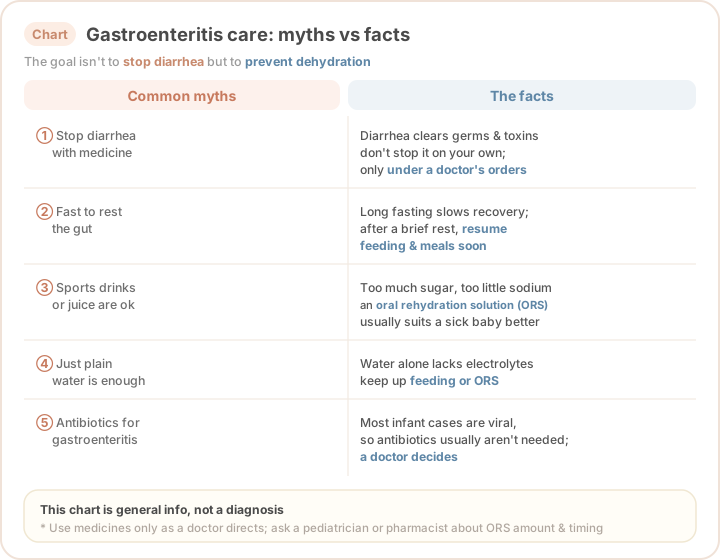
1. "Use an anti-diarrheal to stop it fast"?
When diarrhea is frequent, of course you want it to stop quickly. But for infants, the standard is not to use anti-diarrheal or anti-vomiting medicines casually. Diarrhea is part of how the body clears germs and toxins, so forcing it to stop can leave toxins sitting in the gut, which isn't ideal. Some anti-diarrheals also carry a risk of side effects in young babies.
So whether medicine is truly needed, and which one and how much, is decided only with a doctor's assessment and prescription. Rather than a parent deciding to give a pharmacy medicine, it's usually safer to focus on preventing dehydration.
2. "Fast to let the gut rest"?
When a baby is vomiting and having diarrhea, it can feel like you should give nothing and let the gut rest. But long fasting tends to slow recovery. A baby's gut needs to keep being fed to get the nutrition and energy it needs to recover.
Only in the early stage of heavy vomiting is it worth resting the stomach briefly (about 15–20 minutes); after that, resuming breast milk, formula, or usual meals as soon as possible usually helps recovery. Feeding only rice porridge or thin gruel for days can leave a baby short on nutrition, so it's better to return to normal meals.
3. "Sports drinks or juice will do"?
It's easy to think of a pharmacy or convenience-store sports drink, but off-the-shelf sports and isotonic drinks aren't a good fit for correcting a sick baby's dehydration. They have too much sugar and too little of electrolytes like sodium, so they don't properly replace what's been lost. Sugary drinks like fruit juice or soda can actually pull water into the gut and make diarrhea worse (osmotic diarrhea).
What fits here is an oral rehydration solution (ORS), with electrolyte and sugar concentrations balanced for a child. Infant oral rehydration solutions are available at pharmacies, so ask your pharmacist which product to use and how.
4. "Just plain water, often, is enough"?
On the flip side, some parents diligently give only plain water. Water is needed too, of course, but water alone can't replace electrolytes like sodium that are lost along with diarrhea and vomiting. In severe cases the electrolyte balance can be thrown off.
So instead of water alone, it's better to keep up breastfeeding or formula, or use an oral rehydration solution to replace fluids and electrolytes together. If you're breastfeeding, keep nursing as usual and add an oral rehydration solution when needed.
5. "Gastroenteritis needs antibiotics"?
Gastroenteritis makes people think of antibiotics, but infant gastroenteritis is usually caused by a virus, so antibiotics generally aren't needed. Antibiotics help only in specific cases, such as bacterial gastroenteritis, and that judgment is made through a medical visit. Please avoid giving leftover antibiotics from home on your own.
So what does the right approach look like?
The heart of it is really one thing: replace fluids with electrolytes, in small amounts, often, and return to usual food as soon as possible. Giving a lot at once can startle the stomach and trigger more vomiting. That's why frequency matters more than volume.
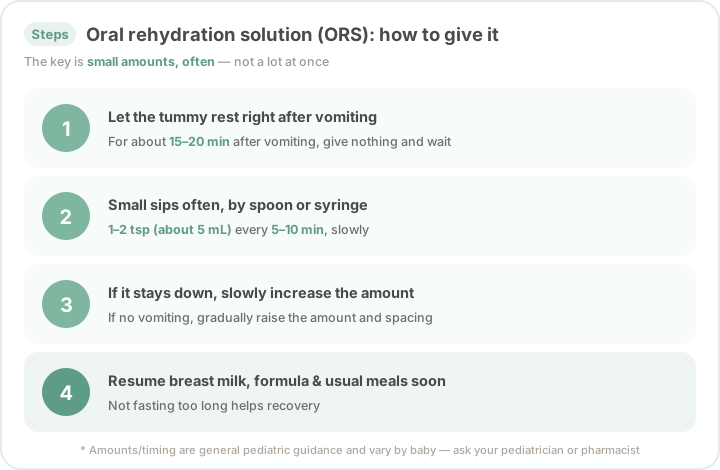
- Rest briefly right after vomiting: for about 15–20 minutes after a vomit, give nothing and let the stomach rest.
- Small amounts, often: then, with a spoon or syringe (no medicine), give 1–2 teaspoons (about 5 mL) at a time, slowly, every 5–10 minutes.
- Increase gradually: if it stays down without vomiting, slowly raise the amount and spacing.
- Resume usual feeding: once your baby takes it fairly well, restart breast milk, formula, or usual meals as soon as possible.
The amounts and timing here (1–2 teaspoons, every 5–10 minutes, and so on) are general guidance from pediatric sources. They can vary with your baby's age, condition, and degree of dehydration, so ask your pediatrician or pharmacist to tailor how much to give.
Vomiting and gastroenteritis diarrhea can be easy to confuse. If you'd like a broader look at why a baby keeps spitting up, Why a formula-fed baby keeps throwing up is worth reading too. Some illnesses can also make a baby's mouth so sore that they eat poorly and slide toward dehydration, so it's worth watching feeding closely whenever your baby seems reluctant to eat.
When to see a doctor right away
Sometimes you can watch at home while replacing fluids, but if you see even one of the signs below, don't delay — go to a clinic or the emergency room. It may be a sign that dehydration has already set in or that something else is going on.
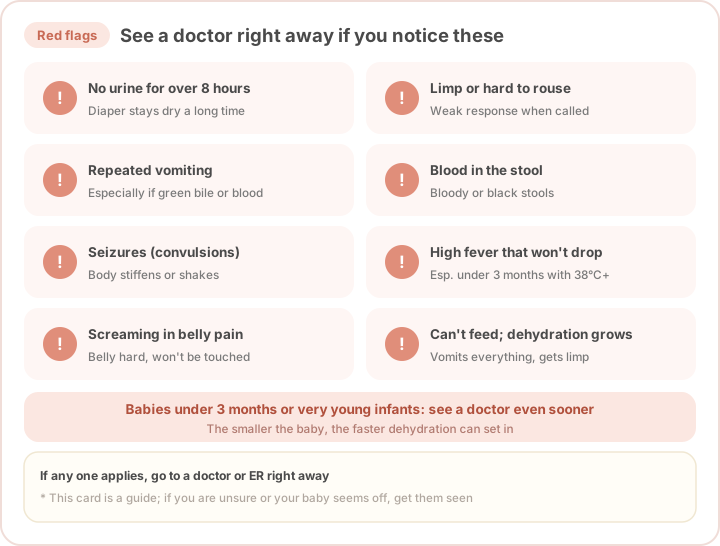
- No urine for more than 8 hours (the diaper stays dry for a long time)
- Limp or drowsy, with a weak response when called
- Repeated vomiting, especially if it contains bile (green) or blood
- Blood in the stool or black stools (bloody stool)
- Seizures (convulsions)
- A high fever that won't come down, especially a fever of 38°C or higher in a baby under 3 months
- Severe belly pain with inconsolable crying, or a hard belly they won't let you touch
- Unable to keep feeding, vomiting up everything, with dehydration progressing
Babies under 3 months, or very young infants, should be seen even sooner — even if these signs aren't obvious. The smaller the baby, the faster dehydration can progress. Even if things don't fit this list exactly, it's usually safer to have your baby seen if they seem clearly different from usual or you're unsure.
Frequently asked questions
I don't have an oral rehydration solution at home right now. What should I do?
You can get an infant oral rehydration solution at a nearby pharmacy. If it's hard to get one right away, keep up breastfeeding or formula in small, frequent amounts, and rather than substituting sports drinks or juice, prepare an oral rehydration solution as soon as you can. If you see signs of dehydration, don't wait — see a doctor.
The diarrhea keeps going — how many days can I watch it?
Viral gastroenteritis often improves gradually over several days. But the signs of dehydration and your baby's overall condition matter more than a specific number of days. If your baby feeds well, urinates, and is lively, you can watch; but if you see the red flags above or your baby grows more listless, see a doctor regardless of how long it's been.
Can I give probiotics or "good for gastroenteritis" products during diarrhea?
The evidence and suitable age vary by product, and some may not fit your baby's condition. Rather than giving various things on your own, it's safer to confirm whether they're needed and what to use through a medical visit or a pharmacist. This article doesn't recommend any specific product.
I'm breastfeeding — should I stop during diarrhea?
No. Breastfeeding usually helps recovery when continued. Keep nursing as usual, and if you're worried about dehydration, lean toward adding an oral rehydration solution.
To sum up
The heart of caring for baby gastroenteritis is not "stopping the diarrhea" but "preventing dehydration." Forcing it to stop with an anti-diarrheal, fasting for a long time, getting by on sports drinks, juice, or plain water, or giving antibiotics on your own can all slow recovery or strain your baby.
Instead, resting briefly right after vomiting, then giving an oral rehydration solution in small, frequent amounts and resuming breast milk, formula, or usual meals as soon as possible is the safe direction confirmed so far. Whether medicine (anti-diarrheals or antibiotics) is needed, and how much oral rehydration solution to give and how, can be tailored to your baby with your pediatrician or pharmacist. And if there's no urine for more than 8 hours, or your baby is listless with vomiting, bloody stools, or seizures, don't tough it out at home — see a doctor right away.