Baby dehydration signs: how to check at home with diaper, pee, tears and the soft spot
How can you tell at home whether your baby is dehydrated? Here's how to check point by point — pee and diaper, lips, tears, the soft spot, skin elasticity, and hands and feet — plus the signs that usually mean seeing your pediatrician right away, based on official health information.

In the middle of summer, or when your baby has diarrhea or vomiting, the worry "could this be dehydration?" tends to creep up fast. But it's hard to tell whether it's serious enough for a doctor or okay to watch a little longer, and that uncertainty just makes you anxious.
There are a few dehydration signs parents can check at home: how much your baby is peeing (the diaper), whether the lips and mouth are dry, whether there are tears when crying, and for a young baby the shape of the soft spot (fontanelle), skin elasticity, and hands, feet and energy. Rather than judging by one sign alone, it helps to look at several of them together.
One thing to note first: every baby's usual urine output and condition varies from baby to baby, so the signs in this article are "points to check," not a basis for diagnosing on your own. If several signs overlap or your baby seems limp, it's safer to see your pediatrician than to keep watching at home. Let's go through the check points one by one.

What dehydration signs can you see at home?
Dehydration happens when more fluid leaves the body than comes in. So most home checks look at "the changes that show on the outside when the body is short on fluid" — less pee, dry mucous membranes (mouth and eyes), and lower skin turgor and energy.
The first sign to watch is how much your baby pees. If the pee drops noticeably or turns darker, and the diaper stays dry longer than usual, that can be an early sign of dehydration. When dry lips, fewer tears, or drooping pile on top of that, it carries more weight. It helps to remember that how many signs appear together matters more than any single sign.
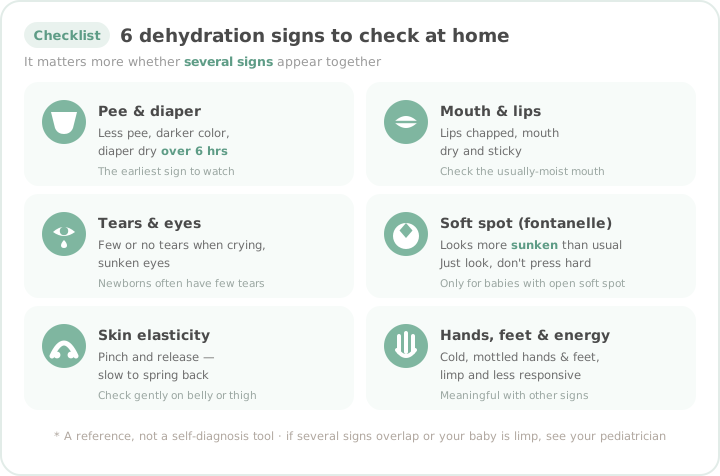
Let's look at each check point one by one
1. Pee and diaper — the first sign to watch
Pee is where you can catch dehydration earliest. See whether the amount is less than usual, the color turns a deep yellow, and the smell gets stronger. You'll change fewer diapers, and roughly if the diaper stays dry for more than six hours, that can be a sign of not enough fluid.
It's easy to brush it off with "there's still some pee, so it's fine," but you need to look at amount, color, and frequency together. If it's dark and infrequent, that's a point to watch even if it isn't completely absent. Jotting down the time of each diaper change and whether there was pee helps you notice much faster how many hours it's been.
2. Mouth and lips — dry and sticky?
The lips and the lining of the mouth are places where the body's fluid state shows fairly well. Check whether the lips are chapped or dry and whether the mouth feels sticky rather than moist. If a mouth that's usually moist with saliva is dry, it's worth looking at alongside other signs.
3. Tears and eyes — few tears even when crying?
Check whether your baby has fewer tears than usual, or almost none, when crying, and whether the eyes look sunken. If a baby who usually cries with brimming tears is crying with no tears and drooping, that's a sign to watch. That said, newborns can naturally have few tears, so this sign means more when it overlaps with others.
4. Soft spot (fontanelle) — only for young babies
The soft, still-open area at the front of the head is the soft spot (fontanelle). With dehydration, this area can look more sunken than usual. Hold your baby upright and look gently.
Please remember two things here. The soft spot usually starts closing gradually around the first birthday, so this is a sign only for young babies whose soft spot is still open. For an older child this method doesn't fit. And don't press or rub hard with your hand — just look with your eyes.
5. Skin elasticity — when you pinch and release
Gently pinch the skin on the belly or thigh with your fingers and release. With enough fluid the skin springs right back, but with dehydration it can be slow to spring back and leave a brief mark. Here too, don't pinch hard — a light check is enough.
6. Hands, feet and energy — limp and less responsive?
See whether the hands and feet look unusually cold and mottled, or whether your baby is more limp than usual, playing less and responding less. Breathing or heart rate may feel faster too. It's easy to shrug off "the hands and feet are cold, must just be chilly," but together with other signs it can be a sign that fluid and circulation have dropped.
When there's one sign versus several together
Now that you've gone through the check points, you're probably wondering "so how serious is it right now?" The exact severity (mild, moderate, severe) is ultimately for a doctor to judge, but the way to gauge the weight at home is fairly simple. If there are only one or two signs and your baby plays and eats well, it may be a situation where you can watch a bit longer while offering fluids often. On the other hand, if several signs appear together, or your baby is drooping and not clearly alert, it carries more weight and needs a doctor.
So rather than fixating on a single sign, it's important to see the whole picture. If the pee has dropped and the lips are dry and the baby is limp with no tears, it's safer to get it checked at the pediatrician than to put it off with "it's probably fine." A baby's condition can change within a few hours, so when you're not sure, choose asking over just watching.
The check points at a glance
Here are the signs you can see at home in one table. Please treat it not as a diagnostic chart dividing "normal vs. abnormal," but as a summary of changes worth watching compared with usual.
| Check point | Change to watch | Note |
|---|---|---|
| Pee and diaper | Less pee, darker color, diaper dry over 6 hours | The earliest sign to watch |
| Mouth and lips | Lips and mouth dry and sticky | Check the usually-moist mouth |
| Tears and eyes | Few or no tears when crying, sunken eyes | Newborns often have few tears |
| Soft spot (fontanelle) | Looks more sunken than usual | Only for babies with an open soft spot; don't press hard |
| Skin elasticity | Slow to spring back when pinched | Check gently on belly or thigh |
| Hands, feet and energy | Cold, mottled hands and feet; limp and less responsive | Meaningful with other signs |
Points parents often get confused about
Even when you know the check points, there are moments that trip you up when you actually look. Here are a few to keep in mind.
First, the judgment "there's still some pee, so it's fine." Even if a little comes out, if the amount is small and the color dark and it's infrequent, it's still a sign to watch. What matters is how different it is from usual, more than whether there's any at all.
"Cold hands and feet just mean the baby is cold" is another common misconception. If the room is warm yet the hands and feet are cold and mottled and your baby is drooping, it may not be simple chilliness but a sign that fluid and circulation have dropped.
The soft spot is also often misunderstood. A sunken soft spot applies only to a young baby whose soft spot is still open. Trying to apply this method to an older child whose soft spot has closed after the first birthday doesn't fit.
Dehydration is easier to spot when you look at it together with the cause. Fluid is especially easy to lose in summer heat or when diarrhea and vomiting continue. We've covered common misconceptions around gastroenteritis and dehydration separately in dehydration during gastroenteritis: don't get this wrong. For how to look at the causes when vomiting keeps happening, see when a formula-fed baby keeps throwing up: looking at the causes, and for protecting your baby in the heat, see the summer stroller heat safety checklist.
See a doctor right away if you notice these signs
The signs below are cases to think of as a doctor or the ER right away rather than watching at home. Not only when several check points overlap, but if even one of the following is clear, please hurry.
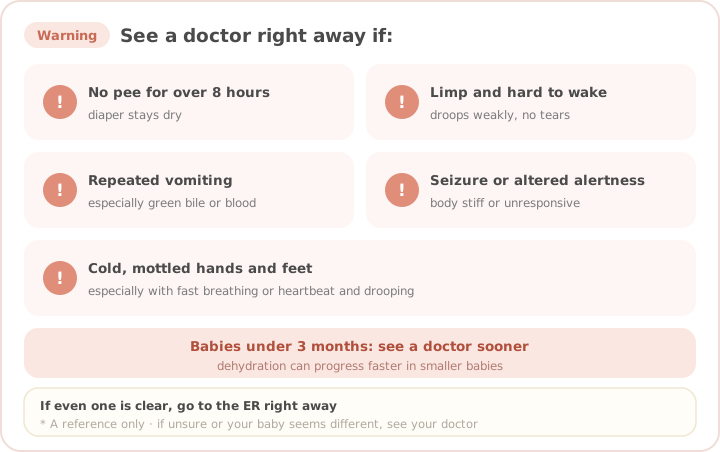
- No pee for more than eight hours, or the diaper stays dry
- Limp and hard to wake, or drooping weakly with no tears
- Repeated vomiting (especially when green bile or blood is mixed in)
- A seizure, or not clearly alert
- Cold, mottled hands and feet with faster breathing and heart rate
In particular, babies under 3 months can worsen quickly, so if you see even a hint of the signs above, it's safer to seek care sooner with a lower threshold. Even when the call is unclear, use "if you're not sure, ask" as your rule. Dehydration often recovers more smoothly the earlier you catch it and respond.
Frequently asked questions
Can it be dehydration even though there's still a little pee?
Yes, it can. If the amount is small, the color dark, and the intervals long, it's a sign to watch even when pee isn't completely absent. Look not only at whether there's pee, but at the amount, color, and frequency compared with usual.
The soft spot seems sunken — is that dehydration?
A sunken soft spot can be one sign of dehydration, but it's hard to conclude from that alone. It applies only to a young baby whose soft spot is still open, and you should look only with your eyes rather than pressing hard. If it overlaps with other signs (less pee, dry lips, drooping), it's a good idea to see a doctor.
Does sweating a lot in summer make dehydration more likely?
In hot weather, fluid is easy to lose through sweat too. Especially when your baby also has diarrhea or vomiting or isn't eating well, fluid shortage can come on faster. Keep your baby cool and offer fluids often in small amounts, but if your baby droops or the pee drops a lot, see a doctor.
Can I just give water or drinks at home?
In mild cases, offering fluids often in small amounts can help. But "what" you give depends on age. In particular, giving a lot of plain water to a baby under 6 months can actually upset the body's balance and be dangerous, so at this age the basic approach is to give breast milk or formula often, as usual. Giving sports drinks, juice, or homemade salt water on your own isn't recommended either. Whether oral rehydration solution (an electrolyte solution) is needed, and how to give it, is safer to check with your pediatrician — all the more so for a young baby or when vomiting is severe.
I heard newborns naturally have few tears — so can't tears be used to check?
In the newborn period the tear glands aren't fully developed, so tears can naturally be few. That's why, rather than judging by tears alone, look at them together with other signs like pee, lips, and energy.
To sum up
The way to check baby dehydration at home is to look at pee and diaper, mouth and lips, tears and eyes, the soft spot, skin elasticity, and hands, feet and energy. Among these, less pee and a long-dry diaper is the first sign to watch, and the more signs that overlap rather than just one, the more weight it carries.
Above all, these signs are not a basis for diagnosing on your own but "points to check." Since each baby's usual state varies from baby to baby, if several signs overlap or your baby seems limp, see your pediatrician rather than just watching. If there's no pee for more than eight hours, or your baby is limp with repeated vomiting, a seizure, or reduced consciousness, go to a hospital right away — and for babies under 3 months, it's safer to check even sooner.