When your formula-fed baby vomits, the cause varies | Telling spit-up, overfeeding, reflux, and warning signs apart
When your formula-fed baby vomits, the cause varies. Here's how to tell normal spit-up and overfeeding/swallowed air from reflux and warning signs like pyloric stenosis or cow's-milk protein allergy — plus the vomiting that means see a doctor now. Diagnosis needs a doctor.
When your baby throws up soon after a feed, the first thought is often "Is the formula not right?" — and you start wondering whether to switch. But a baby vomits for more than one reason, and it not being the formula is actually more common.
Let's get the big picture first. Vomiting after formula splits mainly into normal spit-up that dribbles from the lips, spit-up from overfeeding or swallowed air, reflux from an immature muscle between the stomach and esophagus, and vomiting from a condition like pyloric stenosis or cow's-milk protein allergy. The first group usually eases with time if your baby feeds and grows well; the latter are signs to confirm with a doctor.
So what matters isn't "vomiting or not" but what kind of vomiting. That said, the distinguishing points here are a reference for gauging direction — they can't confirm a diagnosis. Especially under 3 months, a baby's state can change fast, so for any vomiting that worries you even a little, think of seeing a pediatrician before waiting it out.

Vomiting after formula isn't all the same vomiting
The first myth to clear up is "vomiting = the formula doesn't fit." Newborns and young infants have small stomachs, and the muscle that closes off the stomach from the esophagus (the lower esophageal sphincter) isn't mature yet, so what they've eaten easily comes back up to the lips. In other words, much spit-up is close to a natural phenomenon caused by an still-immature digestive system, not the type of formula.
So when you meet vomiting, the order is to first sort what kind of vomiting it is rather than switching formula. As in the map below, place the causes into four broad branches, and look at each one's features, what to do, and the line where you need a doctor.
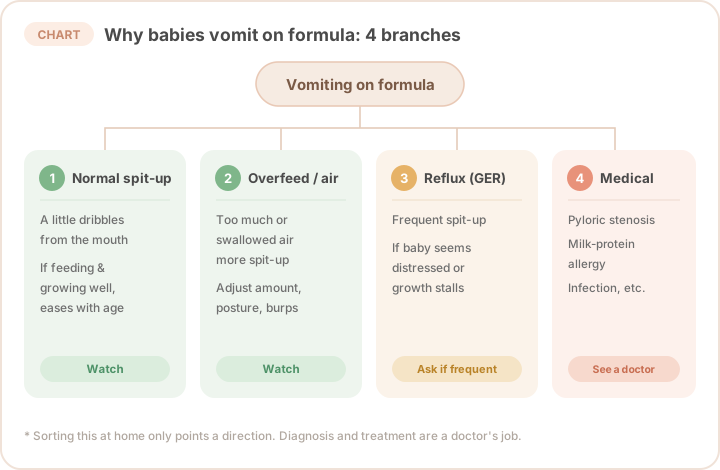
Why is my baby vomiting? Branch by branch
1. Normal spit-up that dribbles from the lips
Spit-up that trickles from the lips after a feed, or comes up a little with a burp. Often called "physiologic reflux," it's common while the stomach is small and the sphincter immature. According to U.S. pediatric sources (Nemours/AAP), this spit-up tends to peak around 3–4 months and usually decrease between 6 and 12 months as the baby sits up and starts solids.
The key is the pattern and your baby's state. If your baby is comfortable after spitting up, feeds well, and is gaining weight steadily, it's usually not a big worry. This kind of spit-up doesn't disappear by switching formula — it often eases naturally as your baby grows. Of course it varies from baby to baby, and if spit-up is excessively frequent or the signs below come with it, that's a different story.
2. When too much is eaten or air is swallowed
Eating more than the guideline at once, or swallowing a lot of air because the bottle angle and nipple hole don't match, can increase spit-up. Formula and air sit together in the stomach, and when a burp comes up, formula gets carried out with it.
Here you can adjust a few things. Rather than one big feed, split the amount and feed slowly, and tilt the bottle enough so formula fills the inside of the nipple so less air is swallowed. Burp mid-feed and after, and holding your baby upright for about 10–20 minutes after feeding can help too. For how to latch so less air is swallowed, see Burping and bottle latch tips to swallow less air.
3. When reflux is frequent (GER and reflux disease)
Even if spit-up is a bit frequent, if your baby feeds and grows well, it's usually seen as simple gastroesophageal reflux (GER), where time is the remedy. The concern is when it crosses into "disease." If, on top of spit-up, your baby gains weight poorly, fusses and seems in pain at every feed, often chokes or has cough/wheeze, and it disrupts sleep, it may be beyond simple reflux.
This distinction is hard to confirm at home. More than the spit-up itself, you need to look at whether your baby is struggling and whether growth has stalled, and whether reflux-reducing medicine or special formula is needed is a call for a doctor. Rather than using medicine or switching formula on your own, if the signs above overlap, it's safer to get a consult.
4. Vomiting from a condition — when a doctor is needed
From here it's not "watch and wait" but "confirm."
Pyloric stenosis (hypertrophic pyloric stenosis) is a condition where the muscle at the stomach outlet thickens, so formula can't pass into the intestine and is forced back out. Per sources like the MSD Manual, it's marked by projectile vomiting that usually begins between 2 and 8 weeks and gets progressively worse; after vomiting hard, the baby is hungry and wants to feed again, and may fail to gain weight or become dehydrated. It can need surgical treatment, so prompt care matters.
Cow's-milk protein allergy (CMPA) can bring, along with repeated vomiting, symptoms like mucus or blood in the stool, eczema/hives, diarrhea, poor weight gain, and wheezing. Switching to hydrolyzed or amino-acid formula here is a domain that needs a doctor's prescription, so rather than starting special formula on your own, confirm with a doctor. For symptoms to look for when intolerance/allergy is suspected, see Signs your baby's formula might not be the right fit.
Besides these, an infection like gastroenteritis can bring vomiting along with fever and diarrhea — and here you need to watch especially for dehydration.
How do you tell spit-up from warning vomiting?
To help you gauge direction at home, here are the features of common normal spit-up and warning vomiting that needs a doctor, side by side. Again — this table gathers general tendencies, can't replace a diagnosis, and symptoms often overlap, so when it's unclear it's safer to confirm with a doctor.
| Area | Common normal spit-up | Warning vomiting — see a doctor |
|---|---|---|
| Amount/look | A little dribble from the lips | Forcefully projectile (fountain vomit) |
| Vomit color | White/pale milk color | Green (bile), blood, coffee-ground |
| Baby's state | Calm after, feeds and grows well | Very fussy, floppy, no weight gain, dehydrated |
| Frequency/trend | Now and then after feeds, easing | Worsening and repeating |
| Timing sign | Peaks at 3–4 months, then usually eases | Worsening projectile vomit at 2–8 weeks (suspect pyloric stenosis) |
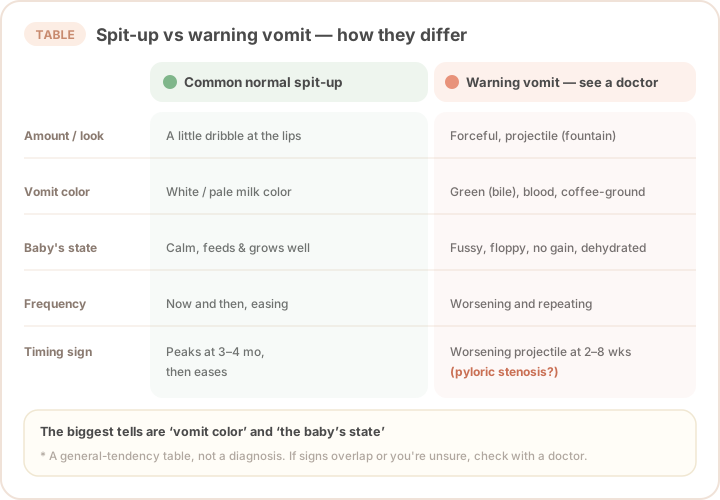
The columns that split most are vomit color and the baby's state. If your baby spits up a little pale milk color and is fine, lean toward normal spit-up; if it's green or bloody, or projectile with a floppy baby, lean toward warning and get seen promptly.
What to do, branch by branch
Since we've split the causes, what you do differs by branch too. The core is two things: don't switch formula first and don't miss warning signs.
If it looks like normal spit-up or overfeeding/swallowed air, split feeds and feed slowly, tilt the bottle enough, manage with burping and holding upright after feeds, and watch your baby's growth first. Switching formula on spit-up alone leaves the cause unchanged while adding a variable, which can actually muddy the picture. If it seems worse after you switched, see What to check when switching formula seemed to make things worse too.
Conversely, if the warning signs below appear, the order is to confirm the cause with a doctor rather than managing at home. Reflux medicine and special formula are both a domain needing a doctor's judgment, so it's best not to start them on your own.
One thing to add: recording when and how much your baby fed, and how long after, in what color, and how much they spat up for a few days is a big help. The frequency and color of vomiting and the weight trend are important clues for sorting the cause in the clinic, so jotting it down rather than relying on memory makes the consult much smoother.

Go to the pediatrician right away for these signs
This is the most important part of the post. Spit-up can be managed and watched at home, but if the signs below appear, confirming with a doctor beats deciding on your own.
- When forceful, projectile vomiting (fountain vomit) repeats
- When the vomit has green (bile), blood, or coffee-ground color in it
- When vomiting repeats often and gets progressively worse
- When your baby is floppy and sluggish to respond, or unusually and severely fussy
- When dehydration is suspected — noticeably less urine, a dry mouth, no tears
- When weight isn't gaining or is even dropping
- When fever and diarrhea come together
- When projectile vomiting gets progressively worse between 2 and 8 weeks (suspect pyloric stenosis)
Remember especially: under 3 months — and even more so under 1 month — lower your threshold for deciding. In a young baby, the state can change fast while you wait for other symptoms, so for vomiting that worries you, rather than assuming "it's just spit-up," get seen promptly. Keep it as your baseline that confirming and treating are the doctor's job.
Frequently asked questions
Q. If my baby vomits on formula, should I switch formula?
Not necessarily. Much vomiting is closer to spit-up from an immature digestive system than the type of formula. Switching on spit-up alone can add a variable while the cause stays, so the order is to first adjust amount, position, and burping while watching. But if repeated vomiting overlaps with bloody stool, eczema, or poor weight gain, confirm with a doctor, including the possibility of allergy.
Q. How is spit-up different from vomiting?
A little dribble from the lips is spit-up; a forceful, fountain-like eruption is what's commonly called warning vomiting. The amount and force, and your baby's state afterward, are the fork. Comfortable and growing well after — usually spit-up; erupting and going floppy — the side that needs a doctor.
Q. Why is green or bloody vomit dangerous?
Green can be a sign that bile is mixed in, and blood or coffee-ground color can suggest bleeding in the digestive tract. Neither is a watch-at-home sign — both are warnings that need a doctor right away. Even if the color is unclear, if it's different from usual, capture a photo to show at the visit.
Q. My baby vomits even though I burp them well. Is that okay?
Burping reduces air-related spit-up but doesn't prevent all vomiting. Spit-up despite burping is common with an immature digestive system. But if, even with burping and positioning, vomiting gets progressively more frequent and forceful or your baby seems to struggle, it's safer to confirm with a doctor whether there's another cause.
Q. Projectile vomiting has been getting worse since around 3 weeks.
Projectile vomiting that gets progressively worse between 2 and 8 weeks is a sign to think of pyloric stenosis — all the more if your baby is hungry again after vomiting hard and isn't gaining weight. Rather than waiting it out, see a pediatrician promptly.
To sum up
Vomiting on formula isn't all the formula's fault, nor all the same vomiting. Normal spit-up that dribbles from the lips, and overfeeding/swallowed air, usually ease with time if your baby feeds and grows well — so rather than switching formula, manage with amount, position, and burping while you watch. On the other hand, projectile vomiting, green or bloody vomit, repeated vomiting with floppiness/dehydration/stalled weight, and worsening projectile vomiting at 2–8 weeks are warning signs that need a doctor. Sorting it at home only points a direction; confirming and treating are the doctor's job. Especially under 3 months, lower your threshold and confirm worrying vomiting promptly with a pediatrician.