Baby Language Development, from Babbling to First Words by Month
When does babbling start, and when do first words come? From cooing to two-word combinations, we lay out the order of language development by month, ways to draw out words, and signs worth checking—keeping individual variation in mind.
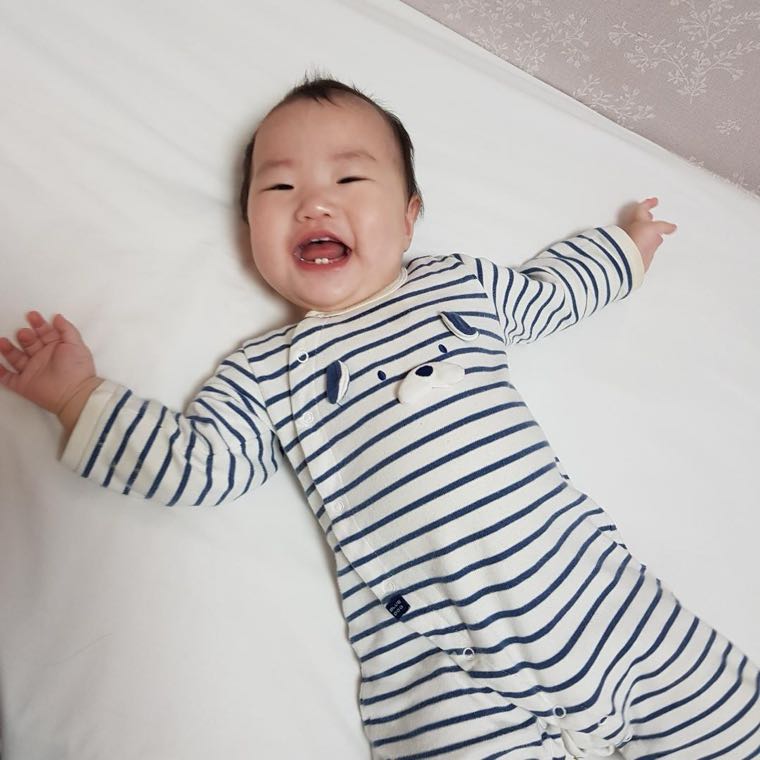
"When will my baby start babbling?" "The first birthday is almost here and they're still not talking." The moments when your baby first makes a sound, babbles, and one day calls out "mama" are the milestones parents wait for most. And that's exactly why comparing with other babies can bring on the worry.
Let's start with the big flow. Babies usually make sounds through crying and cooing at 0–3 months, begin babbling around 4–6 months, and move on to repeated consonant babble like "mamama" and "bababa" by 6–9 months. A meaningful first word tends to come around the first birthday, spoken words grow noticeably around 18 months, and around age two babies start joining two words together.
That said, this stage varies enormously from baby to baby. Below, we'll look at the stages by age, ways that help draw out words, and which signs are worth checking. Read the timing as a broad range, not a fixed answer.
Baby language development, month by month—how does it connect?
A baby's language is growing long before the first word appears. Crying and eye contact, responding to sounds, and babbling are all stages of language development. On one page, it connects like this. Find the row for your baby's age first.
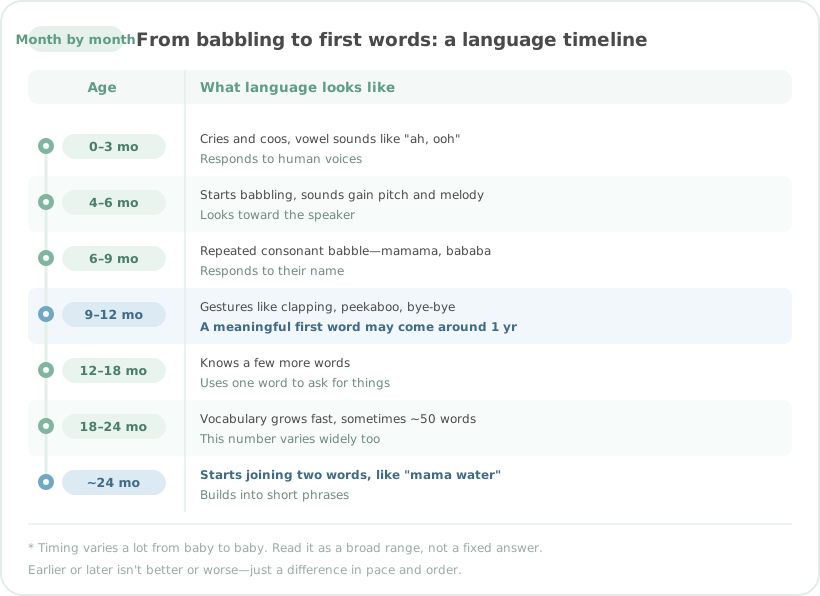
| Age | What language looks like |
|---|---|
| 0–3 mo | Communicates by crying and makes vowel sounds like "ah, ooh." Responds to human voices |
| 4–6 mo | Starts babbling and the sounds gain pitch. Looks toward the person speaking |
| 6–9 mo | Repeated consonant babble like mamama, bababa, and responds to their name |
| 9–12 mo | Gestures like pat-a-cake, peekaboo, bye-bye; a meaningful first word may come around the first birthday |
| 12–18 mo | Spoken words increase and one word expresses a want. Between 18–24 months vocabulary grows fast, sometimes reaching about 50 words |
| ~24 mo | Starts joining two words, like "mama water," to make short phrases |
The table shows the broad flow from sounds to babbling and on to words. Still, even at the same age, one baby may already say a few words while another is still babbling. That's not better or worse development—just a difference in pace and order.
From babbling to first words, stage by stage
Language doesn't switch on overnight; it grows over several months, moving from sounds to words. Here's what shows up at each stage, one by one.
1. 0–3 months: connecting through crying and cooing
Around this time, your baby lets you know about hunger or discomfort by crying. Then, when content, they make vowel sounds like "ah, ooh"—this is called cooing. It's not speech yet, but hearing your voice, making eye contact, and responding is already the beginning of communication.
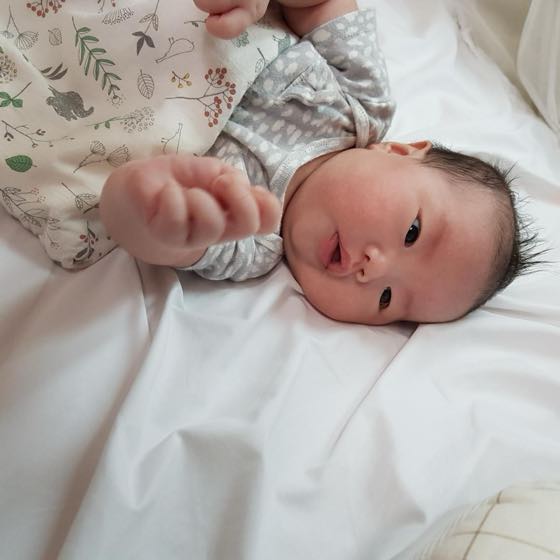
2. 4–6 months: babbling begins
Past four months, your baby starts babbling in earnest. The sounds gain pitch, and giggling grows too. You'll see them watching a speaker closely and trying to copy the shape of the mouth. When you answer their sounds warmly, your baby learns the fun of exchanging sounds.
3. 6–9 months: mamama, bababa consonant babble
At this stage, consonants join the babble. Repeated-sound babble like "mamama" and "bababa" appears, and your baby may mimic the intonation of adult speech. They turn when their name is called and respond more to familiar words. "Mama" doesn't mean mother yet, but this is a time when practice at making speech sounds becomes lively.
4. 9–12 months: gestures and a first meaningful word
As the first birthday nears, your baby expresses feelings with gestures. They do pat-a-cake, peekaboo, and bye-bye, and may understand simple words like "no." Then, around the first birthday, a meaningful first word may appear. A word that points to and names something—like mama or dada—is typical. But the timing of a first word varies widely from baby to baby, and it often comes a bit after the first birthday.
5. 12–18 months: vocabulary grows
After the first word, known words grow one by one. Your baby expresses a want with a single word, and their grasp of directions widens—understanding something like "give me water." Vocabulary grows fast between 18 and 24 months, sometimes reaching about 50 words, though this number also varies widely by baby, so read it as a broad range. Even with few spoken words, if understanding is coming along well, there's room to watch.
6. Around 24 months: joining two words
Around age two, your baby starts putting words together. They combine two words like "mama water" or "daddy up" to make short phrases. This two-word combination is more than a growing vocabulary—it's a sign your baby is beginning to weave thoughts into sentences.
How can you help draw out words?
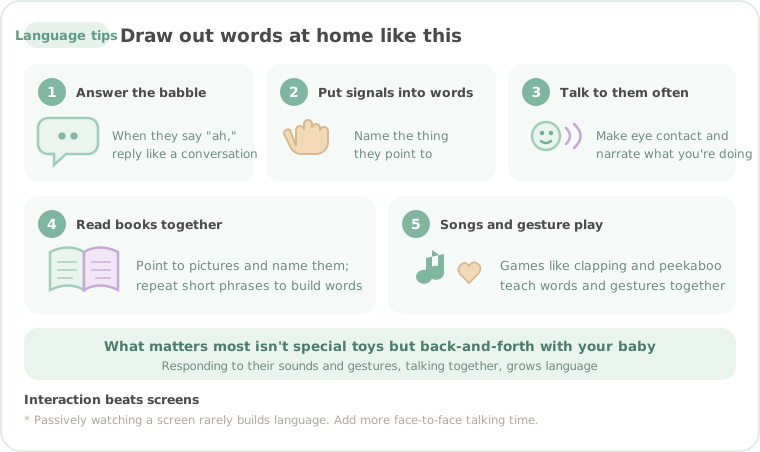
The most important thing is back-and-forth interaction with your baby. More than special toys or programs, the time spent responding to your baby's sounds and gestures and exchanging words together is what grows language. Here are some things you can try at home.
- Answer the babble. When your baby says "ah-ah," reply like a conversation: "Ah-ah, is that so?" The experience of exchanging sounds becomes the foundation of speech.
- Put your baby's signals into words. When your baby points at a cup, add words to the feeling: "You want to drink water."
- Make eye contact and talk to them slowly and often. Just narrating everyday life out loud—what you're doing, what you're looking at—is good input.
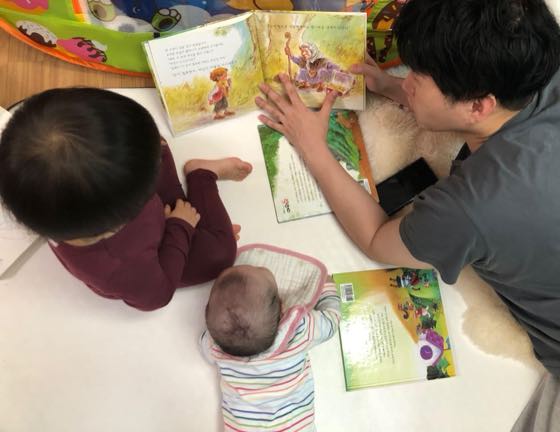
- Read books together. Point to pictures and name them, and repeat short phrases to build up words.
- Add songs and gesture play. Games like pat-a-cake and peekaboo help your baby learn words and gestures together.
Does lots of screen time speed up talking?
To put it plainly, media like video is hard to see as helpful for language development. Language grows not from passively watching a screen, but within the give-and-take of making eye contact and exchanging sounds with a person. It helps to remember that even video described as educational rarely provides language input when a baby watches it alone.
So rather than expecting that turning on a video will speed up talking, increasing the time you sit face-to-face and exchange words is far more helpful. It doesn't have to be anything grand. Simply narrating what you're doing—while changing a diaper, while feeding—makes a good language environment for your baby.
Understanding comes before speaking
When looking at your baby's language, understanding matters as much as the number of spoken words. Usually, receptive language—what they understand—develops earlier and more than expressive language, the words they say themselves. So even with few spoken words, if your baby turns when their name is called, understands and follows simple words like "give me water," and expresses wants with gestures, you can see it as a sign that language is growing.
On the other hand, if expression is slow and understanding feels slow alongside it, it's worth watching a little more closely. The timing of talking varies widely, but when comprehension and expression are slow together, checking brings peace of mind rather than judging by watching alone.
If you'd like to see how overall development connects, our at-a-glance guide to milestones at 0–12 months is worth a look too.
When to check with your pediatrician
Because language development spans a wide range, timing that's a little early or late is usually fine to watch. Still, if you notice the signs below, it's better to check with your pediatrician or at a well-child visit rather than deciding on your own. These are not diagnostic criteria, just signs worth checking.
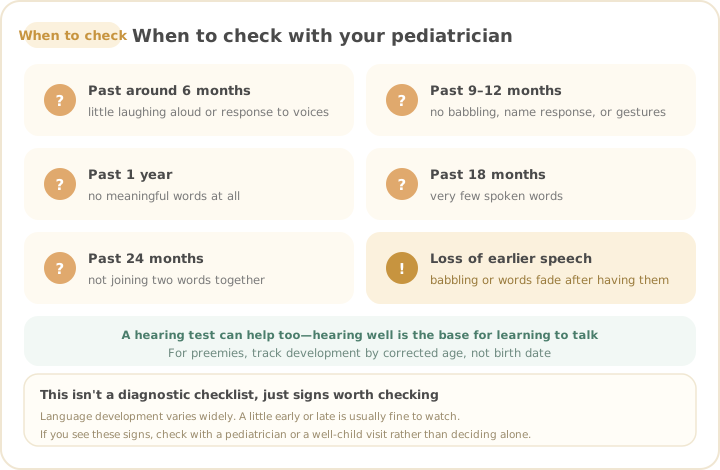
- When, past around 6 months, there's little laughing aloud or response to voices
- When, past 9–12 months, there's no babbling, or no response to their name and no gestures
- When, past the first birthday, there are no meaningful words at all
- When, past 18 months, there are very few spoken words
- When, past 24 months, they can't join two words together
- When babbling or words they used to have fade away from some point on
At regular well-child visits, a provider reviews development—including language—together with you. If you're concerned about responses to sound as well as speech, a hearing test can help, since hearing well is the foundation for learning to talk.
One more thing: for a baby born preterm, track development by corrected age based on the original due date, not the birth date. Comparing by calendar age alone can make things look later than they are and bring on needless worry. For which signs to watch and when it helps to see a doctor when development worries you, our article on signs it's time to see a doctor when development seems slow covers it in more detail.
First babble and first word—worth recording
The first babble, or the day they first called out "mama," are moments that blur easily once they pass, leaving you thinking "when was that again?" Jotting down the day it first happened is great for looking back on your baby's language flow later, and handy for talking through what started when at check-ups.
When you save these moments as growth records on Babyfolio with a short video or photo, grandparents and family living far away can see your baby speak for the first time and share in the joy with comments and reactions. It's a way for the whole family to share the delight of a first word.
Frequently asked questions
My baby is one and still not talking. Is that late?
The timing of a first word varies widely from baby to baby, and coming a bit after the first birthday is common. If your baby responds to their name, understands simple words, and expresses themselves with gestures, there's room to watch. But if understanding feels slow alongside it, or there's no babbling or gestures, check at a well-child visit.
My baby babbles but no consonant sounds come out.
The timing when babbling moves to repeated consonants also varies. Vowel-based babble may continue, with consonants joining a little later. If your baby responds when called and exchanges sounds, you can watch a little longer—but if babbling itself is sparse past 9 months, it's worth checking.
My baby is slow to talk but expresses well with gestures. Is that okay?
Expressing wants with gestures is a good sign that communication skills are growing. If understanding is good alongside gestures, spoken words sometimes follow a bit later. Still, if gestures and words feel slow together, it's worth looking into.
My baby is a second child, and maybe because the older one understands and speaks for them, they're slow to talk.
When a sibling expresses things on their behalf, a baby can get fewer chances to speak themselves. It helps to make a little more time to ask your baby directly and wait for their answer. If you're still worried, talk it over together at a check-up.
To sum up
A baby's language grows in a flow: cooing at 0–3 months, babbling at 4–6 months, repeated consonant babble at 6–9 months, a first word around the first birthday, a fast rise to about 50 words between 18 and 24 months, and two-word combinations around age two. But the timing varies widely from baby to baby, so read it as a broad range.
To draw out words, back-and-forth interaction with eye contact matters more than video, and it helps to watch understanding as much as the number of spoken words. If you see signs like no babbling or gestures, no first word by the first birthday, very few words at 18 months, or the fading of speech they once had, checking with your pediatrician and at a well-child visit—and a hearing test if needed—brings real peace of mind. And for a baby born early, track by corrected age.