Baby Development Milestones at 0–12 Months, a Month-by-Month Map
We organized baby milestones for 0–12 months into a month-by-month table across five areas—gross motor, fine motor, language, cognition, and social-emotional. Milestones are averages and ranges, not a test, plus normal variation and signs worth checking.

When you watch your baby grow and change by the day, one question always tags along: "Is this about normal for now?" You start comparing your little one to the baby next door, or measuring them against a month-by-month chart you saw online—and the worry creeps in.
Let's start with the big picture. Baby development is usually grouped into five areas: gross motor, fine motor, language and communication, cognition, and social-emotional. There's also a rough flow by age, from 0–3 months through 10–12 months. But that flow isn't a rigid answer key. Think of it as the average of what most babies come to do by a given age—and a fairly wide range at that.
Below is a summary table that puts all five areas on one page by age. Find the row for your baby's age first, but read the timing as a broad range, not a test. One or two items being a little early or late doesn't make development better or behind.
The five areas make milestones easier to understand
The U.S. Centers for Disease Control and Prevention (CDC) and various pediatric sources describe milestones across five broad areas. Knowing what each area looks at makes the month-by-month table much easier to read.
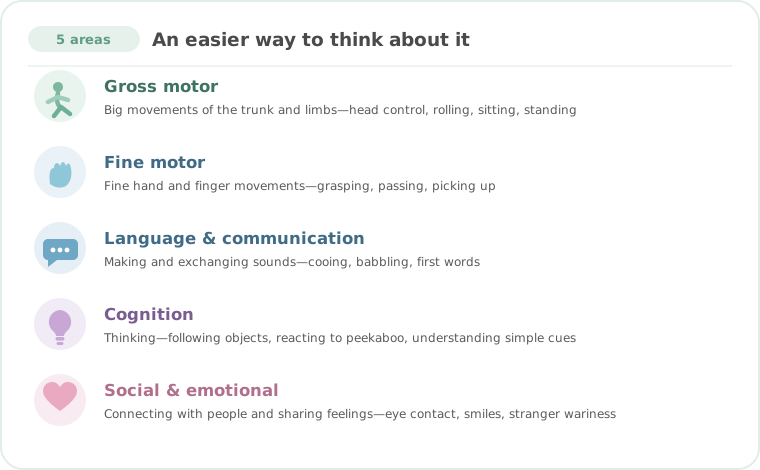
- Gross motor: Big movements using the trunk and limbs—head control, rolling, sitting, standing.
- Fine motor: Fine hand and finger movements—grasping, passing, and picking up objects.
- Language and communication: Making and exchanging sounds—cooing, babbling, first words.
- Cognition: The thinking that lets a baby follow objects, react to peekaboo, and understand simple cues.
- Social and emotional: Connecting with people and sharing feelings—eye contact, smiles, stranger wariness.
The five areas don't grow in isolation—they develop intertwined. So rather than worrying about one area on its own, it's easier on the heart to look at the whole flow together.
Milestones at 0–12 months, month by month
On one page, it comes together like this—a summary table of how the five areas connect from 0–3 months to 10–12 months. Find the row for your baby's age and scan across the five areas.
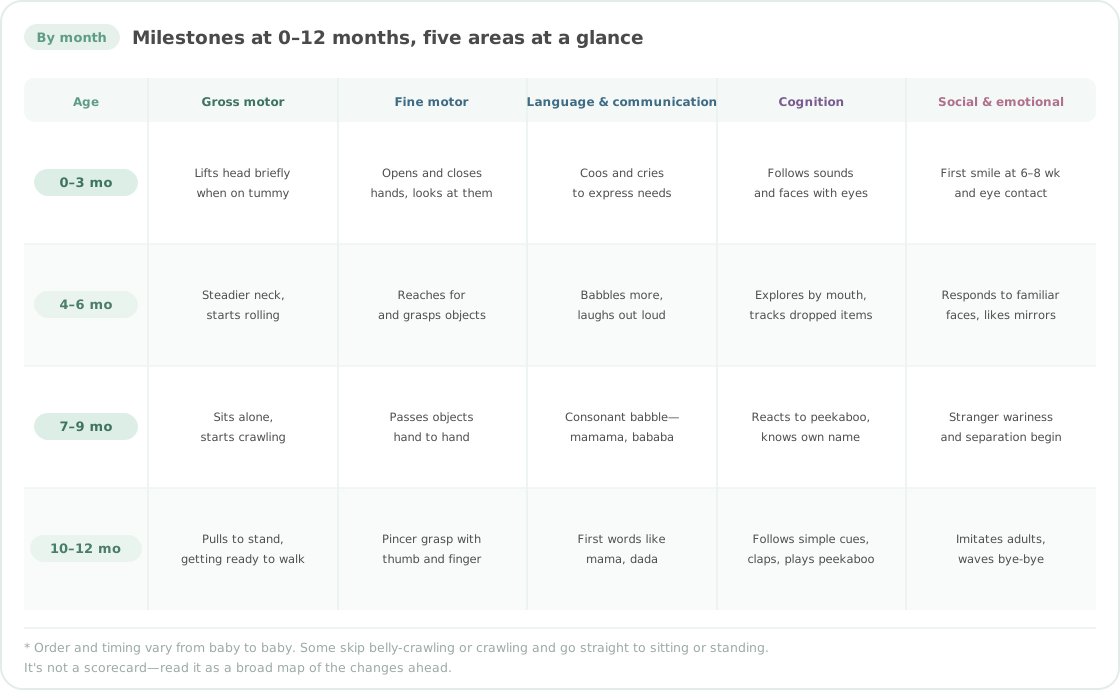
| Age | Gross motor | Fine motor | Language & communication | Cognition | Social & emotional |
|---|---|---|---|---|---|
| 0–3 mo | Begins lifting the head briefly when on the tummy | Opens and closes hands, gazes at own hands | Expresses needs through cooing and crying | Follows sounds and faces with the eyes | Around 6–8 weeks, a first social smile appears and makes eye contact |
| 4–6 mo | Neck steadies and rolling begins | Reaches for and grasps objects | Babbling begins and laughs out loud | Explores objects by mouth and tracks dropped items | Responds to familiar faces and shows interest in mirrors |
| 7–9 mo | Sits alone and starts crawling | Passes objects from one hand to the other | Consonant babble like mamama, bababa increases | Reacts to peekaboo as object permanence emerges, and knows own name | Stranger wariness and separation anxiety begin to appear |
| 10–12 mo | Pulls to stand and gets ready to walk | Uses a pincer grasp with thumb and finger to pick up small things | First meaningful words like mama, dada appear | Understands simple cues and plays pat-a-cake or peekaboo | Imitates adults and waves bye-bye |
The table shows how, as the strength to hold the body steady settles in, the hands, language, and connecting with others widen alongside it. Still, even within one row, it's natural for some items to appear a bit earlier and others a bit later. Read this table not as a scorecard for your baby, but as a map for picturing the changes ahead.
A closer look, age by age
Since the table alone leaves a little to be desired, here's a short note on each age range. Order and pace vary from baby to baby, so read it as a rough flow.
1. 0–3 months: meeting the world with their eyes
Using the body begins with briefly lifting the head when on the tummy. Your baby turns their eyes toward sounds, and around 6–8 weeks may give you their first beaming smile. If you'd like a closer look at how head control develops in stages, see our month-by-month guide to head control and rolling.

2. 4–6 months: reaching out to touch the world
The neck steadies quite a bit and rolling begins. Your baby reaches for and grasps objects they can see, and brings just about everything to the mouth to explore. As babbling grows, you'll often see them laughing out loud, too.
3. 7–9 months: moving on their own and telling people apart
Your baby sits alone and starts moving toward what they want by belly-crawling or crawling. They pass an object from one hand to the other, and consonant babble like mamama grows. Stranger wariness and separation anxiety appear around now—which is also a sign that cognition has grown enough to tell familiar people from strangers.

4. 10–12 months: getting ready for first words and first steps
Your baby pulls up on furniture to get ready to walk, and the pincer grasp for picking up small things with thumb and finger grows more precise. First meaningful words like mama and dada appear, and they may share feelings through gestures like pat-a-cake or waving bye-bye. For how language grows, our sister article, the month-by-month guide to baby language development, goes into more detail.

Milestones are averages and ranges—not a test
This is exactly where milestones get misread most often. The timing in the table is just the average of what most babies come to do by that age—not a deadline they must meet by that day. So one or two items being a little early or late usually still falls within a wide normal range.
Even at the same age, one baby may already be crawling while another is still learning to sit. Weeks at birth, temperament, weight, and how they've usually played all work differently for each child. Passing a milestone early doesn't mean doing better later, and being a little late doesn't mean falling behind.
One more thing: for a baby born earlier than the due date, use corrected age—based on the original due date—rather than calendar age. If a baby was born two months early, then even at six months old it makes sense to watch development along the flow of a four-month-old; comparing by calendar age alone tends to bring on needless worry.

When to check with your pediatrician or at a well-child visit
Because development spans a wide range, being a little early or late is usually nothing to worry about. Still, if you notice the signs below, it's better to check with your pediatrician or at a well-child visit rather than deciding on your own.
- When it seems that several areas together—not just one—are clearly behind same-age peers
- When behaviors or babbling your baby used to do stop happening from some point on
- When the body is extremely stiff, or on the contrary limp and floppy
- When your baby uses only one side of the body, or still makes little eye contact past 6 months
At regular well-child visits, a provider can review your baby's development with you. The U.S. CDC also recommends looking over a developmental checklist together and discussing it when you visit the pediatrician. For which signs to watch and when it helps to see a doctor when development worries you, our article on when to see a doctor if development seems slow covers it in more detail.
Recorded milestones reveal the flow
First roll, first sit, first word—those first-time moments blur easily once they pass, leaving you thinking "when was that again?" Jotting down the date as it happens is great for looking back on your baby's own developmental flow later, and handy for talking through what started when at check-ups.
When you save these milestone moments with photos as growth records on Babyfolio, you can look back on development by age in one place, and grandparents or family living far away can share in the joy of seeing your baby sit for the first time.
Frequently asked questions
Just one area seems a little slow. Is that a problem?
Each area grows at its own pace, so one area being a bit slow is common in itself. If the other areas are growing well, it's usually within a wide range—but if several areas feel behind together, or the worry continues, check at a well-child visit or with your pediatrician.
Does my baby have to pass every milestone in order?
Not necessarily. Some babies nearly skip belly-crawling and move on to crawling or sitting, and the order can shift a little. It's a process of each baby using the body in the way that suits them, so a different order isn't something to worry about in itself.
My baby was born early and I'm worried they're behind peers.
For a baby born earlier than the due date, use corrected age rather than calendar age. If you recount the months from the original due date and watch along that flow, babies often catch up to peers over time.
Where can I find a developmental checklist?
A provider can review development at regular well-child visits. The U.S. CDC also offers month-by-month developmental checklists, so looking one over before your pediatric visit and jotting down your questions makes the conversation go much more smoothly.
What helps support development?
No special tools are needed. Everyday interaction—making eye contact, talking to your baby, and letting them move and touch freely in a safe space—is the biggest help. Adding short, frequent movement play like tummy time is a nice touch too.
To sum up
Development from 0–12 months is a process in which five areas—gross motor, fine motor, language and communication, cognition, and social-emotional—grow intertwined. There's a broad flow: lifting the head and making eye contact at 0–3 months, rolling and reaching at 4–6 months, sitting and crawling at 7–9 months, and standing with a first word at 10–12 months.
Above all, remember this table is a map, not a scorecard. Timing is an average and a wide range, and earlier or later isn't better or worse. For a baby born early, use corrected age; and when several areas feel behind together or the worry lingers, checking at a well-child visit and with your pediatrician brings real peace of mind.