When your baby gets a mosquito bite: what to do before medicine
When your baby gets a mosquito bite, cooling comes before medicine. Here's the three-step order — cooling to ease swelling and itch, preventing scratching to avoid secondary infection, and ointment only when needed — plus what not to do and the warning signs that mean going straight to the pediatrician.
When your baby wakes at night scratching an arm or leg and fussing, the first thing you reach for is usually the anti-itch balm in the drawer. Seeing that red, swollen mark, it's easy to panic and start searching "what should I put on it?"
But the very first thing to do when a baby gets a mosquito bite isn't actually to apply medicine. Cooling it down comes first, then keeping the baby from scratching, and ointment is the last step, only if needed. Just changing the order makes the swelling and itch much easier to get through, and above all it helps you avoid the mistake of hastily applying something that doesn't suit your baby's skin.
That said, bites react differently from baby to baby, and even day to day. Most settle within a few days, but if you notice the warning signs we cover below, think of seeing a pediatrician rather than just watching at home. Below we'll walk through why cooling comes first, the three-step order, what not to do, and where the line is for going to the doctor.
Why cool it before reaching for medicine?
Right after a bite, what helps most isn't medicine but cooling the area down. A mosquito bite makes the blood vessels there widen, so it swells and itches; a cold stimulus makes those vessels narrow again, so the swelling and itch ease together. That's why pediatric and health resources often say "cooling comes before medicine."
It's simple. Dampen a clean towel with cold water and hold it on the bite, or wrap ice in a towel and press gently. Avoid holding ice directly on bare skin for long. A baby's skin is thin and can get a cold burn (frostbite). Aim for about 10 minutes at a time, and if your baby dislikes it, don't force it — several short sessions are easier.
Cooling first also reduces the urge to scratch, which makes the next step, preventing scratching, much easier. Whether or not to use ointment can wait until after that.
The three-step order for a baby's mosquito bite
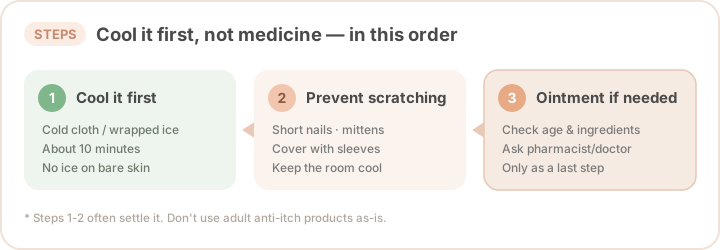
In short, it's cool it → prevent scratching → (if needed) ointment. This order matters because the first two steps alone settle most of the itch and swelling, so ointment often isn't needed. Let's go through each one.
Step 1. Cool it first
As soon as you spot a bite, start by cooling it. A cold towel or towel-wrapped ice for about 10 minutes, just keeping ice off bare skin, is all you need. This is the step that eases swelling and itch the fastest, so if it calms down enough here, you can often simply keep an eye on it.
Step 2. Prevent scratching
Surprisingly, this is the most important step. When a baby itches, they scratch hard without thinking, and if scratching breaks the skin, bacteria can enter the wound and lead to secondary infections like impetigo or cellulitis. The wound from scratching often lasts longer than the bite itself.
So it helps to do two things together: lower the itch, and make scratching less damaging. Keep the nails short and smooth, and during heavy-scratching phases, cover the bite with thin anti-scratch mittens or sleeved clothing. Keeping the room cool reduces the itch itself, which cuts the number of scratches. For a baby who scratches in their sleep, this care especially helps.
Step 3. Ointment — when, and after checking
If steps 1 and 2 don't clear the itch or redness and your baby keeps struggling, that's when you can consider ointment. But there's one thing to always remember: ointment for a baby is different from an adult's.
- Don't use adult anti-itch balms or patches on a baby as-is. Ingredients like menthol or camphor can irritate a baby's skin or may not suit their age.
- Which ointment, from what age, and where to apply it — decide with a pharmacist or pediatrician. There are many types, from antihistamine creams to mild steroid creams, and the right one depends on your baby's age and the bite's location and condition.
- Don't apply carelessly around the eyes or mouth, or on skin broken by scratching.
This article doesn't recommend a specific product for the same reason. Since what suits each baby differs, "what to apply" is safest decided with a pharmacist or doctor who has seen your baby in person.
Please don't do these — common mistakes
These are easy to reach for in a hurry, but they make things harder for your baby. Please avoid them.
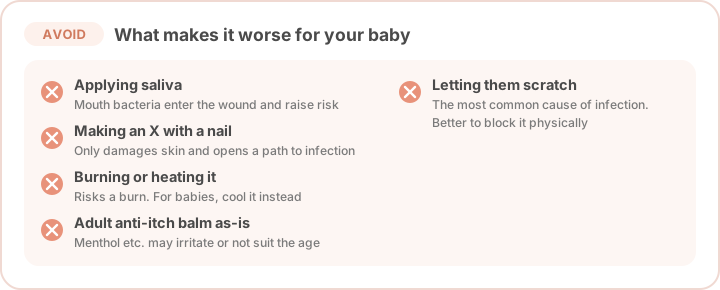
- Applying saliva — an old habit, but mouth bacteria enter the wound and raise infection risk.
- Making an X mark with a fingernail — it feels cool for a moment but only damages skin and creates a path for infection.
- Burning or heating it — applying something hot to stop the itch risks a burn. For a baby, cooling is the right approach instead.
- Over-applying adult anti-itch balm — for the ingredient reasons above, it may not suit a baby.
- Letting them scratch freely — "scratching can't be helped" leaves it be, and that's the most common cause of secondary infection. Better to block it physically.
At a glance:
| Situation | Do this | Avoid this |
|---|---|---|
| Right after a bite | Cool with a cold towel or wrapped ice | Burning it; ice directly on bare skin |
| When itchy | Short nails, mittens, a cool room to prevent scratching | Saliva; an X mark with a nail |
| If still severe | Ointment after checking age & ingredients with a pharmacist/pediatrician | Adult anti-itch balm or patches as-is |
When to go straight to the pediatrician or ER
This is the most important part of this article. Mosquito bites usually settle within a few days, but if you see the signs below, get care promptly rather than watching at home.
- The bite swells wider than a coin, quickly, turning firm and warm (a strong reaction to bites, sometimes called skeeter syndrome)
- The bite oozes or forms pus, or the redness spreads outward (a possible sign of secondary infection from scratching)
- Along with the bite, a fever appears, or the baby is limp and unusually distressed
- Rarely, the lips or area around the eyes swell, breathing becomes difficult, or hives spread over the body — this can be an emergency. Don't delay; use the ER or emergency services right away.
In particular, the younger the baby, the lower you should set your threshold to act. Young babies can change quickly, so waiting and thinking "it's probably just a bad bite" risks missing something. Photographing the bite lets you compare how it changes over time, which also helps when you talk to the doctor.
Preventing bites comes before treating them
Prevention matters as much as treatment. The fewer bites, the less scratching and swelling. But repellents for babies have set ingredients and ages by which they can be used, so you can't simply use an adult's.
Which repellent you can use from what age is covered in Baby mosquito repellent: from what age can you use it?. If your baby is under 6 months and repellent isn't yet an option, see how to prevent mosquito bites in newborns without repellent for ways to protect them without any product, like nets and window screens.
Frequently asked questions
Q. Does applying ice right away make it settle faster?
Cooling is right, but avoid ice directly on bare skin. A baby's skin is thin and can get a cold burn (frostbite). Wrap ice in a towel, use a cold towel as-is, and apply for about 10 minutes at a time to be safe.
Q. Scratching led to a scab and oozing.
If a scratched wound oozes or forms pus, or redness spreads around it, that may be a sign of secondary infection. Don't force the scab off; if you see these changes, it's safer to have a pediatrician check it than to apply ointment on your own judgment.
Q. Should adult anti-itch balm never be used?
Adult balms and patches can irritate a baby's skin with ingredients like menthol or may not suit their age, so using them as-is isn't recommended. Check with a pharmacist or pediatrician whether a product is suitable for your baby and from what age.
Q. My baby keeps scratching in their sleep. What can I do?
Cooling before bed lowers the itch in advance, and keeping nails short or covering the bite with thin anti-scratch mittens or long sleeves helps. Keeping the room cool reduces the itch itself, which tends to reduce restlessness too.
Q. The bite mark stays dark for a long time.
Spots that were wounded by scratching or had lasting inflammation can leave pigmentation for a while. It usually fades over time, but if it lingers unusually long or stays firm, it's worth asking about at a visit.
To sum up
When your baby gets a mosquito bite, rather than reaching for medicine first, remember the order: cool it → prevent scratching → (if needed) ointment. Cooling reduces swelling and itch, and preventing scratching prevents secondary infection. Ointment is the last card, and which one from what age is safest decided with a pharmacist or pediatrician who has seen your baby. Avoid the harmful shortcuts like saliva, nail marks, or adult balms.
And if you see signs like swelling that spreads faster than a coin, oozing or pus, fever, swollen lips or eyes, or difficulty breathing, go to a pediatrician or ER without delay. Most bites pass within a few days, but since every baby reacts differently, it's more reassuring to check on worrying changes than to wait them out.