Newborns too young for repellent: how to block mosquitoes with nets, clothing, and the home
Babies under 6 months usually aren't candidates for repellent, so blocking mosquitoes physically is the rule. Here's how to block them with nets, clothing, outing times, and the home environment, plus cautions on coils and wristbands, and what changes after 6 months.
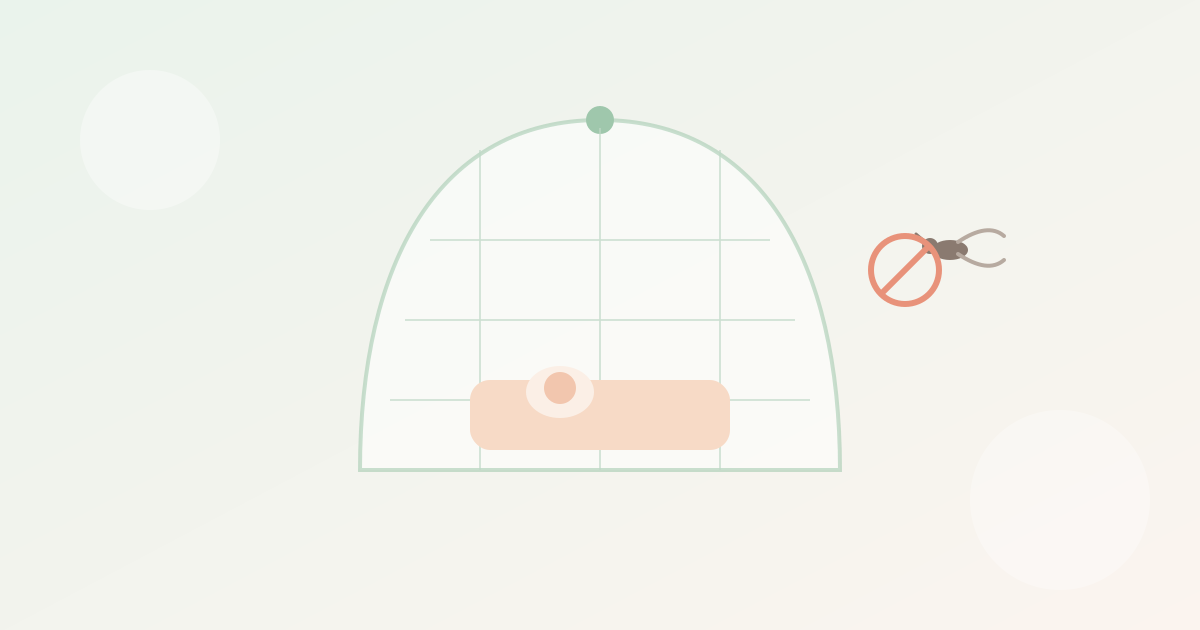
With a baby facing their first summer, even one mosquito buzzing nearby can keep you on edge all night. You find yourself hoping the pharmacy has a gentle baby repellent. But if your baby is under 6 months, there's something to know before you reach for anything to apply.
Here it is up front: many mosquito repellents on the market (sprays, lotions, and so on) are often not intended for babies under 6 months. Each product sets a usable age, and the younger the baby, the thinner and more sensitive the skin, so applying chemical ingredients isn't recommended in the first place. The rule at this stage isn't "apply and repel" but "keep mosquitoes from reaching your baby" — that is, physical barriers.
This article organizes how to protect a newborn from mosquitoes without repellent, split into nets, clothing, outing times, and the home environment. We'll also touch on the confusing question of whether coils, electric mats, or wristbands are okay, and what changes after 6 months.
Why block physically instead of using repellent for young babies?
The reason is simple: there are almost no repellent options you can apply to a baby under 6 months. Mosquito repellents are managed as regulated products with a usable age labeled per product, and many products advise use only from a certain age. So for a young baby, checking the usable age on the back of the product comes first.
Reframing this actually makes things easier. Instead of applying something to repel them, you just keep mosquitoes from physically reaching your baby's body. Block the space with a net, cover the skin with clothing, avoid the times and places with many mosquitoes, and keep the home tidy so mosquitoes can't get in or breed. These four are the main pillars of mosquito prevention for a young baby.
Physical barriers don't put ingredients on the body, so there's less worry about side effects, and they help just as much whether under 6 months or older — a basic worth keeping. Even once your baby is old enough for repellent, it's good to keep using these methods alongside it.
Physical barriers you can do at home, one by one
You don't need elaborate supplies. Just use what's already at home with a little care. Let's go from the surest first.
1. Net — the surest barrier
A net is the surest because it stops mosquitoes from coming near at all. There are forms to fit the situation — for a crib, a stroller, a floor mat — so put one over the spots where your baby spends a lot of time.
- Do this: choose a fine mesh and cover fully while your baby sleeps, naps, or is out. Check now and then that zippers and flaps haven't come open.
- Watch out: set it up with enough room so the net doesn't droop onto or press against your baby's face. If the fabric settles over a sleeping baby it can cover the nose and mouth, so it's safer to make sure there's ample space between the face and the fabric.
2. Clothing — cover lightly but reduce exposure
Clothing is the simplest net. Covering easily bitten areas like the arms and legs with thin clothing reduces the places that can be bitten.
- Do this: even in summer, dress in thin, breathable long sleeves and pants to reduce exposure. Mosquitoes are said to gather more on dark colors, so light-colored clothing is slightly better.
- Watch out: bundling thickly to block mosquitoes makes your baby hot and sweaty. Sweat and body heat actually attract mosquitoes, so cover lightly, check the back and neck by touch to see they aren't overheating, and wipe sweat often.
3. Outing times — avoid when mosquitoes are out
Mosquitoes are especially active from dusk through the night. Just cutting back on outings to mosquito-heavy places like grass, water, or parks at these times can meaningfully lower the risk of bites.
- Do this: shift walks and outdoor time to midday or earlier hours when there are fewer mosquitoes. If you must go out in the evening, bring a stroller net and long clothing.
- Watch out: there are especially many mosquitoes near standing water, so it's best to avoid lingering there with your baby.
4. Home environment — don't let them in, or breed
The inside of the home matters as much as outside. Blocking the gaps mosquitoes enter through, and keeping them from breeding around the home, reduces how often mosquitoes come near your baby at all.
- Do this: check window screens for tears or gaps, and close doors quickly when opening and shutting so mosquitoes don't follow in. Empty standing water in plant saucers, on the balcony, or in toys often, since that's where mosquitoes lay eggs.
- Watch out: taking one look before bed to see whether any mosquitoes have gotten into the room can greatly reduce bites overnight.

Mosquito prevention under 6 months, at a glance
Here's a table that's handy to refer to at home. "Do this" is the direction; "Watch out" is the commonly missed point.
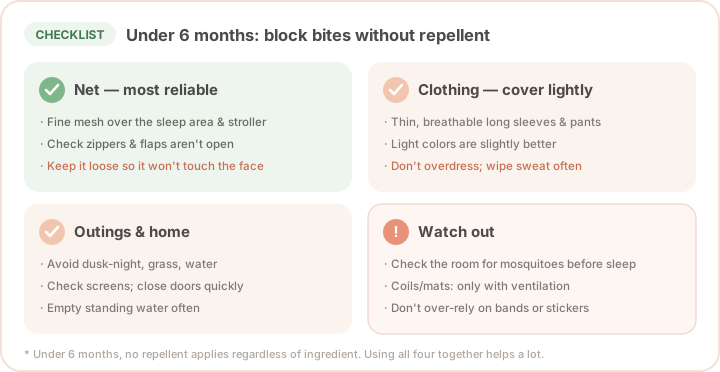
| Category | Do this | Watch out |
|---|---|---|
| Net | Cover the sleep area and stroller with fine mesh | Keep it loose so fabric won't touch or press the face |
| Clothing | Thin long sleeves and pants, light colors to reduce exposure | Don't bundle thickly and cause sweat; wipe sweat often |
| Outings | Avoid dusk-to-night, grass, and water | Bring a net and long clothing for evening outings |
| Home | Check screens, remove standing water | Check the room for mosquitoes before sleep |
Coils, electric mats, wristbands — okay near a young baby?
This is the most confusing part. The bottom line: in a space with a young baby, it's best to approach these carefully.
Products that work through smoke, fumigation, or spraying — like mosquito coils, electric mats, or insecticide sprays — can irritate the airways when used in an enclosed space or close to a baby. If you must use one, it's safer to use it beforehand in a room without the baby and ventilate well before bringing the baby in, or to use it while ventilating with the windows open, so the baby doesn't directly breathe in the smoke or ingredients. It's best to avoid keeping one burning next to the baby in a sealed room.
Wristbands, stickers, and patches scented with something like citronella are also popular, but the mosquito-prevention effect of these products is known to lack sufficient evidence. And "it's a natural ingredient, so it's safe for babies too" mixes two different things — an ingredient being mild versus it actually blocking mosquitoes — so it's hard to rely on these alone. For a young baby, the net, clothing, and environmental barriers above are far surer methods.
What changes after 6 months?
Once your baby grows to the usable age labeled on a product, from then you can use a mosquito repellent that fits the age and ingredient standards. But not just anything will do — you need to choose a product suited to the ingredient and age, and follow the instructions. Which ingredient from what age and how to use it is covered separately in choosing a baby mosquito repellent from 6 months by age and ingredient.
Of course, even once you can use repellent, it's good to keep using the net and clothing and environmental barriers together. Combining "apply to block" with "block physically" reduces the risk of bites that much more.
If they get bitten anyway, and when to seek advice
No matter how careful you are, a bite or two can happen. How to tend a bite and when to go to the doctor is covered in detail in caring for a baby's mosquito bite, step by step.
Apart from the bite itself, if any of the following apply, it's better to have a pediatrician check than to watch at home.
- The bite keeps swelling larger or turns firm, feels warm, and oozes
- Your baby itches severely, or scratching creates a wound that won't heal well
- After the bite, a fever, lethargy, or unusual fussiness appears along with it
- Your baby seems off after visiting an area where you're worried about summer mosquito-borne illness
Especially if signs of a different nature from a simple bite — like fever or lethargy — appear together, it's safer to get seen promptly than to tough it out on your own judgment.
Frequently asked questions
Isn't there a gentle repellent for newborns?
Babies under 6 months usually aren't candidates for repellent. Even if a product says "for newborns" or "gentle," be sure to check the usable age on the back, and at this stage the rule is to use net, clothing, and environmental barriers first.
Does a fan's breeze help repel mosquitoes?
Mosquitoes can't fly well against wind, so an environment with good airflow can somewhat reduce bites. Just aim it toward a wall or the ceiling so the cool air doesn't hit your baby directly. Wind alone won't fully block them, so it's best used together with a net.
If a breastfeeding mother applies repellent, is it okay for the baby?
It matters that repellent applied to the mother doesn't transfer onto the baby's skin. Before holding the baby, try to keep it off areas not covered by clothing, like the arms and neck, and wash your hands before feeding or cuddling. If you're worried, it's more reassuring for the mother to also use long clothing and net barriers indoors instead of repellent.
Can I preemptively apply a topical bite product as prevention?
These products also have a set usable age and purpose. Applying one to a young baby in advance for prevention isn't recommended, and even use after a bite is best only when needed, after checking the age and the product's instructions. For a young baby, it's safer to ask a pediatrician before applying anything on your own.
To sum up
Babies under 6 months mostly aren't candidates for repellent, so the rule is physical barriers that keep mosquitoes from reaching them. Cover the sleep area with a fine net, reduce exposure with thin long clothing, avoid the times and places with many mosquitoes, and keep the home tidy so mosquitoes can't get in or breed. These four are the basics of mosquito prevention for a young baby.
Use coils or electric mats carefully with ventilation, and don't over-trust wristbands or stickers. And once your baby grows to the usable age, you can add a repellent suited to the ingredient and age then. In that first summer, blocking every single one perfectly is hard, but just setting up this much lets your baby spend it far more comfortably.