Baby Stool Colors: Which Are Usually Fine and Which Need a Doctor
Yellow, mustard, green, and brown are usually not a worry, but white, gray, black, or bloody stool shouldn't be judged on color alone — see a pediatrician right away. Here's how to read color with texture, frequency, and your baby's condition.

Every time you open a diaper, you find yourself checking the color. "It was yellow yesterday, but today it's greenish — is something wrong?" Since your baby can't tell you in words, stool color becomes one of the few clues you have about how they're doing.
Here's the big picture first: yellow, mustard, greenish, and brown are colors commonly seen in babies. If your baby is feeding well, sleeping well, and generally content, these colors usually aren't a cause for worry. Just keep one thing in mind: it's hard to call a stool "normal" or "abnormal" from color alone. The same color can mean different things depending on how your baby is doing.
And a few colors are exceptions. White or gray (cream), a black stool after meconium has passed, and a red bloody stool are colors where it's safer to see a pediatrician right away rather than watch and wait. We'll highlight these three separately below. Let's go through the colors one by one.

Can color alone tell you if it's normal?
Honestly, color alone is hard to judge by. Stool color can shift within a single day depending on what your baby ate, how quickly it moved through the gut, and how much bile mixed in. So treat color as a "reference signal," and read it together with texture (loose or firm), frequency, and your baby's overall condition (feeding well and growing well) — that's when the picture comes together.
For example, a single greenish stool is hard to read as "something's wrong." If your baby is feeding well, playing well, and gaining weight, greenish is often fine. On the other hand, even if the color looks ordinary, a baby who is feverish, vomiting repeatedly, and limp is showing signs worth checking regardless of color. Please read the color notes below always assuming you'll look at "color + your baby's condition" together.
Which colors usually aren't a cause for worry?
As your baby grows, the color changes in order, from meconium to solid-food stools. Here are the colors commonly seen at each stage. Again, this is within the assumption that your baby is feeding well and generally content.
1. Meconium — the black, sticky stool of days 1–2
For the first day or two after birth, you'll see a black, sticky stool. This is called meconium — a mix of swallowed amniotic fluid, bile components, and more — so it's very dark and usually has almost no smell. Black at this stage is a commonly seen sight. Just be sure to tell it apart from the "black stool after meconium" we'll cover later.
2. Breastfed stool — yellow to mustard, loose and seedy
Breastfed babies often have yellow to mustard stools. They tend to be loose and watery, sometimes with seed- or grain-like bits, and can be frequent. Many parents worry, "It's yellow and loose — is it diarrhea?" But breastfed stool is often loose and frequent to begin with. It's hard to call it diarrhea by frequency alone, and here too, reading it alongside your baby's condition is the guide.
3. Formula-fed stool — pale yellow to tan, a bit firmer
Formula-fed babies often have pale yellow to tan stools. They tend to be a bit firmer than breastfed stool and can have a slightly stronger smell. With combined breast and formula feeding, you may see a color somewhere in between.
4. Greenish stool — common, and often fine
Greenish is also quite common in babies. It can appear for many reasons — bile mixing in, quick passage through the gut, feeding patterns, and so on. If there are no other symptoms and your baby is feeding well and growing well, greenish is usually fine to watch. Green stool is an especially confusing color, so if you'd like to know more, you can see it broken down color by color in our sister article below.
5. Brown stool — after starting solids
Once solids begin, stool settles into brown, and the color of foods can show through. Carrots can lend an orange tint, spinach a green one. If it's a temporary change from food, it's usually a natural one.

Which colors mean seeing a pediatrician right away?
From here I'll be a bit more direct. Unlike the colors above, the ones below are colors where it's safer to see a pediatrician right away rather than "watch a little longer" — even if your baby seems perfectly fine.
White or gray (cream) stool
If the stool looks white or gray (cream), drained of color, this isn't a color to just watch. It can appear when bile isn't flowing properly into the gut, and it can be linked to problems that need quick checking, such as biliary atresia. Especially between 2 and 8 weeks of age, a white or gray stool warrants a same-day visit to the pediatrician. Timing matters with this color, so don't put it off.
Black stool after meconium has passed
After the meconium (days 1–2) has passed — that is, a black stool that reappears from day 3 onward — it should be viewed differently from meconium. Bleeding from the stomach or intestine can make stool look black (melena), so this also needs a pediatrician's visit. Rather than "it was black at birth, so it's probably fine," always consider the timing together.
Red bloody stool, or blood in mucus
A stool showing red blood, or blood mixed into mucus, is also a color that needs a pediatric or emergency visit. In particular, a jam-like dark-red stool along with severe fussiness and vomiting can point to something like intussusception, so go to the hospital without delay. When vomiting keeps happening, you may also want to look at the causes when a baby keeps vomiting.
If you'd like to understand more about why these three colors are warning signs, how long you can watch, and what to do, you can continue in a closer look at the 3 emergency colors: white, black, and bloody stool.
When mucus stool keeps repeating
A stool with mucus like a runny nose, once or twice, with a baby who is feeding well and content, can usually be watched. But if mucus stool keeps repeating along with fever, diarrhea, or vomiting, or your baby isn't gaining weight well, it's better to get it checked.
Baby stool color guide at a glance
Pulling the colors out on their own, here's the summary. To stress it again: a color on the left doesn't mean automatic reassurance, and one on the right doesn't mean automatic disaster. Color is a signal; the judgment happens together with your baby's condition.
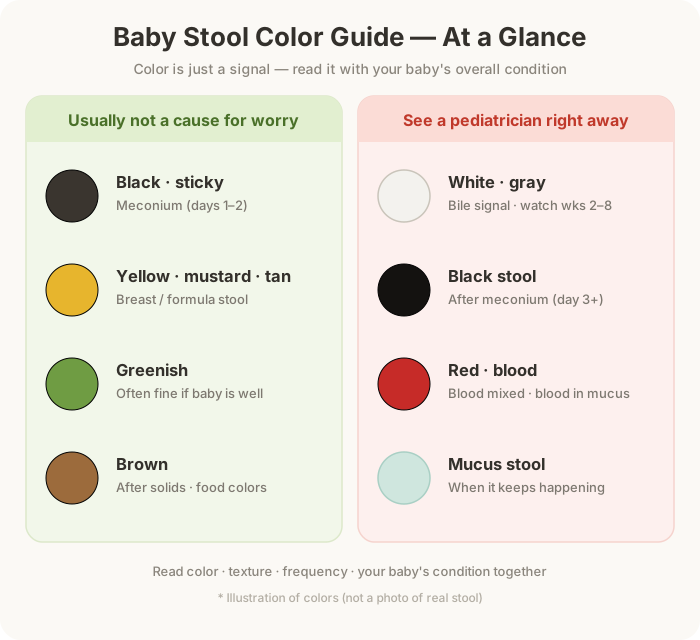
| Stool color | Commonly seen stage/situation | How to read it |
|---|---|---|
| Black (sticky) | Meconium, days 1–2 | A common color at this stage. But see below for black after meconium |
| Yellow/mustard (loose) | Breastfeeding | Usually not a worry, read with condition |
| Pale yellow/tan (firmer) | Formula feeding | Usually not a worry, read with condition |
| Greenish | Bile, quick gut passage, etc. | Often fine if no other symptoms |
| Brown/food-colored | After starting solids | Food effect, usually a natural change |
| White/gray (cream) | When bile isn't coming through | Pediatrician right away at any age (same day if 2–8 weeks) |
| Black (from day 3) | After meconium passes | Possible GI bleeding, see a pediatrician |
| Red (bloody)/blood in mucus | Bleeding, inflammation, etc. | Pediatric/emergency; vomiting + fussiness, don't delay |
Look at more than just color
Because the same color can mean different things depending on your baby, reading these alongside the color makes it less confusing.
- Texture: Did it suddenly turn watery-loose, or hard and hard to pass?
- Frequency: Has it sharply increased or decreased from the usual rhythm?
- Your baby's condition: Feeding well, sleeping well, playing well, gaining weight?
- Other symptoms: Any fever, repeated vomiting, limpness, or signs of dehydration?
Color can change day to day, so watching the trend over several days helps more than a single instance. If you see a color that worries you, take a photo of the diaper on the spot and show it at the visit — it helps the doctor understand the situation.
See a doctor right away in these cases
Separate from color, if any of the following apply, see a pediatrician promptly rather than waiting.
- White or gray (cream) stool — a same-day visit especially at 2–8 weeks
- A black stool after meconium (from day 3 onward)
- Red bloody stool, or blood in mucus — without delay if a jam-like dark-red stool comes with severe fussiness and vomiting
- Mucus stool that keeps repeating with fever, diarrhea, or vomiting, or poor weight gain
- Regardless of color, whole-body symptoms like fever, repeated vomiting, suspected dehydration, or limpness
Stool color is only a reference signal. If you see a worrying color or your baby seems different from usual, the safest thing is to have it checked by a pediatrician rather than deciding on your own from color.
Frequently asked questions
My baby keeps having green stools — is that okay?
Greenish is a common color in babies. If they're feeding well, sleeping well, and gaining weight, it's usually fine. But if symptoms like fever, vomiting, or limpness come along, or you notice a worrying change, get it checked.
My breastfed baby has yellow, loose stools several times a day. Is it diarrhea?
Breastfed stool is often loose and frequent, so it's hard to call it diarrhea by frequency alone. If it suddenly turns watery-loose beyond the usual rhythm, the frequency jumps, and your baby becomes limp or feeds poorly, that's when it's worth getting advice.
After feeding carrots or spinach, that color shows right up in the stool.
Once solids start, it's common for the color of foods to show through. If it's just a temporary change from food, it's usually natural. But if you can't tell whether a red color is from food or blood, it's safest to take a photo and have it checked at the visit.
The stool is white but my baby feeds well and seems fine. Can I just watch?
White or gray stool is a color we recommend seeing a doctor about right away, even if your baby seems fine. Especially between 2 and 8 weeks, go to the pediatrician the same day.
To wrap up
Yellow, mustard, green, and brown are colors commonly seen in babies, and if your baby is feeding well and growing well, they usually aren't much of a worry. On the other hand, white or gray, a black stool after meconium, and bloody stool shouldn't be watched on color alone — see a pediatrician right away. And above all, rather than deciding from a single color, look at your baby's condition and the trend over several days together — that's the surest way to feel less anxious in front of that diaper.