White, Black, or Red Baby Stool: See a Doctor Right Away — 3 Colors Not to Miss
If your baby's stool is white or pale gray, black, or shows red blood, don't put it off — see a pediatrician right away. Here's what each color may signal, how long you shouldn't wait, and what to do now.

When you open a diaper and the color is very different from usual, your heart drops. That's especially true when it's not yellow or brown but white, jet black, or shows red blood.
Let me start with the conclusion. If you see any of these three in your baby's stool — white or pale gray (cream), black after meconium has passed, or a color mixed with red blood — it's safer to see a pediatrician right away than to watch at home. These aren't colors to "wait and see a little longer"; they can be signals that need quick checking.
That doesn't mean it's always something serious. The causes range from mild to urgent, and the judgment has to be made through a visit. But because "check now" matters for these three, below we'll go through each color one by one: why it happens, how long you shouldn't wait, and what to do now.

Which colors mean going to the hospital right away?
There are broadly three colors that need checking right away: a white or pale-gray (cream) stool, a tarry, black, sticky stool after the meconium stage has passed, and a stool mixed with red blood or a jam-like dark red. Other colors like green and yellow mostly fall within the normal range, but these three are a different matter.
For all three, what to do now is similar: take a photo of the soiled diaper in a bright place, and see a pediatrician that same day. In particular, if a red stool comes with severe fussiness plus vomiting and limpness, think emergency room rather than waiting for an appointment. The card below sums up color, meaning, and action at a glance.
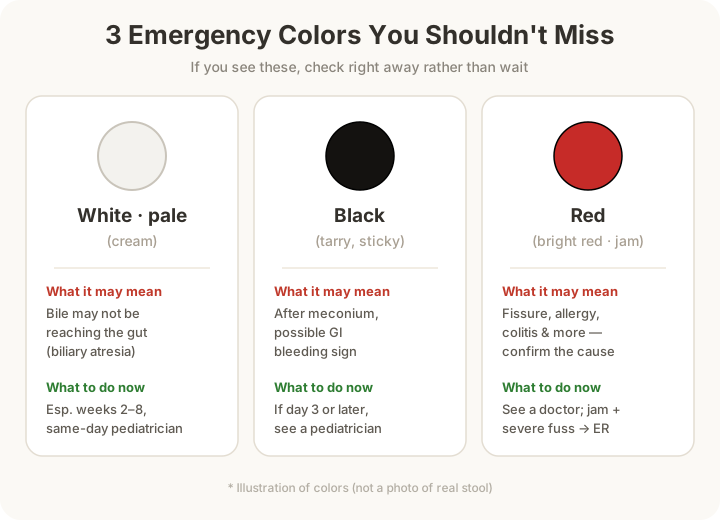
Let's look at why each color needs checking, one by one
Even within the same "go to the hospital" signal, what's happening in the body differs by color. We'll break down, color by color, why the color appears, how long you shouldn't miss it, and what to do now.
1. White or pale-gray cream stool — it can be a sign that bile isn't coming through
Stool being yellow or brown comes from the color of bile. But if the stool is pale — white, gray, or cream-like — it can be a sign that bile isn't flowing properly into the gut. One thing to consider here is a blockage of the bile ducts, that is, something like biliary atresia.
Timing matters here. Especially around 2 to 8 weeks of age, if you see a pale, gray-white stool, don't put it off. Problems like biliary atresia are known to have better outcomes the earlier they're found and treated, so "time" itself is the key to protecting your baby. The thing most worth avoiding is letting the check fall behind while you watch for a few days thinking "maybe it just wasn't digested well."
What to do now is clear. If the stool color looks pale or gray-white, see a pediatrician the same day. Color can look different under different lighting, so photographing the diaper under natural or bright light and showing it at the visit helps with the assessment.

2. Black stool — worth a second look if meconium has passed
Black stool is a slightly confusing color. The black, sticky stool around days 1–2 is meconium, a natural stool at that stage. That's where the thought "isn't black stool fine to begin with?" comes from.
The concern is after that stage. From day 3 onward, once the meconium has all come out and the stool color has settled, if a tarry, jet-black, sticky stool appears again, it's a different story. This can be a sign of GI bleeding — blood from the upper digestive tract that has come down and been digested, making the stool look black.
Of course, not everything that looks black is bleeding. Iron supplements the mother took, or certain foods the baby ate (dark-colored foods like blueberries) can also turn stool black. But this is hard to sort out at home. So rather than guessing the cause and moving on, it's safer to confirm it with a visit. If the black stool continues or the amount is large, hurry more.
3. Stool mixed with red blood — causes vary, so it must be checked
Seeing red blood in the stool is startling, but the causes are many. Bright-red blood streaked on the surface, or blood mixed in mucus, can be an anal fissure from constipation, but it can also be cow's-milk protein allergy or infectious enteritis. So rather than deciding on your own that "it's probably constipation," a visit is needed to sort out the cause.
There's one combination especially worth watching. If a jam-like, dark-red, sticky stool comes with a baby who fusses severely then goes quiet, over and over, and who vomits or goes limp, it can point to intussusception, where part of the intestine telescopes into itself. This is an emergency that needs prompt treatment.
Here's what to do now. If there's blood in the stool, see a pediatrician; and if the jam-like stool described above comes with severe fussiness, vomiting, or limpness, don't wait for an appointment — go to the emergency room. Here too, keeping a photo of the soiled diaper lets you convey your baby's condition accurately.
If these signs appear along with the color, hurry more
Your baby's overall condition matters as much as stool color. If one of the three colors above is present and the signs below also pile on, it's safer to lower your threshold and see a doctor quickly.
- Fever
- Limp with weak responsiveness, or hard to wake
- Repeated vomiting (especially when green bile is mixed in)
- Feeding poorly and lethargic
- Noticeably less urine (when dehydration is suspected)
- Fussing more severely than usual
These signs can be a marker that your baby's body is struggling. If they pile on while you're already worried about stool color, use "when unsure, ask" as your guide and move the visit up. If dehydration signs like reduced urine or limpness appear together, you may also want to see how to check for dehydration in a baby at home.
The 3 emergency colors compared at a glance
Here's color, meaning, timing, and action in a table. It's not a rule for judgment, but a reference to help you quickly notice a situation that needs a visit.
| Color | What it may signal | Especially when | What to do now |
|---|---|---|---|
| White/pale-gray/cream | A sign bile isn't reaching the gut (biliary atresia, etc.) | Watch around 2–8 weeks; quick checking matters | Same-day pediatrician; photo the stool in bright light |
| Black (tarry, sticky) | After meconium, possibly a GI-bleeding sign | From day 3, after meconium has passed | Visit; also mention iron supplements/foods |
| Red (bright-red blood/jam) | Fissure, cow's-milk protein allergy, enteritis, and more | Jam color + severe fussiness/vomiting/limpness is an emergency | Bloody stool: visit; if it looks emergent, the ER |
Keeping a photo of the stool helps at the visit
There's one thing that helps for all three colors: a diaper photo. Stool color looks different depending on lighting and time, and by the time you reach the clinic you've usually already changed the diaper, making it hard to explain in words alone.
So when you see a color that's different from usual, before throwing the diaper away, take one photo in a bright place. It's even better to jot down when the color started, how many times a day, and any accompanying symptoms (fever, vomiting, fussiness, etc.). A record like this is a big help in conveying your baby's condition accurately at the visit.
If you're curious about baby stool colors overall, seeing our complete baby stool color guide, which lays out everything from the normal range to colors to watch, together with this one can reduce the confusion.
Frequently asked questions
Meconium is black, so isn't all black stool fine?
Black meconium is natural only around days 1–2. If a tarry, black, sticky stool reappears from day 3 onward, once the meconium has passed and the color has settled, it can be a sign of a different problem, so it's safer to confirm it with a visit.
Should I go to the hospital even if it's only a tiny bit of blood?
Yes — even a small amount, it's best not to decide the cause on your own. It can be relatively mild, like an anal fissure from constipation, but it can also be another cause such as cow's-milk protein allergy or enteritis, so it needs a visit to sort out. Especially if a jam-like, dark-red stool comes with severe fussiness, vomiting, or limpness, think emergency room right away.
A white stool showed up once and then turned yellow again. Should I still get it checked?
If a pale or gray-white stool appeared even once, it's safer to keep a photo and mention it at the visit. Problems where bile isn't coming through are known to depend on quick checking, so rather than brushing it off with "it went back to normal," getting it checked is also more reassuring.
Is there anything I can do at home before the visit?
Take a photo of the soiled diaper in a bright place, and note when the color started, how many times, and any accompanying symptoms. If your baby is feeding well and playing well with no fever, vomiting, or limpness, share that too; conversely, if such signs pile on, move the visit up.
To wrap up
If you see any of these three in your baby's stool — white or pale gray (cream), black after meconium has passed, or a color mixed with red blood — it's safer to check right away than to watch. White or pale-gray can be a sign bile isn't coming through, so see a doctor the same day especially at 2–8 weeks; for black stool, a visit if it's from day 3 onward; for red stool, get a visit, and if jam color comes with severe fussiness, vomiting, or limpness, think emergency room.
For all three, the common thing to do is keep a diaper photo in a bright place and see a pediatrician that same day. If signs like fever, repeated vomiting, limpness, or reduced urine pile on, hurry more. These colors aren't there to frighten you — they're signals to not miss and to check quickly.