Baby Supplements by Age: What to Give and When, Newborn to Age 2
From newborn to 4–6 months to age 1 and 2, here is what to look at at each stage as a month-by-month timeline. It covers official guidance like vitamin D 400 IU and iron timing, plus the caution that combining products can mean too much.

"What should I be giving my baby at this age?" Standing in front of the supplement aisle, or with a search box open, it's easy to get stuck. There are so many options, and it's hard to find a clear rundown of what to give and when.
Here's the big picture first. The nutrient to keep an eye on shifts a little by stage: vitamin D in the newborn period, iron around 4–6 months, food over supplements once solids settle in after 6 months, and balanced meals at the center after age 1.
That said, this isn't a "you must buy this at this age" list. Whether something is needed depends on feeding method (breast or formula) and your baby, and combining products can actually mean too much. So below, we lay out what's worth looking at at each stage as a timeline, and cover how to judge whether it's actually needed separately.
What to add first, by month?
Here's a quick summary of what to watch at each stage. Exclusively or mostly breastfed babies are advised to get 400 IU of vitamin D a day, starting within the first few days (to prevent rickets). Formula-fed babies usually don't need a separate supplement if they feed enough, since formula contains vitamin D. Note that vitamin K is given as a shot at the hospital at birth, so it's a different matter from the supplements you give at home.
After that, you look at iron around 4–6 months, and during the solids stage the baseline is to cover it through food. The roadmap below lays out the checkpoints for each stage at a glance.
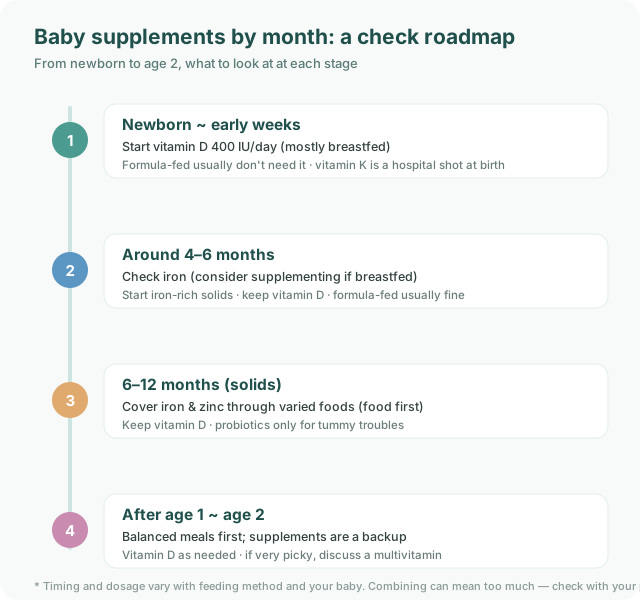
| Stage | What to look at | Notes |
|---|---|---|
| Newborn ~ early weeks | Vitamin D 400 IU/day (exclusively/mostly breastfed) | Formula-fed usually fine if feeding enough / vitamin K is a hospital shot at birth |
| Around 4–6 months | Iron (consider if exclusively breastfed), keep vitamin D | Start iron-rich solids / formula-fed usually fine as it's fortified |
| 6–12 months (solids) | Iron & zinc through varied foods, keep vitamin D | Probiotics optional for colic, constipation, diarrhea, etc. |
| After age 1 ~ age 2 | Balanced meals first; vitamin D as the situation calls for | If very picky, discuss a multivitamin |
The table is for seeing the overall flow. Whether your baby actually needs something, and when to start and how long to continue, depends on feeding method and your baby — so let's unpack each stage a bit more below.
Let's look at each stage one by one
Even the same "supplement" is added for different reasons at different stages. Let's break down, by stage, why you look at that nutrient then and who it applies to.

1. Newborn to early weeks — start with vitamin D
The first thing that comes up at this stage is vitamin D. Breast milk is wonderful in many ways, but its vitamin D content may not be enough for a baby, so exclusively or mostly breastfed babies are advised to get 400 IU a day starting within the first few days. It's tied to bone health and preventing rickets.
Conversely, formula-fed babies get vitamin D from the formula itself, so if daily intake is enough, they usually don't need a separate supplement. If intake is on the lower side, check once with your pediatrician. The vitamin K mentioned earlier is a shot given at the hospital right after birth, so keep it separate from the supplements parents give in this roadmap.
2. Around 4–6 months — time to look at iron
The iron a baby is born with gradually declines around 4–6 months. So this is when you look at iron. Exclusively breastfed babies are advised to consider iron around 4–6 months (per the American Academy of Pediatrics), and as solids begin, it flows naturally into iron-rich foods like beef and iron-fortified cereal. Formula-fed babies usually don't need a separate supplement, since formula is iron-fortified. That said, babies born premature or at low birth weight may have different needs and timing, so it's safest to follow your pediatrician's guidance for iron at this stage. For how to cover iron through solids, see our guide on the order and how to start first foods. Keep up vitamin D through this stage too.

3. 6–12 months (solids) — food comes before supplements
Once solids settle in, the baseline is to cover nutrients like iron and zinc through a variety of foods. Around this time the range of foods a baby can eat keeps growing, and simply meeting different food groups across three meals a day can cover a good portion.
So at this stage, look at "is my baby eating well?" before "should I add a supplement?" If picky eating is significant or a specific deficiency is a concern, that's when to talk to your pediatrician. Probiotics are something to consider only selectively, for situations like colic, constipation, or diarrhea. Keep up vitamin D through this stage too.
4. After age 1 to age 2 — meals take center stage
After the first birthday, your baby's meals gradually shift toward more adult-like forms. Here, balanced meals come first, and supplements are strictly a backup, since a growing share of nutrition comes from food — such as switching to cow's milk after age 1.
Vitamin D may continue depending on diet and sun exposure, so whether to keep it up is something to follow your pediatrician's guidance on. If picky eating is especially strong and meals alone feel hard to cover, whether to give a multivitamin is best decided through consultation rather than started on your own.

You don't have to buy and give everything on the age chart

Looking at the roadmap, the nutrients at each stage are so densely packed that you might think, "Do I have to get all of these?" But this timeline is a map of "here's what to look at at this stage," not a shopping list you have to buy in full.
Whether something is actually needed varies from baby to baby. Even at the same 4 months, exclusively breastfed and formula-fed babies handle iron differently, and a baby who eats well differs from one who doesn't. For how to judge "what, why, and for whom," see our article on whether babies really need supplements — it goes into more detail and is helpful to read alongside this.
Stacking several can actually mean too much
One surprisingly easy thing to miss when giving supplements is overlapping nutrients. Giving a multivitamin alongside individual vitamins, or having the same nutrient in different products, can push a particular nutrient higher than needed without you realizing it.
In particular, fat-soluble vitamins like A and D build up in the body, so take extra care with excess. If you're giving two or more, check each product's nutrient and amount label to make sure the same nutrient doesn't overlap, and when in doubt, checking with your pediatrician or pharmacist brings peace of mind. Rather than "it's supposed to be good, so add one more," start by checking whether it overlaps with what you're already giving.
When to consult your pediatrician
Supplements — starting, stopping, and dosing — all need to match your baby's situation, so in cases like these it's safer to seek care or a consultation rather than deciding on your own.
- You're exclusively breastfeeding but unsure when and how much vitamin D or iron to give
- Situations where timing and dosage may differ, such as prematurity or low birth weight
- You're already giving several supplements and worry whether nutrients overlap
- Picky eating is significant or your baby isn't eating well, raising concern about a specific deficiency
- After giving a supplement, you notice unusual reactions like hives, vomiting, or diarrhea
In particular, if your baby has fever, repeated vomiting, bloody stool, suspected dehydration, or signs of labored breathing, get medical care promptly — separate from any supplement question.
Frequently asked questions
Q. Do premature or low-birth-weight babies follow the same schedule?
A. No, it can differ. The timing and dose for starting iron may differ from full-term babies, so in this case it's safer to follow your pediatrician's guidance than to apply the roadmap as is.
Q. How long should I give vitamin D?
A. It's hard to give one fixed age. It varies with feeding method, how much comes from solids and meals, and sun exposure, so whether to keep it up is best decided together with your pediatrician.
Q. Can't one multivitamin cover everything?
A. It looks convenient, but caution is needed. Giving a nutrient that's already in the multivitamin again as a separate supplement can lead to excess. If you're considering a multivitamin, start by checking the label for nutrients that overlap with what you're already giving.
Q. If my baby eats solids well, can I stop the supplements?
A. If food covers it sufficiently, you can adjust, but it varies by nutrient and by your baby's situation. Rather than stopping on your own, we recommend deciding through a consultation.
To sum up
It's handy to remember supplements by age as the flow of newborn vitamin D → iron at 4–6 months → food-first during solids → meal-centered after age 1. But keep in mind this is only a map of the order — whether something is needed varies with feeding method and your baby, and stacking can mean too much. When starting, stopping, or dosing feels unclear, a pediatrician consultation is the most reliable guide. For which nutrient matters for whom and why, read more in our article on whether babies really need supplements.