Do Babies Need Supplements? When to Give Vitamin D, Iron, and Probiotics
Supplements aren't essential for every baby. But exclusively breastfed babies typically start 400 IU of vitamin D a day within the first days, and iron depends on feeding method and timing. Here's which nutrient matters for whom and why, and how to judge if your baby needs it. Before combining products, check for overlapping or excess nutrients with your pediatrician or pharmacist.

Walk down the baby aisle at the pharmacy and you'll see vitamin D, iron, probiotics, multivitamins — so many options. It's easy to start wondering, "Everyone seems to give these; does my baby need them too? Am I missing something if I don't?"
Here's the big picture first: not every baby needs supplements. A baby who is feeding well and growing well usually gets the nutrients they need from milk and food alone. So you can set down some of the pressure that "something bad will happen if I don't."
That said, there is one near-exception — something that becomes a baseline depending on the situation. The main example is vitamin D for exclusively breastfed babies. So rather than lumping everything into "give them all" or "skip them all," this article walks through which nutrient matters for whom, and why, by feeding method (breast, formula, mixed) and age. If you're curious about the order of what to add and when, month by month, you can continue with our baby supplements roadmap by age.

Does every baby really need supplements?

The short answer: supplements are not uniformly essential for a healthy, thriving baby. The general thrust of pediatric guidance is that a baby who eats well and grows along their curve usually gets the nutrients they need from milk and solids.
So supplements are less "a checklist to complete in full" and more a way to fill in what your particular baby is likely to be short on, as the situation calls for it. What's needed shifts with feeding method (breast or formula), current age, whether solids have started, and whether there's picky eating. Rather than following what everyone else does, it helps to weigh things one by one based on your own baby.
Which nutrient, for whom and why?
"Who needs it" varies quite a bit by nutrient. Let's focus on the easily confused ones — vitamin D, iron, and probiotics — and break them down by situation.
1. Vitamin D — a baseline for exclusively breastfed babies
Vitamin D is the first one worth remembering here. Breast milk is wonderful nutrition, but it's relatively very low in vitamin D. Because a shortfall can lead to rickets (weakened bones), exclusively (or mostly) breastfed babies are advised to get 400 IU of vitamin D a day, starting within the first few days of life.
Formula-fed babies are a bit different. Formula already contains vitamin D, so a baby taking roughly 1L a day often doesn't need a separate supplement. But if intake is lower than that, or if breast milk makes up a large share in mixed feeding, extra vitamin D may be needed — check with your pediatrician.
2. Iron — depends on feeding method and timing
Iron is a nutrient you look at alongside your baby's age and feeding method. Newborns are born with a store of iron from their mother, but that reserve gradually declines over the first several months. So the American Academy of Pediatrics suggests considering iron for exclusively breastfed babies around 4–6 months. After that, it flows naturally into iron-rich solids like beef and iron-fortified cereal. For how to cover iron through solids, see our guide on how to start first foods and in what order.
Formula-fed babies usually don't need separate iron, since formula itself is iron-fortified. That said, babies born premature or at low birth weight have different iron requirements, so it's best to follow your pediatrician's guidance tailored to your baby.
3. Probiotics — optional, not essential
Probiotics are less an essential nutrient and more of an optional choice. A pediatrician may suggest them selectively for digestive troubles like colic, gas, constipation, or diarrhea, but not every healthy baby needs them. Effects can also vary from baby to baby and situation to situation, so rather than "everyone gives them, so we will too," it's better to decide after a consultation when a need comes up.
4. Zinc, DHA, multivitamins — depends on the situation
The same goes for nutrients like zinc, DHA, and multivitamins. They're worth considering case by case — when a specific nutrient is lacking, when picky eating is significant, or when there's a special health situation — not something every baby needs day to day. If you're unsure whether they're needed, talk to your pediatrician first rather than stacking several on your own.
Who needs what, at a glance
Here's everything so far in one table. Finding which cell your baby falls into can make the decision a little easier.
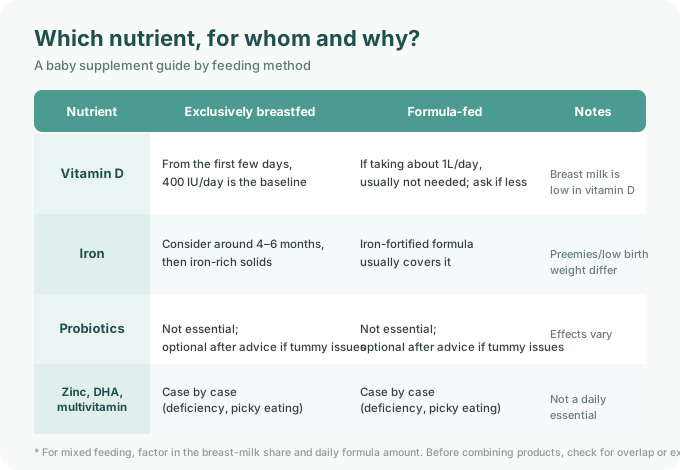
| Nutrient | Exclusively breastfed | Formula-fed | Notes |
|---|---|---|---|
| Vitamin D | 400 IU/day from the first few days is the baseline | Usually not needed if taking about 1L/day; ask if less | Breast milk is low in vitamin D |
| Iron | Consider around 4–6 months → then iron-rich solids | Iron-fortified formula usually covers it | Preemies/low birth weight differ |
| Probiotics | Not essential; optional after advice if tummy issues | Not essential; optional after advice if tummy issues | Effects vary |
| Zinc, DHA, multivitamin | Case by case (deficiency, picky eating) | Case by case (deficiency, picky eating) | Not a daily essential |
For mixed feeding, factor in the balance of breast milk and formula, plus how much formula your baby actually takes each day. If breast milk makes up a large share, it's safer to lean toward the exclusively-breastfed guidance.
How do you decide if your baby needs it?

If the table is the broad frame, the actual decision comes down to looking at a few things about your baby together:
- Feeding method: exclusively breastfed, formula-fed, or mixed. This is the starting point especially for vitamin D and iron.
- Age: how many months old. Some nutrients, like iron, shift around the 4–6 month mark.
- Intake and growth: whether your baby is feeding well and growing along their curve. If growth is on track, extra supplementation usually isn't urgent.
- Solids and picky eating: whether solids have started, and whether certain food groups are barely eaten.
Sketching out these four makes it a little clearer what's worth adding right now and what you can leave out. If it still feels unclear, that's exactly the right moment to ask your pediatrician.
Before combining products, watch for excess like this
With supplements, "more is better" doesn't hold. If anything, giving several products at once can stack the same nutrient and push intake higher than needed.
In particular, fat-soluble vitamins like A and D build up in the body, so too much can actually be harmful. It's easy for overlaps to happen — giving a separate vitamin D product when the multivitamin already contains it, or unknowingly adding a nutrient that's already covered by formula.
So before adding a new supplement or giving two or more together, it's important to check what nutrients and how much are in each product, and whether they overlap. Don't raise doses on your own either — follow the product labeling and the guidance of your pediatrician or pharmacist. Exact doses and combinations can vary with your baby's situation, so it's safer to get it confirmed than to decide alone.
When to check with your pediatrician or pharmacist
If any of the following apply, it's best to consult a professional before starting or adjusting.
- You're exclusively breastfeeding but haven't started vitamin D yet
- Formula intake is under about 1L a day, or breast milk makes up a large share in mixed feeding
- There's a special birth situation, such as prematurity or low birth weight
- You're planning to give two or more supplements together, or you're unsure whether nutrients overlap
- Picky eating is significant, or your baby isn't eating well and growth seems slow
And separate from supplements: if your baby shows signs like fever, repeated vomiting, bloody stool, suspected dehydration, or breathing difficulty, that's not something to solve with nutrition — get medical care promptly.
Frequently asked questions
Q. How long should I give 400 IU of vitamin D?
A. For exclusively breastfed babies, starting within the first few days is recommended. As solids and feeding change over time, needs can shift too, so it's best to decide when to stop or adjust together with your pediatrician.
Q. Do formula-fed babies need no supplements at all?
A. Formula is fortified with vitamin D and iron, so if a baby takes enough each day, extra supplementation usually isn't needed. But if intake is low or there's a special situation, it can differ — when in doubt, get it checked.
Q. Should probiotics always be given to a baby with tummy trouble?
A. They're not a must-have essential. A pediatrician may suggest them selectively for digestive troubles, but effects can vary from baby to baby, so it's best to decide after a consultation.
Q. Isn't one multivitamin a convenient way to cover several nutrients at once?
A. It can be convenient, but if it overlaps with nutrients already covered by formula or another product, it can lead to excess. It's important to first check that the nutrients and doses suit your baby.
To sum up
Supplements aren't essential for every baby, but some — like vitamin D for exclusively breastfed babies — become a baseline depending on the situation. The key isn't "give them all" or "give none," but looking at your baby's feeding method, age, and intake, and picking only what's needed. And before giving two or more together, always check for overlapping or excess nutrients — when in doubt, get guidance from your pediatrician or pharmacist. For what to add and when, month by month, continue with our baby supplements roadmap by age.