Baby vaccination schedule, from birth to age 6 at a glance
When does your baby get which shot? We've put the standard immunization schedule from just after birth to age 6 into a single age-by-age table — with full vaccine names, whether it's free and where to go, and how to confirm your own schedule.

Once your baby arrives, a question keeps following you around: "What's the next shot, and when?" From right after birth to around age one and on to ages 4–6, there are many vaccines and several doses. At times like these, just having one schedule you can see at a glance takes a lot of the worry away.
Here's the big picture first. Hepatitis B dose 1 right after birth, BCG within 4 weeks, then several vaccines split into doses at 2, 4 and 6 months. From around age one to age 6, shots like MMR and Japanese encephalitis and their boosters continue. The table below gathers the vaccines by age, so you only need to look at the row for your baby's age.
This article organizes the timing and vaccines based on the standard immunization schedule. Most are free shots supported by the government, and the timing may shift a little depending on your child's condition — so the most accurate personal schedule comes from your pediatrician.
What does the whole vaccination schedule look like?
On one page, it looks like this — a standard schedule of the vaccines given at each stage, from just after birth to age 6. Start by finding the row that matches your baby's age.
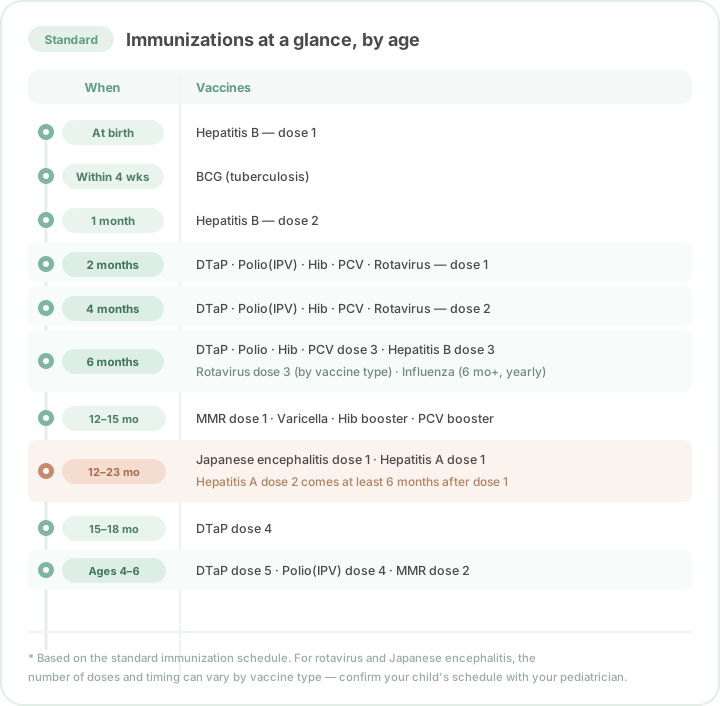
| When | Vaccines |
|---|---|
| At birth | Hepatitis B — dose 1 |
| Within 4 weeks | BCG (tuberculosis) |
| 1 month | Hepatitis B — dose 2 |
| 2 months | DTaP dose 1, Polio (IPV) dose 1, Hib dose 1, Pneumococcal (PCV) dose 1, Rotavirus dose 1 |
| 4 months | DTaP dose 2, Polio (IPV) dose 2, Hib dose 2, Pneumococcal (PCV) dose 2, Rotavirus dose 2 |
| 6 months | DTaP dose 3, Polio (IPV) dose 3, Hib dose 3, Pneumococcal (PCV) dose 3, Hepatitis B dose 3, Rotavirus dose 3 (by vaccine type), Influenza (yearly from 6 months) |
| 12–15 months | MMR dose 1, Varicella, Hib booster, Pneumococcal (PCV) booster |
| 12–23 months | Japanese encephalitis dose 1, Hepatitis A dose 1 (Hepatitis A dose 2 at least 6 months after dose 1) |
| 15–18 months | DTaP dose 4 |
| Ages 4–6 | DTaP dose 5, Polio (IPV) dose 4, MMR dose 2 |
Looking at the table, you'll notice shots cluster at 2, 4 and 6 months. In this window several vaccines are given in doses, and from around age one the types change and boosters follow. Some items, like rotavirus and Japanese encephalitis, vary in number of doses and timing by vaccine type — so use this table for the big picture and follow your pediatrician's guidance for the details.
The vaccine names look unfamiliar — what do they prevent?
Abbreviated names like DTaP, Hib and PCV can feel unfamiliar at first. Knowing what each one prevents makes the schedule much less confusing.
- Hepatitis B: prevents hepatitis B virus infection.
- BCG: a shot that prevents tuberculosis.
- DTaP: one vaccine covering diphtheria, tetanus and pertussis (whooping cough).
- Polio (IPV): prevents polio.
- Hib: prevents illnesses such as meningitis caused by Haemophilus influenzae type b.
- Pneumococcal (PCV): prevents pneumococcal infection.
- Rotavirus: an oral vaccine that prevents rotavirus gastroenteritis, a common cause of infant diarrhea.
- MMR: prevents measles, mumps and rubella together.
- Varicella: prevents chickenpox.
- Japanese encephalitis: prevents Japanese encephalitis; the schedule differs between inactivated and live attenuated vaccines.
- Hepatitis A: prevents hepatitis A, given twice at least 6 months apart.
- Influenza: prevents seasonal flu, given every year from 6 months of age.
Don't worry if the names are hard. At the clinic, your pediatrician will tell you which vaccine fits that stage, so you don't have to memorize every abbreviation. It's more helpful to know where your baby is in the sequence — which dose they're up to.
Newborn stage: shots in the first month
The very first shots come right after birth: Hepatitis B dose 1 just after birth, BCG within 4 weeks, and Hepatitis B dose 2 at 1 month.
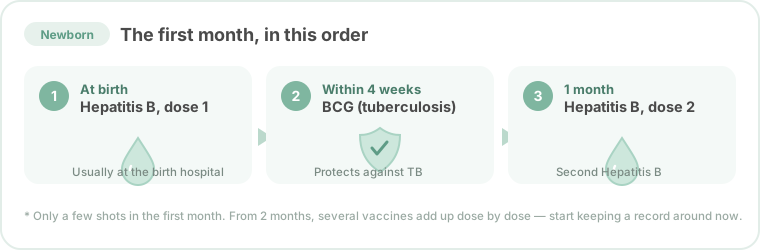
Hepatitis B dose 1 right after birth is often given at the hospital where you delivered. BCG, which prevents tuberculosis, is given within 4 weeks, and the guidance can vary a little by how it's administered. There aren't many shots in the first month, but from 2 months they ramp up in earnest — so starting a record now makes everything easier later.

2, 4 and 6 months: the busiest stretch
This is the busiest window for vaccinations. At 2 and 4 months your baby gets DTaP, Polio (IPV), Hib, Pneumococcal (PCV) and rotavirus by dose, and at 6 months Hepatitis B dose 3 and influenza are added.

Getting several at once is worrying, isn't it. The standard schedule guides giving multiple shots on the same day. Which vaccines go together on a given day is decided by your pediatrician based on your baby's condition, so asking "what will you give today?" before the visit helps you feel prepared. Rotavirus is an oral vaccine, so it's given a little differently, and the total number of doses can vary by vaccine type.
After a shot, a fever or swelling at the injection site can happen. For how to watch a fever after vaccination, we've put together more in caring for a fever after a shot.
From age one to age 6
Around age one, the vaccine types shift. At 12–15 months come MMR dose 1, varicella, and Hib and Pneumococcal (PCV) boosters, and Japanese encephalitis dose 1 and Hepatitis A dose 1 also begin sometime between 12 and 23 months. Hepatitis A dose 2 comes at least 6 months after dose 1. DTaP dose 4 is usually given at 15–18 months.
At ages 4–6 there are pre-school boosters. This is when DTaP dose 5, Polio (IPV) dose 4 and MMR dose 2 round out the doses you started earlier. Japanese encephalitis follows a different later schedule depending on the vaccine type (inactivated vs. live attenuated), so recording which type your baby started with helps you keep up with the next shot. Shots after age one are spaced far apart, which actually makes them easy to forget — a schedule reminder helps here.
Is it free, and where do we go?
Most standard immunizations are included in the National Immunization Program (NIP) and can be received for free. They're given at designated clinics and public health centers.

Shots on the standard schedule can also be given free at your neighborhood pediatrician if it's a designated clinic, so many families simply handle it at their usual clinic without going far. Note that some items may have different coverage or eligibility by vaccine type, so it's worth checking whether the shot is free before you go.
Keeping the record, so nothing slips
With so many types and different intervals, keeping the next date only in your head isn't easy. That's why the habit of writing down what's been given and the next due date in one place quietly helps a lot.
Your baby's health booklet and the official records keep the vaccination history, and adding your own family record on top makes it even more reassuring. In Babyfolio, logging which shots your baby got and when, alongside a photo, is handy for checking the next date or showing the history quickly at a pediatric visit. Grandparents and family living apart can view the record together and leave reactions, so you can watch growth moments like vaccinations together.
When to check with your pediatrician
The standard schedule is only a reference; the schedule that fits your baby can vary with their condition. In situations like these, don't decide on your own — check with your pediatrician.
- When your baby has a fever or seems unwell on the shot day and you're unsure whether to go ahead.
- When you've missed a scheduled time or the schedule has slipped.
- When your baby was born premature or has a special health condition needing schedule adjustment.
- When there was an unusual reaction after a previous shot.
- When you're unsure of your baby's exact next timing and vaccine.
A fever or fussiness after a shot is a common reaction, but if a worrying sign appears — a fever that lasts a long time, or your baby becoming very listless — get them seen. For how to tell a fever apart from a cold or other causes regardless of vaccination, is it a cold or something else? may also help.
Frequently asked questions
We missed the timing by a few days. Do we have to start over?
Being a little late usually doesn't mean starting from scratch. How you continue can vary by how late it is and the vaccine type, so check the remaining schedule with your pediatrician.
Is it okay to get several on the same day?
The standard schedule guides giving several vaccines together on the same day. Which combination is decided by your pediatrician based on your baby's condition, so discuss it together at the visit.
My baby has a slight cold — can we still vaccinate?
Whether it's a mild symptom or better to postpone depends on your baby's condition that day. If there's a fever or they seem unwell, it's safer to get them checked before the shot to confirm it's okay.
We moved and changed clinics. How does the record carry over?
The official vaccination history is managed nationally, so even after switching clinics you can keep seeing the earlier record. Telling your new pediatrician the past history helps you continue the remaining schedule.
To sum up
Baby vaccinations start with Hepatitis B and BCG right after birth, continue with several vaccines by dose at 2, 4 and 6 months, and carry on from around age one to age 6 with shots like MMR and Japanese encephalitis and their boosters. Finding the row for your baby's age in the standard schedule above gives you the big picture.
Most can be received free at designated clinics and public health centers, and even unfamiliar vaccines are explained on the spot, so parents don't need to memorize everything. Above all, remember the standard schedule is a reference — the exact schedule that fits your baby, and any situation needing adjustment, is most accurately confirmed with your pediatrician.