How to thaw and warm pumped breast milk: melt and warm it safely to feed
How should you thaw and warm frozen breast milk? From thawing in the fridge first, using lukewarm water when in a hurry, and why to avoid the microwave and hot water, to warming in a water bath, fat separation, leftover milk, refreezing and summer cautions, all organized from official guidance.
The breast milk you carefully froze away in the freezer — the moment you actually go to feed it, the questions start. "How do I thaw this? Can't I just microwave it briefly? If there's some left after warming, can I put it back?" The more you search in a hurry, the more the methods vary, which can be even more confusing.
Here's the big flow first: frozen breast milk is safest thawed slowly in the fridge. When you're in a hurry, thaw it in lukewarm or running water, and to feed, warm it in a bowl of warm water to about body temperature only. The two key things here: avoid the microwave and hot water. They heat unevenly and can burn the baby, and can also damage the nutrients in the milk.
This article walks through it in order: how to thaw, the warming steps, whether the fat rising is normal, and what to do with leftover milk and refreezing. The methods and time guidance draw on official sources such as the Academy of Breastfeeding Medicine. If you're wondering how many days or hours you can store it in the first place, the summer storage guide for breast milk, formula and solids lays out the storage times in a separate table, so it's worth reading alongside this.
How should you thaw frozen breast milk safely?
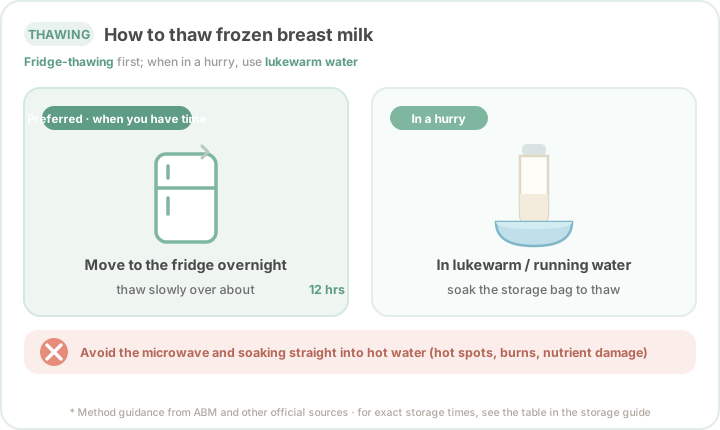
The safest method is to move it to the fridge the night before feeding and let it thaw slowly. It varies with the amount of frozen milk, but it generally takes about half a day, around 12 hours. It takes time, but the temperature doesn't rise abruptly, so the milk's components are best preserved — which is why official guidance recommends this fridge thawing first.
When you're in a hurry and need to feed right away, there's one more method: soak the frozen storage bag in lukewarm or running water to thaw it. Keep the water from getting too hot — just lukewarm. Once it has thawed somewhat, move on to the warming step.
What to avoid: the microwave and hot water
It's tempting to reach for the microwave to thaw quickly, but whether thawing frozen milk or warming it, don't use the microwave. Microwaves heat unevenly, so "hot spots" can form where the outside is lukewarm but the inside is scalding. A baby can be burned by these hot spots, and high heat also damages the beneficial components in breast milk.
For the same reason, it's best to avoid soaking it straight into boiling or hot water too. The more of a rush you're in, the more it helps to remember that you'll handle it within just two options: lukewarm water and running water.
Warming: only to about body temperature
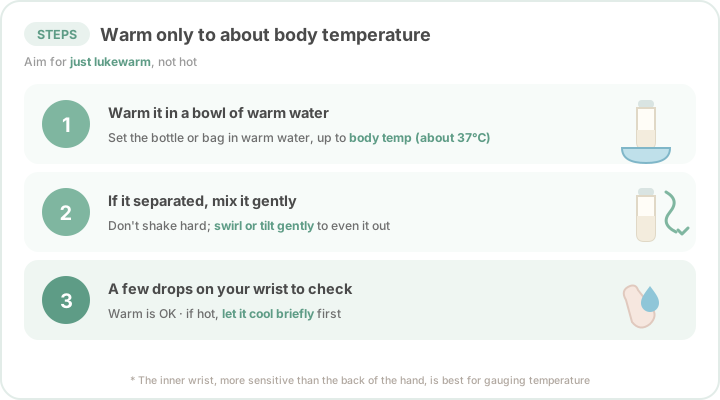
Warm thawed milk by standing it in warm water, only to around body temperature, roughly 37℃. Fill a bowl or cup with warm water and set the bottle or storage bag in it so the warmth transfers gradually. Just remember that the temperature babies drink best is not hot but "lukewarm."
If it has separated into layers while warming, don't shake it hard — swirl or tilt it gently to mix. Once warmed, before feeding, drop a few drops on the inside of your forearm or wrist to check the temperature. The skin there is more sensitive than the back of the hand, so it's good for gauging temperature. If it feels warm you're fine; if it feels hot, let it cool briefly before feeding.
If you're also thinking about how to burp your baby afterward, or how to latch them so they swallow less air, newborn burping and feeding with less air may help too.
The fat rose and it separated into layers — has it gone off?
When stored milk separates into upper and lower layers with a yellowish oily film on top, it's easy to worry it has spoiled. But it's natural for the fat in breast milk to rise and separate into layers. Over time the fat just separates from the rest, so mixing it gently makes it even again.
The trick here, again, is not to shake it hard. Hard shaking creates a lot of foam and can be hard on the milk's components. Gently swirling the bottle in your hand is enough.
It helps to tell layer separation apart from a real "sign of spoilage." If it smells sour or off, or the taste seems strange, that may be a different issue from separation. Milk that smells or tastes off is safer discarded, however wasteful it feels. When the call is unclear, using fresh milk is easier on the mind than forcing it.
What to do with leftover milk and refreezing
What to do with milk left over after warming is another common point of confusion. There are two lines here worth keeping.
First, breast milk thawed once is not frozen again. Thawing and refreezing puts more strain on both the components and hygiene, so not refreezing is the official standard. That's why portioning into single feeds from the very first freeze helps reduce waste.
Second, milk left in a bottle the baby has fed from is discarded once that feed is over. Saliva from the baby's mouth gets into the bottle, where bacteria can multiply. Milk that has only been warmed and not yet touched by the baby can still be used within the guideline time, but anything left after mouth contact is safer cleared away, however wasteful it feels.
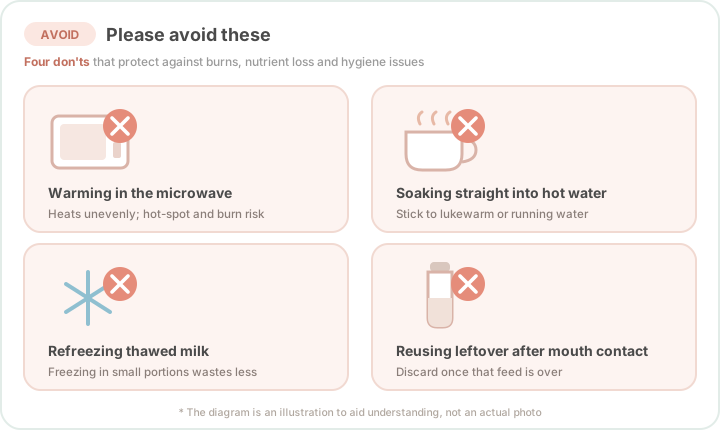
In the end: use thawed milk within the set time, don't refreeze, and discard leftovers after mouth contact. Those three are almost the whole of it. For how many hours or days you can keep it in the fridge, freezer or at room temperature, the time guidance is laid out as a table in the storage guide introduced earlier, so please refer to it alongside this.
In summer, just take extra care with this
The basic method is the same regardless of season. In summer, though, it's better to keep room-temperature times especially short, because milk can change faster when it's hot.
- Minimize the time thawed or warmed milk sits at room temperature. Once it's ready, feeding right away is the safer flow.
- If you take milk out with you, keep it cool in a cooler bag with ice packs.
- Don't leave milk in places that heat up quickly, like inside a car.
- Setting up fridge thawing in advance reduces the situations where the temperature ends up in-between while you rush to thaw with lukewarm water.
Thawing and warming methods at a glance
The table below is a quick guide to which method to use and what to avoid in each situation. For the exact storage "time" guidance, refer to the table in the storage guide; read this table mainly for the methods.
| Situation | Recommended method | Avoid |
|---|---|---|
| Thawing frozen milk (when you have time) | Move to the fridge the night before and thaw slowly | Leaving it out at room temp for long |
| Thawing frozen milk (in a hurry) | Soak in lukewarm / running water to thaw | Microwave, hot water |
| Warming | Warm water bath, up to body temp (about 37℃) | Microwave, boiling water |
| Mixing | Swirl gently and check temp on your wrist | Shaking hard |
| Leftover milk | Discard what has had mouth contact | Refreezing, reusing at the next feed |
When to ask a lactation specialist or pediatrician
Thawing and warming can usually be handled with the steps above, but for situations where the call is hard, like those below, it's safer to check with a lactation specialist or pediatrician than to decide alone.
- The milk has a sour or strange smell or taste and you can't tell whether it's okay to feed
- After feeding warmed milk, your baby shows unusual reactions such as repeated vomiting, diarrhea or a rash
- You'd like individual advice on whether your whole pumping, storage and thawing routine suits your baby
- Your baby was premature or has a special health condition that may call for stricter standards
Especially if your baby vomits repeatedly after feeding, or seems limp and low on energy, it's better to seek care early rather than guessing at the cause on your own.
Keeping records makes the next feed much easier
When you're pumping and thawing over and over, it's easy to lose track — "when did I freeze this bag?", "which feed was this today?" Jotting down the freeze date and feeding time as you go lets you use the oldest first and cuts down on mistakes like refreezing.
Keeping feeding and pumping records in Babyfolio at times like these gathers the feeding times and amounts along with photos, bit by bit. It's handy for using your frozen milk in order, and it lets you show "when and how you fed" directly at a pediatric visit, making the conversation easier too.
Frequently asked questions
How long can I use milk thawed in the fridge?
Milk thawed in the fridge is best used within the set time. The longer it has sat out at room temperature, the shorter the usable time. The specific time guidance for fridge, freezer and room temperature is laid out in the table in the storage guide introduced earlier.
Can I not refreeze milk that has only been thawed and not yet warmed?
Regardless of whether it's been warmed, not refreezing milk that has been thawed once is the official standard. Portioning into single feeds at the first freeze helps reduce waste.
My milk smells soapy. Has it gone off?
Some milk develops a distinctive smell after storage, and telling this apart from a spoiled smell can be unclear. If the smell or taste seems off and you hesitate to feed it, discard it however wasteful it feels, and if it keeps happening, consult a lactation specialist.
It got too hot while warming. Can I cool it and feed it?
If it warmed up hot, let it cool naturally at room temperature or to lukewarm — not in cold water — then check the temperature on your wrist and feed. That said, if it was already heated too hot, the components may have been strained, so next time keep the temperature lower with a warm-water bath.
To sum up
Thaw frozen breast milk slowly in the fridge first, and when in a hurry, soak it in lukewarm or running water. When warming, use a warm-water bath only up to about body temperature, and remember to avoid the microwave and hot water. Fat rising and layers separating is natural, so mix it gently; milk thawed once is not refrozen; and leftover milk after mouth contact is discarded.
Above all: milk that smells or tastes off is not fed, however wasteful it feels, and if the call is hard or your baby shows an unusual reaction, consult a lactation specialist or pediatrician. Keep just these two in mind and you can feed pumped breast milk with far more peace of mind.