Formula switch seemed to make it worse | An order for reading your baby's signs before switching again
Worried the switch made spit-up, refusal, or green stools worse? Right after a switch, the adjustment phase and how it looks overlap, so it easily seems worse. Before rushing another switch, here's a calm order — observe, record, consult, switch if needed — plus the warning signs that mean see a doctor now.
Your baby kept spitting up, wasn't feeding well, and had odd stools, so you finally switched formula. But instead of improving, there's even more spit-up and now greenish stools too, and your mind races: "Is this one not right either? Should I switch again?"
First, you can loosen your grip a little. Right after a formula switch, your baby's gut is still adjusting to the new formula, and the switch itself adds a brief bit of stress, so there's often a stretch where things actually look worse. It may truly be a poor fit, but a lot of the time it's a common adjustment-phase change, or simply how it looks. What you need right now isn't to rush the "switch again or not" decision, but to read your baby's signs calmly over a few days.
In this post: why things can look worse after a switch, why switching again too soon makes it more confusing, and a calm order of observe → record → consult → (if needed) switch, plus the signs that mean you should see a doctor right away.
Why does it look worse after switching?
In short, when things look worse right after a switch, it's usually three things overlapping. It may be a real mismatch, but recalling these three first tends to settle your nerves.
First is the gut adjusting. Each formula has slightly different proportions, so it takes the gut a few days to get used to a new one. In the meantime stool color or firmness shifts, burps and gas increase, or feeding dips briefly. Second is the brief stress of the switch itself. When a familiar taste and thickness change, a baby may balk or fuss at the unfamiliar. Third is how it looks to you. After a switch, parents watch far more closely, so a greenish stool or bit of spit-up that was already there can feel bigger — "did the switch cause this?"
So it's too early to decide "this one doesn't fit either" from the changes right after a switch. At this stage, first tell whether the new change is within the adjustment range, or a warning sign we'll cover below.
Why does switching again make it more confusing?
One thing worth knowing: if you keep switching formula, the adjustment process restarts each time, which actually makes it harder to tell what's behind the changes you're seeing now. You reset the few days you've watched and layer on a new variable again.
For example, if you go A → B and then jump to C after three days, there's no way to tell whether the spit-up now is because B didn't fit, because your baby is still adjusting to C, or because frequent switches have tired the gut. And even without special formula, when you're switching between brands with similar ingredients and your baby is feeding well with no real trouble, there's often little reason to switch often. The idea that similar formulas don't need to be swapped around if your baby drinks them fine is one pediatricians commonly share.
In short, the problem may not be the brand but something else. So "switching will fix it" is less helpful than "change one thing at a time, and watch for a few days" — the latter makes the call far easier.

Adjustment-phase change, or a warning sign?
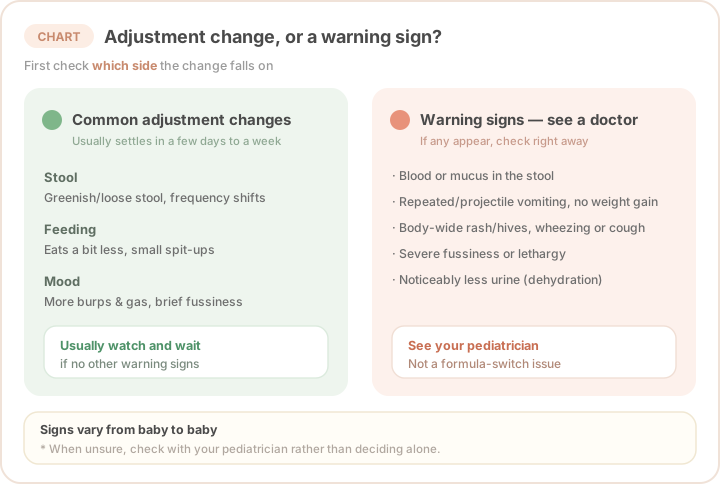
This is the most important fork. What you do differs completely depending on whether what you see is an adjustment-phase sign that passes in a few days or a warning sign that needs a doctor now. Here's how they split.
| Area | Common adjustment change (a few days–1 week) | Warning sign — see a doctor |
|---|---|---|
| Stool | Greenish/slightly loose stool, frequency shifts | Blood in the stool, mucus (snot-like) stool |
| Feeding | Briefly eats less, small spit-ups | Repeated/projectile vomiting, feeds poorly and no weight gain |
| Skin/breathing | — | Body-wide rash/hives, wheezing/cough |
| Mood | More burps/gas, brief fussiness | Severe fussiness/lethargy, noticeably less urine (dehydration) |
For the left-column changes — even a greenish or slightly loose stool — if that's all there is, with no other warning signs, it's usually watched. Bile isn't fully absorbed yet, so stools can look greenish, and this is common in an immature gut. If the right-column signs come along, though, don't wave it off as adjustment — it's safer to get seen. This split can look a little different from baby to baby, so when it's unclear, rather than deciding alone, follow the order below.
Don't rush to switch — follow this order
If it isn't a warning sign, work through the following calmly over a few days. Instead of a hasty re-switch, these four steps make the call much clearer.
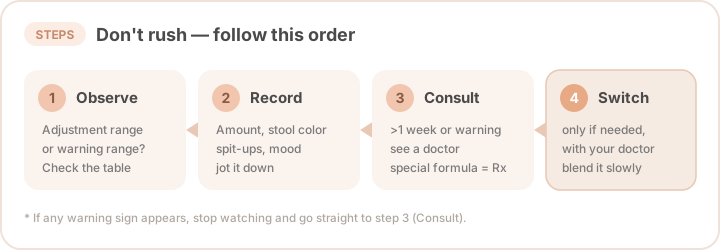
1. Observe — first check adjustment range vs. warning range
Match what you see against the table above. If it falls in the left column — greenish stool, small spit-ups, a dip in intake — and your baby is doing reasonably well, it's better to watch for about three days rather than rushing another switch. If even one right-column sign appears, stop observing and move straight to consulting.
2. Record — it becomes decisive at the visit
While you watch, note just a few things briefly. Feeding times and amounts taken/left, stool frequency and color/firmness, spit-up, rash, and overall mood are enough. Changes that are easy to miss in words become visible in a record — you can see the trend over a few days at a glance and tell the doctor precisely at the visit.
3. Consult — don't choose special formula on your own
If there's a warning sign, or the adjustment phase lasts more than a week, get a consult at the pediatrician. In particular, special formulas — hypoallergenic, hydrolyzed, amino-acid, lactose-free — are a domain that needs diagnosis and a prescription. Issues like cow's-milk protein allergy are confirmed through testing and exams, so rather than picking a special formula from symptoms alone, setting the direction with a doctor is more reassuring for your baby's nutrition and safety.
4. (If needed) switch — blend it in slowly
If, after talking with your doctor, you truly decide to switch, don't swap it all at once — blend gradually. For example, start the old and new formula at 7:3, then 5:5 on day two, 3:7 on day three, raising the ratio a little at a time and moving over within about a week. Treat the ratio as an example of "slowly, not all at once" rather than a fixed formula. Switching all at once gives the gut no time to adjust, which can actually increase stool changes or spit-up. Keep watching how much is left and how stools look throughout.
If these signs come together, go to the pediatrician now
As noted above, this ties directly to safety, so here it is once more. The signs below aren't a switch-formula-on-your-own matter — they're signs to see a pediatrician without delay.
- When the stool has blood or mucus (snot-like) in it
- When repeated vomiting or projectile vomiting continues
- When your baby feeds poorly and isn't gaining weight
- When body-wide rash/hives spread, or there are breathing symptoms like wheezing/cough
- When your baby is severely fussy or floppy, and urine drops noticeably (dehydration)
These signs can connect to conditions that need care, including cow's-milk protein allergy. Since signs vary from baby to baby, when even one or two overlap or you can't make the call, checking beats waiting — and it eases your mind. If spit-up is especially frequent and you want to know why, Why a formula-fed baby keeps vomiting, and how to tell the causes apart breaks it down by situation.
Frequently asked questions
Q. How many times is it okay to switch formula?
There's no set number. But the more often you switch, the more the adjustment restarts each time, making it harder to tell what's behind it. Keeping to one change at a time, watching for a few days, and switching after a consult if needed is often the faster route in the end.
Q. There are greenish stools after switching — is that a sign it doesn't fit?
Greenish or slightly loose stools alone often can't be read as a poor fit. Bile isn't fully absorbed yet, so stools can look greenish, and it's common in an immature gut. But if blood, severe fussiness, or stalled weight gain come with it, then get seen.
Q. My baby got constipated — will switching to another formula help?
It could be the formula, but often it's other reasons — fluid intake, mixing concentration, your baby's age. So rather than switching right away, record the state for a few days, and if it persists, look at the cause together with a pediatrician. If you want to know more about why a baby suddenly won't drink or refuses, see When your baby refuses formula: common reasons and what to do.
Q. Can I buy and try special formula (hypoallergenic/lactose-free) myself?
Special formula is a domain that needs diagnosis and a prescription. Choosing it on your own can skew nutrition or delay the diagnosis you actually need, so deciding together with a pediatrician is safer.
To sum up
Right after a switch, the gut adjusting, the stress of switching, and parents watching more closely all overlap into a stretch that can look worse. So rather than rushing another switch, first match what you see against the table: is it a common adjustment change or a warning sign? If it's a change that appears without other signs — greenish stool, small spit-ups, a dip in intake — watch and record for about three days; if it lasts more than a week or is unclear, consult; and if you truly switch, blend slowly, 7:3 → 5:5 → 3:7. And if signs like bloody stool, repeated vomiting, body-wide rash, wheezing, floppiness, or dehydration come together, it's not a switch-formula matter — it's time to go to the pediatrician without delay. Every baby adjusts at a different pace and is comfortable on a different formula. Just setting the urgency aside and reading your baby's signs for a few days makes the next choice far clearer. This post is general information and doesn't replace your baby's diagnosis or care. When you can't make the call, talk with your pediatrician. If straining and grunting during bowel movements adds to your worry, When your newborn grunts and strains: the order to help can ease your mind too.