Does newborn head asymmetry get better on its own? When it self-corrects vs. when it doesn't
Is it true that newborn head asymmetry rounds out on its own as they grow? We sort out when positional plagiocephaly self-corrects, the signs that need an early check, position care you can do at home, and when to consult.

When your baby's head looks flat on one side or a little uneven, it's easy to feel unsettled. Older relatives may say "it'll round out on its own as they grow," while your pediatrician says "it's better to have it checked early." So is your baby the kind you can just watch, or the kind that needs something done now?
To start with the takeaway: "it gets better on its own" is half true and half not. Mild positional head asymmetry often improves when you manage your baby's position well. But that doesn't mean "leave it alone and it straightens out." Babies who improve usually get there while also having their sleeping direction changed and doing tummy time.
So what matters isn't choosing between "on its own vs. the doctor," but figuring out which one your baby is closer to. Let's sort out the cases where you can reasonably expect natural improvement, and the cases that need checking before the window passes.
Why is "it straightens out if you leave it" only half true?
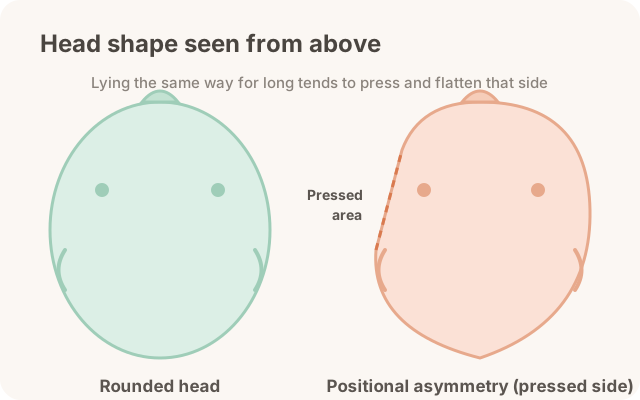
A newborn's skull is still soft and made up of separate pieces. So if a baby always lies facing the same way or leans on one side to sleep, that spot tends to get pressed and flatten. When this comes from position, it's called positional plagiocephaly, and it's common in newborns and usually has a good outlook.
This is where "it gets better on its own" comes from. Mild positional asymmetry does often round out over time just by changing the direction of pressure. But the key lies in that care of "changing the direction of pressure." If you leave a habit of always lying on the same side unchanged, the pressure tends to continue unchanged too.
And not every asymmetry is caused by position. If it comes with torticollis, where the neck tilts to one side, or if the flattening is already significant, position care alone may have limits. So rather than believing "it straightens out on its own" and simply waiting, it's better to first see which case your baby is in.
When can you reasonably expect natural improvement?
If your baby is close to the following three, they may fall on the side where you can help with positioning and keep watching. Still, this is a guide to refer to at home, not a diagnosis.
1. When you notice it early, before 3 months of age
The earlier head asymmetry is found, the more room there is. In the early period when the skull is soft, even just changing position makes the pressed area recover more easily. It's known that if you notice it before 3 months and start position care, it often improves with positioning alone. As time passes and the bones harden, the range you can reverse narrows little by little.
2. When the flattening is mild and caused by a habit of sleeping on one side
If the cause is always looking the same way to sleep, or being held on just one side, changing that direction often brings a response. If the flattening isn't severe and the face or ear position hasn't shifted much, there's usually room to improve with positional guidance.
3. When the baby turns the neck freely to both sides
If your baby turns toward either side well and doesn't insist on only one direction, that's a good sign. Free neck movement means it's less likely that another cause like torticollis is overlapping, so it may respond better to position care.

On the other hand, there are signs it's better to check early
With the same head asymmetry, if you see the signs below, it's better to get a consultation once rather than waiting for natural improvement. These are the points that tell you it isn't "always on its own."
- The baby always keeps the head to one side and can't turn well to the other (possible torticollis)
- The flattening is clear, and even the left-right of the face or the ear position looks asymmetric
- Even after changing position, there's no change for weeks, or it seems to be getting worse
- By the time it was found, the baby was already quite a few months old
Especially when it comes with torticollis, where the neck tilts to one side, no matter how you change the position, the baby turns the head back to the comfortable side, so position care alone may not be enough. In that case, checking the cause first is the right order, so we recommend a consultation with pediatrics or rehabilitation medicine.
Why shouldn't you miss the window?
There's a reason the phrase "golden time" gets attached to head asymmetry in particular. The skull is known to complete a large part of its growth (often cited as about 85%) within the first year of life. In other words, the first few months are when the bones are softest and respond best to change.
So with the same effort, starting earlier tends to give better results. Once time passes and the bones harden, the range you can reverse with position care shrinks. When the degree is significant or the window for positional correction has passed, a corrective helmet may be considered, and around 3 to 8 months of age, when the skull is soft, is known as a good time to see an effect. Still, whether a helmet is needed and when to start is for a specialist to judge after seeing your baby's condition. So rather than putting it off with "it'll round out once they're bigger," it's more reassuring to check once when you're unsure.
Let's clear up one misunderstanding here. Emphasizing timing isn't to scare you; it's because the earlier you look, the more you can help with easier, gentler methods. It's best to get an accurate judgment through a well-baby checkup or a pediatric visit.
Not "on its own" — help with positioning while you watch
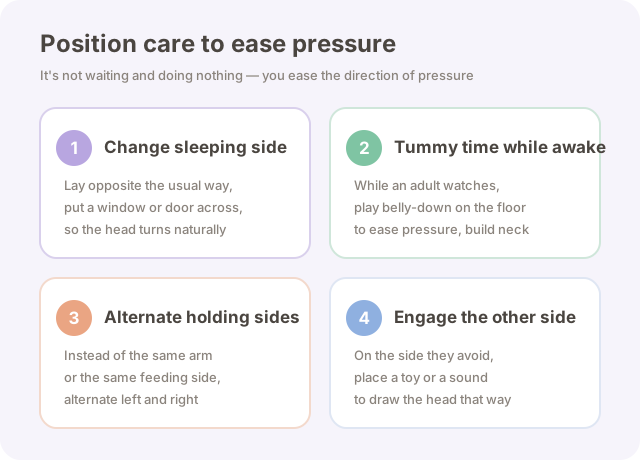
Even when natural improvement can be expected, helping with positioning at home is key. It's not waiting while doing nothing, but easing the direction of pressure. Here's what you can try.
- Change the sleeping direction: Try laying the baby the opposite way from usual, or place a favorite window or door on the opposite side so the baby naturally turns the head.
- Tummy time while awake: While an adult watches, letting the baby play with the belly on the floor reduces the time the back of the head is pressed and builds neck strength.
- Alternate the holding and feeding direction: Instead of always holding with the same arm or feeding on the same side, alternate left and right.
- Place toys and sounds on the less-viewed side: Put something interesting on the side the baby doesn't turn to, to encourage turning the head that way.
One thing to watch: even if you're worried about the head shape, you must not put the baby to sleep on the tummy. Do tummy time only while an adult is awake and watching, and for sleep, always lay the baby on the back, face up. Sleeping face down is linked to sudden infant death, so it's not recommended. If you're curious about safe sleep positions, it helps to also read Building newborn sleep habits and environment.
Natural improvement expected vs. needs checking, at a glance
Here's a summary you can refer to at home. Still, if the line feels unclear, we recommend getting it checked once rather than waiting.
| What to look at | Fine to watch with position care | Better to get a consultation |
|---|---|---|
| When found | Early, before 3 months | Quite a few months later |
| Degree of flattening | Mild, face and ears not shifted | Clear, asymmetric even to face and ears |
| Neck movement | Turns freely to both sides | Looks only one way, can't turn back well |
| Change after repositioning | Feels like it's improving a little | Same for weeks, or worse |
How can you tell if it's improving?
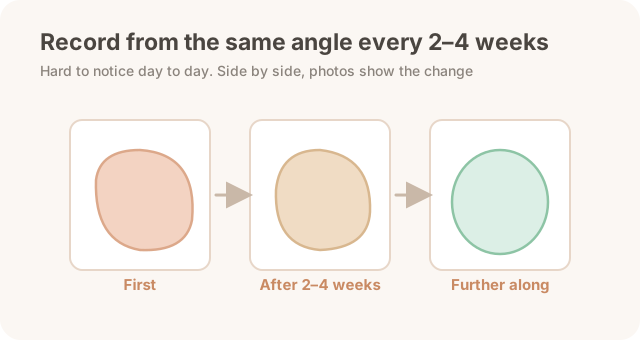
The head shape is actually harder to notice a change in for the parents who see it every day. Even as it rounds a little, it's hard to catch by eye. So a few photos taken from the same angle help a lot.
If you take photos of your baby's head from directly above every 2 to 4 weeks, you can later line them up and confirm "it's better than back then." Recording these head photos with dates in Babyfolio lets you use them to compare changes in order over time. When you go for a consultation, having progress photos also makes explaining much easier. For more on how to keep growth in photos, see Tips for self-photographing your 100-day baby.
See a pediatrician in these cases
Most mild positional asymmetry can be watched with position care, but if the following apply, check with a pediatrician once rather than waiting for natural improvement.
- The neck is always tilted to one side, or the baby can't turn the head well to the other side
- The flattening is clear, and even the face, forehead, and ear positions look asymmetric
- Even after changing position, there's no change for weeks, or it seems to be getting worse
- One part of the back of the head sticks out unusually, or the head shape changed suddenly
- When you're worried you may have missed the window because it was found late
These signs may have another cause overlapping beyond a positioning problem, so it's best for a specialist to see and judge directly. Timing especially matters, so checking early when you're unsure widens your options to gentler ones.
Frequently asked questions
Does head asymmetry cause developmental problems too? Positional head asymmetry is usually a matter of head shape, and it's hard to see it as something that by itself determines brain development. Still, there are cases where a cause like torticollis overlaps, so if you're worried, check it together at your consultation.
Is a helmet a must? No. A helmet is one method considered when the degree is significant or position care doesn't improve it enough. In mild cases it's often just watched with position care, so whether it's needed is best judged through a medical visit.
Does using a pillow or a donut pillow prevent it? Pillows sold for head correction don't have clear effects, and putting a newborn to sleep on a fluffy pillow is actually not recommended for safety. For prevention, changing the sleeping direction and doing tummy time while awake help more than a pillow.
Until when can you expect natural improvement? The earlier period when the skull is soft has more room, and it narrows as the months pass. Rather than drawing a line at an exact number of days, we recommend checking early if you're unsure.
To wrap up
Newborn head asymmetry is somewhere between "it straightens out on its own" and "you must go to the doctor." When it's mildly positional and found early and you help with positioning well, it often improves — but that's not because nothing was done; it's because the direction was changed while caring for it.
If the neck tilts to one side, the flattening is clear, or there's no change even after repositioning, check with a pediatrician rather than waiting. Always lay the baby on the back to sleep, and don't forget tummy time while awake. Checking early once when you're unsure — that's the most reassuring choice for your baby's head shape.