5 Environment Tips to Ease Newborn Heat Rash | Temperature, Humidity, Clothing, Bathing, Moisturizing
If you want to ease newborn heat rash at home before reaching for medicine. Covers why heat rash appears and five environment tips — temperature, humidity, clothing, bathing, and moisturizing — laid out as "try this / watch out for this," plus the signs that mean it's worth seeking advice.

When little red bumps appear on your baby's cheeks, forehead, or the folds of their neck, your heart sinks. You wonder whether you should head straight to the doctor, or reach for an ointment. But with newborn heat rash, there's something worth checking before any medicine: your baby's surroundings.
Here's the reassuring part first. Mild heat rash often settles down when you take care of the environment around your baby, like the temperature and humidity of your home, their clothing, bath time, and moisturizing. Heat rash tends to appear because a newborn can't yet regulate their own body temperature well and their sweat glands aren't fully developed, so heat builds up easily on the skin. That's why the most basic step is usually to shift the environment toward "a little less warm, and not too dry."
So in this article, we've laid out five things you can change at home right away, one by one, split into "try this" and "watch out for this." Of course the environment alone isn't always enough, so we'll also point out the signs that mean it's worth seeking advice at the end.
Why does heat rash appear, and why does the environment matter?
Heat rash refers to the red rash that shows up when heat doesn't escape well from a newborn's skin and builds up instead. A newborn's temperature-regulating system is still immature and their sweat glands aren't fully developed, so even a little warmth or stuffiness can make heat gather on the skin more easily. It tends to appear especially on the cheeks, forehead, neck folds, and back, where heat and sweat tend to collect.
This is where the environment comes in. A baby's body temperature is directly affected by the surrounding temperature and humidity, and by what they're wearing. If the room is warm and you've also dressed them in thick layers, there's that much less room for heat to escape. Keeping things cool and well-ventilated, on the other hand, often lets the built-up heat ease off, and the skin tends to feel more comfortable.
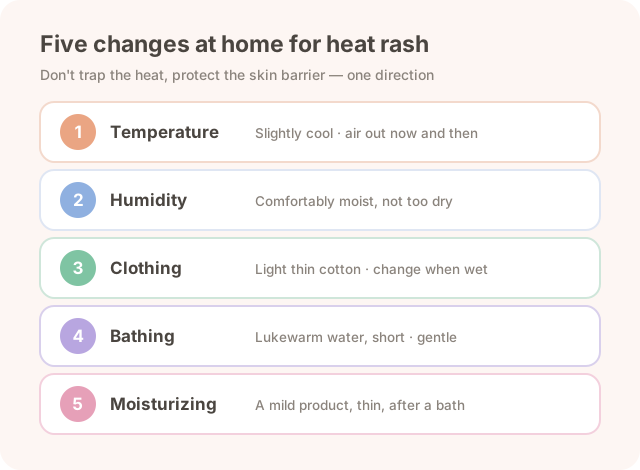
So it helps to think of heat rash care in two broad directions. Keep it "cool" so heat doesn't build up, and "not too dry" so the skin barrier isn't damaged. All five of the things below fall within these two directions.
Five things you can change at home
None of this is dramatic. It's really about adjusting, little by little, things you're already doing. Let's look at them one at a time.
1. Temperature — don't let it get too warm
The first thing to look at is the room temperature. Many people feel a newborn should be kept warm so they don't get cold, but when there's heat rash, the opposite is often more helpful. A warm, stuffy environment traps heat.
- Try this: Aim for the kind of temperature where an adult in short sleeves feels slightly cool, and keep your baby's room from getting too warm. Airing the room out now and then, so the air doesn't feel stuffy, can also help.
- Watch out for this: Lowering the temperature doesn't mean letting cold air blow directly onto your baby. It's usually better to point air conditioning or fan airflow toward a wall or the ceiling, cooling the room indirectly.
2. Humidity — don't let it get too dry
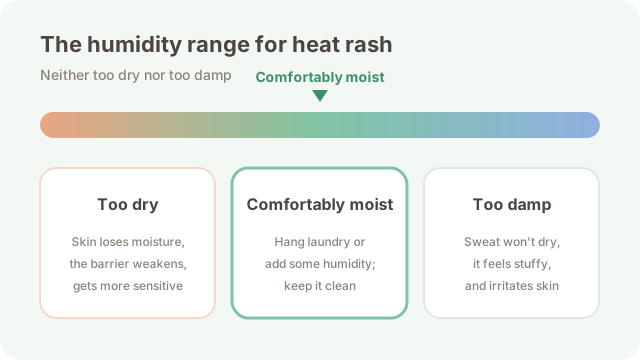
When you focus only on keeping things cool, it's easy to overlook humidity. If the air gets too dry, moisture escapes from your baby's skin and the barrier weakens, and skin with heat rash can become even more sensitive.
- Try this: Try to keep the indoor air from getting overly dry. Air tends to dry out especially when heating or air conditioning runs for a long time, so hanging laundry to dry or adding some humidity to keep things comfortably moist can help.
- Watch out for this: On the flip side, if humidity is too high, sweat doesn't dry well and things can feel stuffy instead. The aim is "neither too dry nor too damp." If you use a humidifier, wipe the tank and the area around it often to keep it clean.
3. Clothing — light and breathable
What you dress your baby in becomes part of their body temperature too. Wrapping them in several thick layers traps that much more heat. When there's heat rash, the mindset of "one layer fewer" often turns out to be more helpful.
- Try this: Dress them lightly in thin, breathable cotton. When they sweat, damp clothing irritates the skin, so change them into something dry as soon as it feels wet. Folds like the neck creases and armpits collect sweat easily, so gently wipe and dry those spots.
- Watch out for this: It's tempting to keep bundling them up out of worry that they'll be cold, but to check whether your baby is warm, feel their back or the nape of their neck rather than their hands and feet. If the back feels damp and hot, that's a sign they're too warm. Hands and feet naturally tend to run a little cool, so they're harder to use as a gauge.
4. Bathing — warm water, kept short
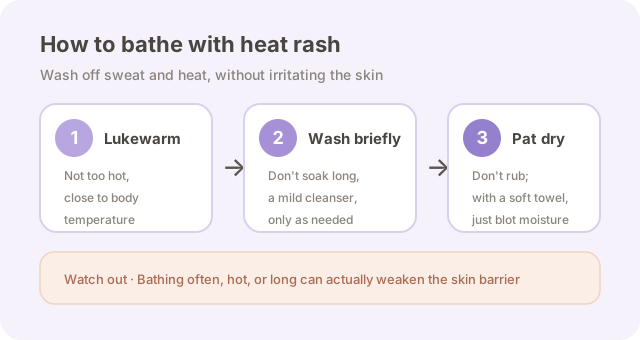
Bathing is a good way to wash away the sweat and heat built up on the skin, but how you do it matters. If the water is too hot or your baby soaks for too long, the skin can actually get irritated and lose moisture, leaving it dry.
- Try this: Wash them briefly in lukewarm water. If you use a cleanser, choose a mild one with little fragrance or irritation, use it only as much as needed rather than often, and clean the folds gently.
- Watch out for this: Just because there's heat rash, avoid scrubbing your baby several times a day. Frequent, hot baths can actually weaken the skin barrier. After bathing, don't rub; pat gently with a soft towel to blot the moisture.
5. Moisturizing — protect the skin barrier gently
Surprisingly, moisturizing matters with heat rash too. If you focus only on cooling the skin and it becomes dry, the barrier weakens and grows more sensitive to irritation. Right after a bath is an especially easy time for moisture to escape, so it tends to be a good moment to moisturize.
- Try this: After a bath, once you've gently blotted the moisture, apply a thin layer of a mild moisturizer with little fragrance or dye to protect the skin barrier. Spreading it thin tends to work better than applying it thickly.
- Watch out for this: We wouldn't suggest applying a particular ointment or cream on your own as if it were a treatment for heat rash. Rather than deciding to use ointments containing steroids by yourself, it's safer to have a pediatrician look at your baby's condition and prescribe them when needed. When trying a new product, it can help to apply it first to a small area, like the inner arm, and watch for a reaction.
When the skin is sensitive, babies easily scratch and break the skin without meaning to. Keeping the nails short and smooth can help reduce irritation from scratching, so for how to trim them without hurting your baby, take a look at How to Trim a Newborn's Nails Safely.
The five environments, at a glance
Here's a table to make it easy to refer to at home. "Try this" is the direction to aim for, and "watch out for this" is what people commonly miss.
| Environment | Try this | Watch out for this |
|---|---|---|
| Temperature | Slightly cool, air out now and then | Don't let cold air blow directly on the body |
| Humidity | Comfortably moist, not too dry | Too damp feels stuffy too; keep the humidifier clean |
| Clothing | Light thin cotton; change when wet | Check warmth at back/nape; don't over-bundle |
| Bathing | Lukewarm water, short, gentle cleansing | Don't bathe often, hot, or long |
| Moisturizing | A thin layer of a mild product after a bath | Avoid using ointments/creams on your own |
Why is "keep them warm" the opposite of what heat rash needs?
This is where parents get confused most in managing heat rash. "Keep newborns warm" is such familiar advice that when heat rash appears, some end up bundling the baby up even more. But heat rash is already the result of heat that has built up, so adding more warmth traps even the heat that was escaping.
So when heat rash shows up, the direction of "one layer fewer, a degree cooler" tends to help. If you're worried your baby might be cold, as mentioned earlier, check by feeling their back or the nape of their neck rather than their hands and feet. If the back feels dry and mildly warm, it's usually about right.
One more thing: bathing and moisturizing can feel contradictory and confusing, since one washes away and the other fills back in. It's easier to understand these two as a sequence. You wash briefly in lukewarm water to reduce heat and sweat, then moisturize thinly right away to hold in the moisture that would otherwise escape. That balance between washing off and applying on tends to suit skin with heat rash well.
After changing the environment, how do you know it's improving?
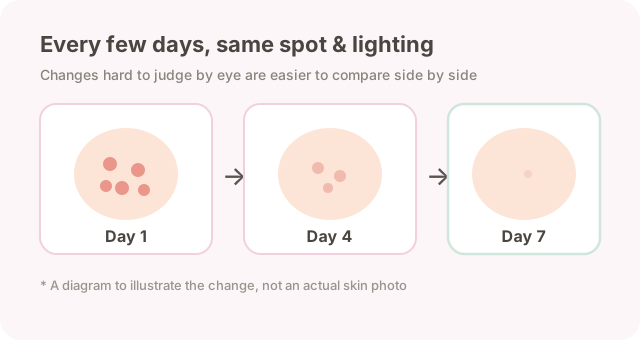
Once you've sorted out the environment, it's time to watch how your baby's skin responds. The thing is, the more you see it every day, the harder heat rash can be to gauge. Even as it fades bit by bit, it's hard to catch with the eye.
So it helps to photograph the same spot every few days under the same lighting. Later, placing the photos side by side lets you confirm, "the redness is less than it was back then." If you record these skin photos with the date in Babyfolio, you can use them to compare the changes in chronological order, and having progress photos when you go for a consultation makes it much easier to explain. For more on how to capture your baby's photos well, see Tips for Taking Self-Photos of Your Baby at 100 Days.
When to see a pediatrician
Most mild heat rash can be watched while you manage the environment, but if any of the following apply, rather than toughing it out at home, it's worth having a pediatrician take a look.
- It oozes or forms scabs, and the skin looks raw or infected
- Your baby is intensely itchy or scratches so much they can't sleep well
- Even after a few days of environmental changes, it doesn't improve or actually spreads
- A fever comes along with the rash, or your baby seems unusually listless and isn't feeding well
- You find it hard to tell on your own whether it's heat rash or eczema or another skin problem
Especially when signs that differ from simple heat rash, like fever, listlessness, or oozing, appear together, it's a good idea to seek care promptly. Heat rash and other skin conditions can look similar on the surface but may need different care, so when it's unclear, it's safer to have a professional see it and decide in person.
Frequently asked questions
Are heat rash and prickly heat the same thing? They're sometimes used interchangeably, but heat rash is often a broad term for the redness that appears on a baby's face and body, while prickly heat refers specifically to the rash that forms from trapped sweat. Both involve heat and sweat, so the care direction of keeping things cool and dry is similar. That said, if you're unsure how to tell them apart and it isn't clearing up, do seek advice.
When does heat rash tend to get better? It varies from baby to baby, but with good management of the environment, it's generally understood to settle down over time in many cases. If it lasts a long time or gets worse, though, there may be another cause, so we'd recommend seeing a doctor.
If I'm breastfeeding, does what I eat affect the heat rash? The link with food varies from baby to baby and is hard to state with certainty. Rather than cutting out particular foods blindly, if you're concerned, it's a good idea to check it together at a pediatric or breastfeeding consultation.
Can I apply moisturizer to heat rash on the face too? Applying a thin layer of a mild product with little fragrance or dye is generally fine in many cases, but if it's oozing or raw, don't apply anything on your own and see a doctor first.
To sum up
With newborn heat rash, rather than reaching for medicine first, the first step is to make your baby's surroundings cool and dry. Temperature slightly cool, humidity not too dry, clothing light, bathing lukewarm and short, moisturizing gentle and thin. These five all lead in one direction: "don't trap the heat, but protect the skin barrier."
Above all, it's okay to set aside the familiar instinct to "keep them warm" when it comes to heat rash. If you've watched for a few days and it's still oozing, intensely itchy, or not clearing up, then having a pediatrician check is the most reassuring choice. Your baby's skin grows steadily sturdier as they get older, so there's no need to rush.