Don't Drape Cloth Over a Summer Stroller | How Shading the Sun Turns It Into a 'Thermos'
In summer, draping a thin cloth or gauze over a stroller to block the sun and mosquitoes can block ventilation and make the inside hot like a thermos. Drawing on a reported experiment from a Swedish pediatric specialist, we lay out why it's dangerous and what the heat warning signs in a baby are.
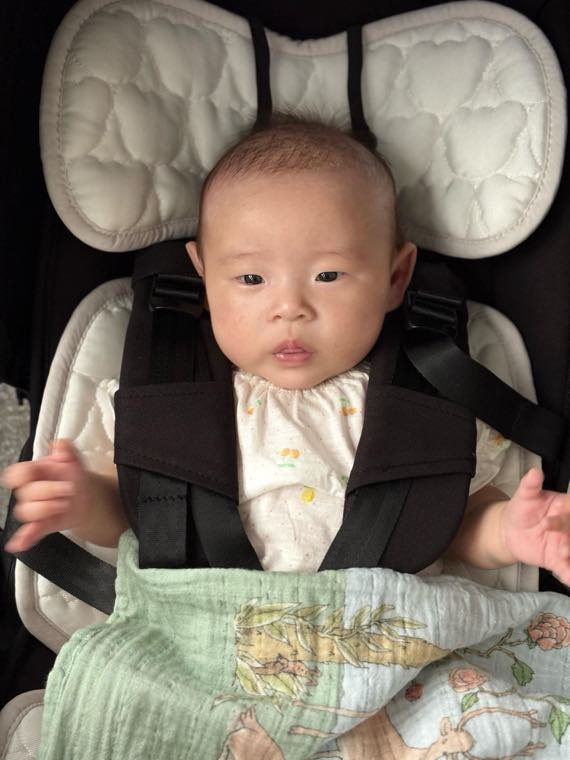
On a midsummer afternoon, taking your baby out in a stroller, the strong sun and the mosquitoes coming at you are hard to ignore. So many parents drape a thin gauze, a handkerchief, or a light blanket over the top of the stroller. With the thought, "This much should block the sun and still let air through." It comes from a good place, but this very habit can become an unexpected danger to your baby.
First, the key point. Even a single thin cloth draped over a stroller blocks the airflow, and the temperature inside can rise sharply, like a thermos. It may look cool on the outside, but the inside of the stroller where your baby sits gets far hotter than the air around it. So in summer, it's safer not to put on a cover that blocks ventilation.
Then how do you shade the sun? You handle that separately, in a breathable way, and we've laid out the details in the sister articles below. In this article, we'll focus on "why you shouldn't cover it" and "the signs not to miss when your baby is hot."

Why is a single thin cloth so dangerous?
Let's answer the question you're most curious about first. A thin cloth may shade the sun a little, but at the same time it blocks the path for air to move in and out. The air trapped inside the stroller then warms up, and the heat can't escape, so it keeps building. Add the heat coming off your baby's body, and the inside gets far hotter than the outside.
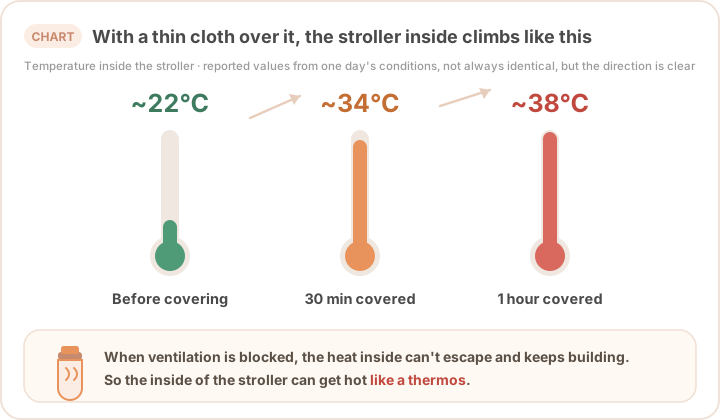
There's a case that showed this in real life. A pediatric specialist (Svante Norgren) at a children's hospital in Stockholm, Sweden, warned about this problem, and a local news outlet ran an actual experiment. On one summer day, the inside of a stroller that was about 22°C without a thin cloth over it rose to about 34°C within 30 minutes once a thin cloth was draped over it, and to about 38°C an hour later. The specialist said "the inside gets extremely hot, like a thermos," and pointed out that air circulation worsens and the cover also makes it hard to check on your baby with your own eyes.
| Stroller state | Temperature inside the stroller (per the reported experiment) |
|---|---|
| Before a thin cloth was draped over | About 22°C |
| 30 minutes with a thin cloth over it | About 34°C |
| 1 hour with a thin cloth over it | About 38°C |
Just looking at the numbers, you can feel the difference. Of course, these values came from one particular day under particular conditions, so they won't always reproduce the same way. But the direction is clear: a cover that blocks ventilation doesn't cool the inside of the stroller — it traps the heat instead. This is exactly why "it's thin, so it should be fine" doesn't hold up.
A stroller is hotter than where an adult stands
Here's one more thing worth knowing. A stroller sits low, close to the ground. In summer, asphalt and pavement blocks are heated by the sun and radiate that hot heat upward, and a baby in a stroller takes in that radiant heat from closer than an adult's face level. It means that even in shade where an adult feels cool, the lower stroller inside can be hotter than you'd think. Add a cover that also blocks ventilation, and the heat stacks up.
On top of that, babies are far more vulnerable to heat than adults. Their ability to regulate their own body temperature is still immature, and their ability to release heat through sweat isn't as good as an adult's. Above all, they can't say "I'm hot," so the adult beside them has to watch for them instead. Younger infants in particular can worsen more quickly in the heat, so it's a common recommendation to keep babies under 6 months out of direct midsummer sun.
When your baby is hot, don't miss these signs
This is the most important part of this article. When it gets hot inside the stroller, your baby's body sends signals first. If you see the signs below, cool them down right away — and it's worth keeping just this list in mind.
- The face flushing unusually red, or conversely turning pale
- The body burning hot and going limp
- Fussing severely unlike usual, or conversely responses becoming sluggish and dull
- Not feeding well, or vomiting
- Sweating a lot and then suddenly barely sweating
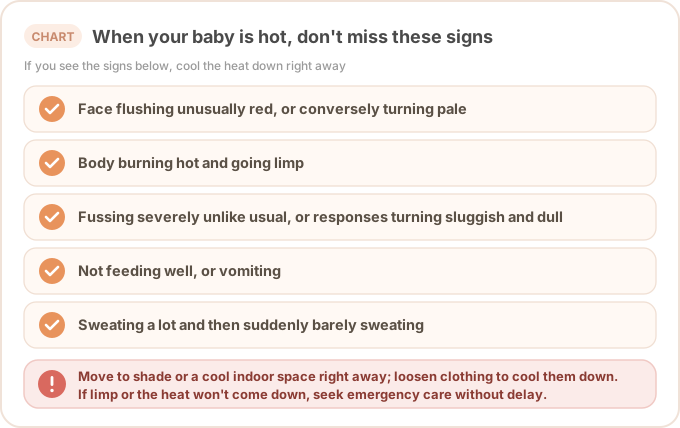
If you see these signs, move to shade or a cool indoor space right away, loosen the clothing, and cool the body down. If your baby can take fluids, give a little at a time. If your baby still goes limp, responds oddly, or the heat doesn't come down easily, don't delay — seek emergency care. Babies can worsen more quickly in the heat than adults, so it's better to get help early than to wait for things to be okay.
In particular, for a young baby under 3 months, fever alone warrants prompt care. In a young baby, the condition can change quickly while you wait for other symptoms.
So how do you shade the sun in summer?
Reading this far, you might think, "So are you telling me to just leave them under the blazing sun?" Of course not. Direct sunlight should be avoided, but the answer isn't a cover that blocks ventilation — it's shading in a way that lets air through. That means using the canopy (sun canopy) that comes standard on the stroller, or creating shade in a breathable way.
There are enough methods here to warrant covering separately, so rather than summarizing briefly, we've organized them in a sister article. For how to shade the sun without blocking ventilation, please see How to shade a summer stroller from the sun without blocking airflow. And if you want to review summer stroller outings overall, The summer stroller safety checklist is worth reading alongside it too.

Frequently asked questions
Q. Isn't a thin gauze or a mosquito net okay?
Even a thin material can raise the temperature inside if it covers the stroller and blocks the airflow. The experiment we saw earlier was the result of draping a "thin cloth," not a thick blanket. Rather than feeling safe because it's thin, it's safer to keep mosquitoes off in a way that doesn't block ventilation. Mosquito and sun measures are laid out in the sister article linked above.
Q. Is it okay to cover it on a cloudy day or in the shade?
Even on a day with weak sun, the way a cover blocks air circulation is the same. In summer especially, when the temperature itself is high, the inside of the stroller can get hot even in the shade, so a cover that blocks ventilation isn't recommended all season. Instead, check your baby's condition and the temperature inside the stroller often.
Q. It's just a few minutes — is even that not okay?
Even for a short time, the temperature can rise faster than expected under the blazing midsummer sun. In the experiment, too, the temperature rose noticeably within 30 minutes. Rather than draping it thinking "it's just a moment," it's better to keep it ventilated even on a short outing.
Q. How do I check whether it's hot inside the stroller?
Put a hand on the back of your baby's neck or their back — if it's damp with sweat or unusually hot, it can be a sign of heat. If you make a habit of lifting the cover and directly checking your baby's face and condition often, you'll also notice the warning signs above more quickly.
To wrap up
Draping a thin cloth over a summer stroller comes from a good intention to block the sun, but as ventilation gets blocked, the inside can get hot like a thermos. In the actual experiment, the inside of a stroller that was about 22°C before a thin cloth was draped rose to about 34°C within 30 minutes once covered, and to about 38°C an hour later. A stroller sits low, where it takes in more radiant heat from the ground, and babies are vulnerable to heat, so it's safer not to put on a cover that blocks ventilation. If your baby's face flushes or turns pale, the body is hot and limp, or they won't feed and are vomiting, move them to a cool place right away and cool them down; if something seems off, seek emergency care — and for a baby under 3 months in particular, fever alone warrants prompt care. As for shading the sun, do it in a way that doesn't block ventilation, using the sister articles as a guide.
How to shade a summer stroller from the sun without blocking airflow