Shading Your Stroller from the Summer Sun | How to Make Shade Safely Without Blocking Airflow
Here's how to shade your stroller from the summer sun the safe way — keeping air flowing while blocking only direct sunlight. We cover the hood, breathable parasols, timing, clothing, and fluids, plus methods that backfire (a wet towel, a handheld fan, an ice pack) and the heat-related warning signs to watch for.
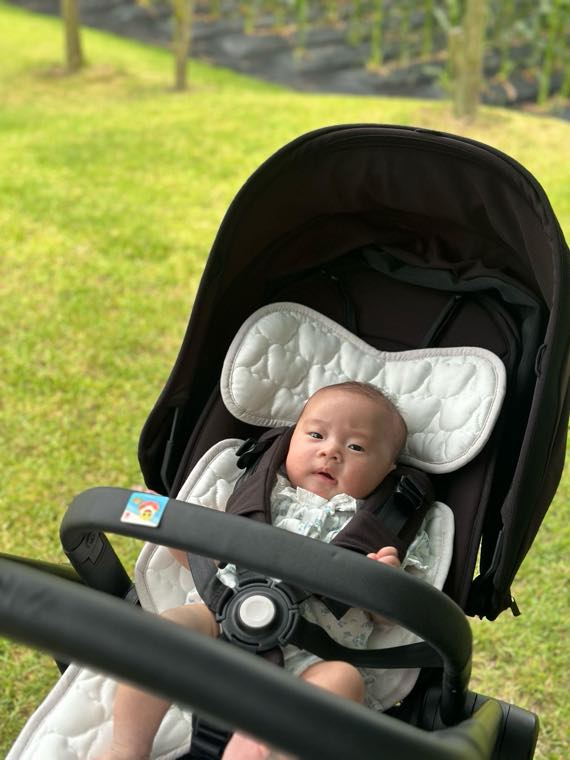
When you push a stroller out in the height of summer, the thing you worry about most is the sun beating down on your baby's face. So a lot of parents drape a thin cloth or handkerchief over the top of the stroller to make some shade. The impulse makes complete sense — but the truth is that this method, far from cooling your baby, can make the inside of the stroller far hotter.
Let's answer the big principle first, briefly. With summer stroller sun, the key is to "keep air flowing and block only the direct sunlight." If you cover the whole stroller with cloth and shut off the air, heat gets trapped inside and the temperature shoots up. So you want to choose a method that keeps air moving in and out while deflecting only the sunlight.
Below, we'll go through the ways to make shade without blocking airflow, tips for avoiding the heat itself, and the common mistakes that backfire along with the warning signs — one by one. If you're curious about why a cloth cover is so dangerous in the first place, we cover the mechanism in more detail in A Cloth Cover on a Summer Stroller — Why It's Dangerous. This article focuses on "so how should I shade it, then?"
Why keeping air flowing comes first
Before we get into methods, let's pin down one principle. The heart of protecting a baby from summer heat is less the shade itself and more keeping air circulating. Young babies are still less able than adults to regulate their body temperature, so if heat gets trapped in a small, closed space, their temperature can rise quickly.
The trouble is that the "cloth cover" we so often reach for is exactly what blocks this airflow. Even a cloth that looks thin, once it covers the whole stroller, stops the inside air from escaping — the temperature climbs, and it becomes hard to check on your baby by eye. That's why every good shading method shares one thing in common: "block only the direct sun from one side, and leave the rest open."
To sum up: blocking the sunlight and blocking the wind are two different things. We only want the first. Every method below was chosen on top of this principle.
Ways to make shade without blocking airflow
So how should you actually shade it? Here are the ways to keep air moving while deflecting only the direct sun.
1. Extend the stroller hood (sunshade) as far as it goes
First, and easiest. Most strollers come with a canopy hood that folds and unfolds. Pull this hood down as far as it goes toward the direction of the sun, and — since the front and back stay open — air keeps flowing right through while only the direct sun falling on your baby's face is blocked. You don't have to buy anything extra, and it doesn't block airflow at all, which makes it the most basic method. As the sun moves, just shift the hood angle to match.
2. Use a breathable UV parasol or a clip-on umbrella
When the hood alone isn't enough, adding a clip-on umbrella or a UV-blocking parasol that attaches to the stroller works well. It blocks only the one side the sun is coming from, leaving the other faces open, so it widens the shade while keeping front-to-back airflow. When choosing one, check whether the material blocks UV, and a product whose angle adjusts to the sun's direction is even handier. Here too, the point is to use it strictly as a "one-side shade" so the parasol doesn't end up covering and sealing the entire stroller.
3. Use mesh covers only sparingly
There are also mesh-fabric covers that let air through. They're better than a fully closed cloth, but wrapping the whole stroller in one still cuts down airflow to some degree. So even with a mesh cover, avoid a complete seal, and above all don't forget to check the temperature inside the stroller often. If you slip a hand inside and it feels stuffy, the first thing to do is take the cover off and move to shade or somewhere cool. Just avoid leaving it covered for long stretches on the assumption that mesh makes it safe.
Timing, clothing, and fluids — as important as shade
Just as important as shading is "when, in what outfit, and how briefly you go out." No matter how well you shade, staying long under the midday sun makes the heat hard to escape. Here are some tips for designing the outing itself.
Avoid the midday hours. The sun and temperature are strongest roughly between 11 a.m. and 3 p.m. Cut outings during these hours as much as you can, and shift them to the morning or around sunset. When you do go out, choosing tree-shaded paths and indoor spaces over asphalt sharply lowers the heat you feel.
Thin, loose clothing and a brimmed hat. Dressing your baby loosely in thin, breathable cotton helps sweat evaporate and cool them. Adding shade to the face with a brimmed hat is good too. That said, babies under 6 months have thin skin, and the principle is to avoid direct sun itself — so rather than relying on sunscreen, it's safer to shade them by physical means like shade, clothing, and a hat.
Fluids, often. Hot days call for more fluids than usual. Give water to babies over 6 months, and breast milk or formula to those under, more often than usual. And planning a short outing from the start is the surest prevention on a hot day.
Check the temperature inside the stroller often. As you walk, slip a hand inside now and then to gauge the temperature, and keep an eye on whether your baby's nape or back is sweating heavily and whether their face is overly flushed. A baby can't tell you they're hot in words, so this habit of checking for them is more reassuring than any shade.
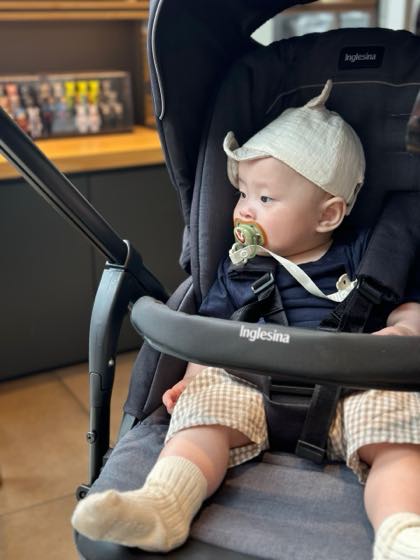
Safe methods vs. ones that backfire, at a glance
Here's what we've described in words, laid out as a table. Even the same "trying to cool them down" action splits by whether it keeps air flowing or blocks it.
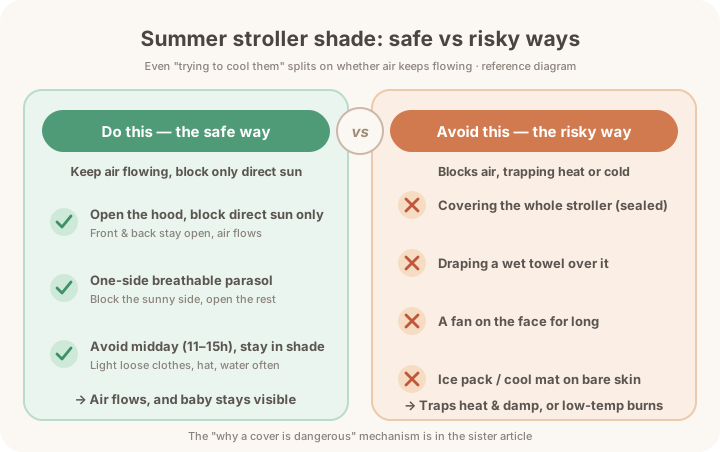
| Situation | Safe method | Method to avoid |
|---|---|---|
| Blocking direct sun | Extend the hood; a one-side breathable parasol/umbrella | Draping cloth or a handkerchief over the whole stroller (sealed) |
| Using a cover | A mesh cover sparingly + checking the temperature often | Leaving a sealing cloth cover on for a long time |
| Lowering the temperature | Moving to shade or indoors; avoiding midday outings | Laying a wet towel over it like a cover |
| A cool breeze | Natural airflow in the shade; short outings | Aiming a handheld fan at the face directly for a long time |
| Cooling items | Over a thin cloth only, briefly, if needed | Putting a cool mat or ice pack directly on bare skin |
Well-meant methods that backfire
Some methods come from wanting to cool your baby down but end up making things harder for them. The following three are especially common, so we'll flag them separately.
Laying a wet towel over it like a cover. Draping a water-soaked towel over the stroller seems like it would be cooling, but it ends up blocking airflow and trapping heat and moisture inside. It's the same problem as the sealing cloth cover we saw earlier. If you want to use a wet towel, it's better to use it not as a cover but just to gently wipe your baby's nape.
Aiming a handheld fan at the face directly for a long time. A handheld fan itself isn't the problem on a hot day, but blowing hot outside air directly at the face nonstop can actually draw out moisture and dry the skin and mouth. If you do use one, keep it at a distance from your baby's face and use it only briefly, just enough to circulate the surrounding air.
Putting a cool mat or ice pack directly on bare skin. Letting a cooling mat or ice pack touch your baby's skin directly can cause a low-temperature burn from prolonged contact with something cold. If you must use one, wrap it in a layer of thin cloth or a cover, use it only briefly, and watch whether your baby seems uncomfortable.
If you see these signs, cool them down right away — and see a doctor
This is the most important part, so we've gathered it separately. If you see the signs below in your baby during a summer outing, it may mean the heat has worn them out. Without delay, move them to shade or a cool indoor space, loosen their clothing, and give them fluids.
- Their face becomes overly flushed, or conversely they go limp and respond sluggishly
- They fuss intensely unlike usual, or go limp and listless
- After sweating heavily, sweat suddenly stops coming and the skin feels hot
- They feed poorly and urine noticeably drops off (when dehydration is suspected)
If cooling them like this doesn't improve their condition, or if a fever climbs with vomiting and limpness alongside, seek care promptly. In particular, if your baby is hard to wake or is limp with almost no response, is struggling to breathe, or has a seizure, contact emergency services (such as 911) or an emergency room without delay. And for a young baby under 3 months, it's safer to get to a hospital quickly even with fever alone. A young baby's condition can change fast, so checking early beats waiting for other symptoms.
If you'd like to check what to pack and what to watch out for before a summer outing all at once, take a look at the Summer Stroller Outing Heat-Safety Checklist as well.
Frequently asked questions
Q. As long as air gets through, a cover is fine, right?
It's true that a breathable material like mesh is better than a fully closed cloth. But any cover, once it wraps the whole stroller, reduces airflow. So even with a cover, the principle is to avoid a complete seal and check the temperature inside the stroller often. The safest combination is blocking only direct sun with the hood and a one-side parasol, rather than covering everything.
Q. Bringing a parasol along feels like overkill.
Not at all. A one-side parasol or umbrella is one of the safest ways to make shade while keeping air flowing. It's far better than covering everything with cloth, and because it blocks only the sun's direction, you can keep watching your baby the whole time.
Q. What time is the least bad to head out?
Avoid the 11 a.m.–3 p.m. window when the sun and temperature are strongest as much as you can, and shift to the early morning or around sunset. Even at the same time, choosing shaded paths and indoor spaces cuts the heat you feel a lot.
Q. From how many months old can I take my baby out?
It's hard to name a hard cutoff date — you need to weigh your baby's condition together with the weather that day. That said, the younger the baby, the weaker they are to heat and direct sun, so keep midday outings in high summer short and stick mostly to the shade. Under 6 months in particular, the principle is to avoid direct sun itself.
To wrap up
With summer stroller sun, the key is "keep air flowing and block only the direct sunlight." Instead of covering the whole thing with cloth and sealing it, extend the hood and deflect just the sunlight with a one-side breathable parasol or umbrella. Even with a mesh cover, avoid a complete seal and check the temperature often. Cut midday outings and take shaded paths, dress your baby in thin, loose clothing and a brimmed hat, and give fluids often. A wet-towel cover, a fan blowing on the face for long, and an ice pack against bare skin can backfire however well meant, so avoid them. And if you see signs the heat has worn them out — a flushed face, going limp — cool them down right away, and if it doesn't improve or a young baby develops a fever, seek care promptly.