Don’t delay egg and peanut — early allergen introduction may help prevent allergy
The idea that egg and peanut should wait until after age one is now outdated. Introducing them safely and early, from around 4–6 months when solids begin, may actually help prevent allergy. We cover the four safe-introduction steps, the eight major allergens, and what to watch for with family history or eczema.
When it’s time to start solids, you probably wonder when to give foods like egg or peanut. You may have heard that “those are safest given slowly, after age one.” Yet these days the guidance is often the opposite.
Let’s start with the big picture. The idea that deliberately delaying allergenic foods like egg and peanut because you’re worried about allergy will prevent allergy has weak evidence. Instead, the thinking has shifted: introducing a variety of foods appropriately, together, as you begin solids around 4–6 months of age may help lower the risk of developing allergy. A study finding fewer allergies among children who met peanut early (the LEAP study) is part of the background to this change.
Of course, babies differ in their readiness and condition, so there’s no formula like “peanut at exactly this month.” Below, we’ll walk through why early introduction may help prevention, how to try it safely at home, and the points to watch out for in particular.
Egg and peanut: why did “wait until after age one” change?
It used to be thought that the later you gave high-risk foods, the safer. So there was a lot of advice to give egg slowly starting with the yolk, and to delay peanuts and tree nuts until after age one or even two to three. But the evidence that delaying like this prevents allergy was never clear, and more recently the guidance has settled toward introducing at an appropriate time instead.
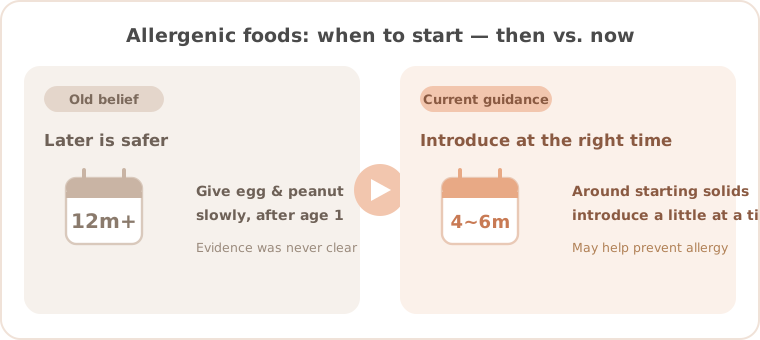
The key point is that “leaving it out entirely because it’s scary” may not be the safe choice. Letting your baby experience a variety of foods a little at a time from around when solids begin can be better than avoiding a specific food for a long time. If you’re not yet sure whether it’s time to start solids, you might first check Signs your baby is ready for solids.
Why does early introduction help prevention?
A baby’s body is said to learn “this is a safe food” as it meets new foods by mouth. But if a specific food is only ever avoided for a long time, the chance to safely accept that food can actually shrink. The same goes for allergenic foods like egg and peanut — experiencing them in small amounts during the solids stage may help.
That said, “early introduction is good” does not mean “the earlier the better, no matter what.” What matters is trying foods one at a time, in a safe way, when your baby is ready to accept solids. Rushing before they’re ready, or piling on several foods at once, isn’t recommended. For a good order to start first ingredients in, see First foods for babies: where and how to start.
Four steps to introduce safely at home
When you first give an allergenic food, just keeping a few things in mind makes it far more reassuring. The four below are the basic principles.
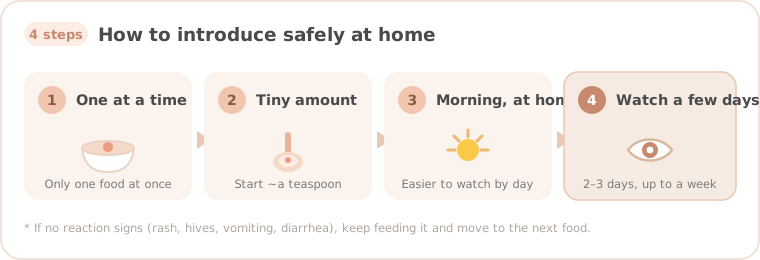
1. Only one food at a time
Try a new allergenic food one at a time. If you give several ingredients mixed together at first, it’s hard to tell which one caused a reaction. Watching one food for a few days and moving on to the next only if it’s fine is the safe flow.
2. Start with a tiny amount
Begin with a very small amount, about a teaspoon. If there’s no particular reaction, increase the amount little by little from the next time. Rather than a large amount on day one, it’s better to start small and increase while watching the response.
3. In the morning, at home, when possible
We recommend giving new foods in the morning and at home when you can. That way, if a reaction appears, you can watch your baby through the day and get to a clinic quickly if needed. It’s safer to avoid trying something for the first time late at night or while out.
4. Watch for a reaction over a few days
After giving one food, watch your baby for usually 2–3 days, up to about a week. Look for changes like skin rash, hives, vomiting or diarrhea, or unusual fussiness. If there’s nothing wrong, you can keep feeding that food and move on to the next.
The eight major allergenic foods worth knowing
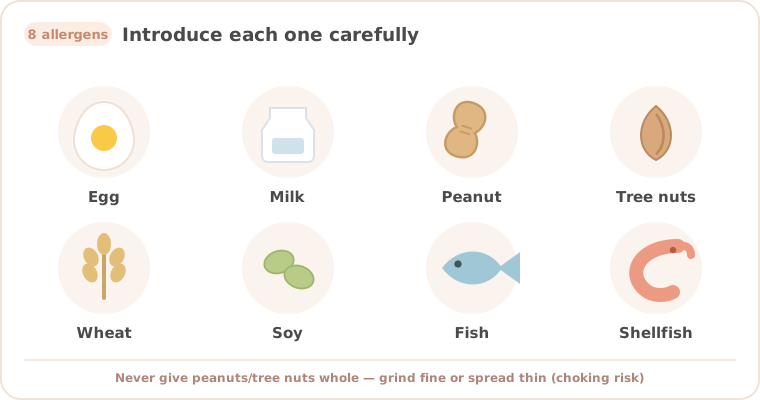
Eight foods are commonly listed as prone to causing allergy. This doesn’t mean avoid them entirely — rather, it means it’s good to introduce each one carefully, one at a time, when you first offer it.
| Food | Common form | Note when introducing |
|---|---|---|
| Egg | Fully cooked egg | Cook well, start small |
| Milk | Dairy used in cooking | Plain cow’s milk after age 1 |
| Peanut | Finely ground, or peanut butter thinned | No whole peanuts — choking risk |
| Tree nuts | Finely ground or spread thin | No whole nuts — choking risk |
| Wheat | Cooked wheat foods | Start small |
| Soy | Tofu or cooked beans | Mash, start small |
| Fish | Deboned, cooked flesh | Start small |
| Shellfish | Cooked flesh, finely chopped | Especially small at first |
There’s one thing to be sure to remember here. Don’t give peanuts and tree nuts whole. Hard, round whole peanuts and nuts can slip into a baby’s airway while swallowing and cause choking. So when you try them as allergenic foods, it’s safe to grind them fine, or thin them right down into a form you can spread softly. Please be sure to distinguish between “meeting nuts early” and “giving them whole” — they are completely different things.
If there’s family history or severe eczema, get advice first
Even though early introduction is generally recommended, it doesn’t apply the same way to every baby. In particular, if a parent or sibling has an allergic condition such as food allergy, or your baby has moderate or more severe atopic dermatitis, it’s safer to discuss the timing and method with your pediatrician before proceeding.
In these cases, the approach can vary with your baby’s condition. Rather than deciding alone from internet information, it’s better to confirm through a visit. Asking in advance “when and how should our baby start allergenic foods?” and making a plan will put your mind far more at ease.
If a reaction appears, do this
Seeing a change in your baby after giving a new food is unsettling. If the signs below appear, stop that food for now and watch how your baby is doing.
- Hives or a rash around the mouth or on the body
- Repeated vomiting or diarrhea
- Swollen lips or eyelids, or unusually intense fussiness
If you see these, it’s safe to stop the food and have your pediatrician check. In particular, if a severe allergic reaction (anaphylaxis) is suspected — trouble breathing, a swollen face or lips with limpness, or hives spreading quickly over the whole body — don’t wait; call emergency services (911) right away and head to the ER. For how to watch for and respond to symptoms when a reaction appears, see Baby food allergy symptoms and signs.
Frequently asked questions
Exactly what month should I give peanut? It’s hard to say “definitely at this month,” because babies differ in when they’re ready for solids. Generally, from around 4–6 months when solids begin, you can try it in a finely ground form, a small amount at a time. If there’s family history or eczema, talk with your pediatrician before you start.
Once it was fine, can I relax now? Even if there was no reaction to the first small amount, a reaction can still appear later when you increase the amount or feed it often. Early on, it’s best to keep watching while increasing the amount slowly.
Should I start egg with the yolk? There used to be a lot of talk about the order starting from the yolk, but now the guidance is often to try fully cooked egg in a small amount. If you’re unsure what form to start with, asking about it at a visit is one option.
Can I introduce allergenic foods while still breastfeeding or formula-feeding? Yes — keep milk feeds going as they are, and introduce allergenic foods one at a time as solids. It’s not about stopping milk to start; it’s about adding solids on top.
To wrap up
The advice to give egg and peanut slowly after age one is now close to a thing of the past. Rather than delaying allergenic foods for a long time out of worry, introducing them one at a time in a safe way, once your baby is ready to start solids, may help with prevention.
The method isn’t hard: one food at a time, starting with a tiny amount, in the morning at home when possible, watching for a reaction over a few days. With the eight — egg, milk, peanut, tree nuts, wheat, soy, fish, and shellfish — take an especially careful approach when you first give them, and because peanuts and tree nuts are a choking risk, don’t give them whole; grind them fine or spread them thin.
That said, if there’s family history or your baby has severe eczema, it’s safer to discuss it with your pediatrician before introducing, and if a reaction appears, stop that food and have your baby seen. If a severe reaction such as trouble breathing or a swollen face is suspected, call emergency services (911) right away — please keep just this part in mind.