How to measure a baby's temperature accurately — methods by site and reading the gaps
From why a baby's temperature differs each time, to how to measure at each site and its accuracy, reading the gaps between sites, and the features of each thermometer type. The key is measuring the same way consistently and recording which site you used.
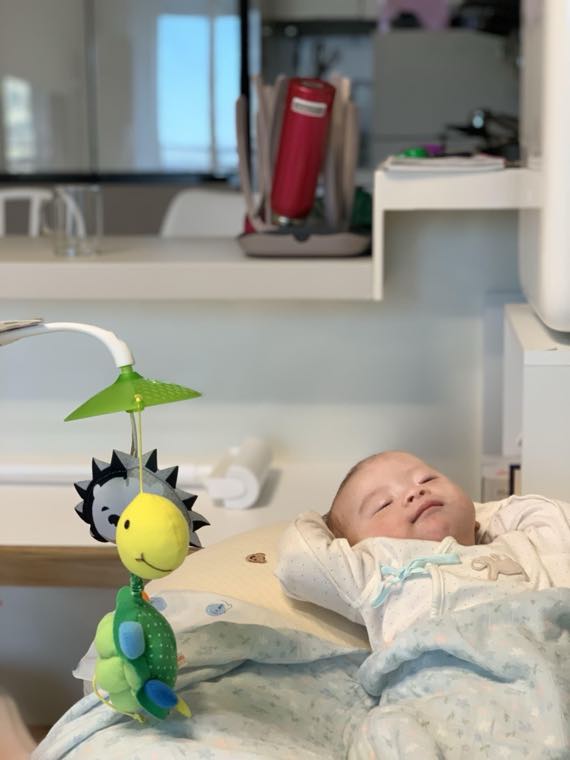
In the middle of the night your baby feels warm, so you take the temperature — once it reads 37.2°C, and on a re-take 38°C, and your heart jumps. It's hard to know which value to trust. Getting slightly different readings is mostly down to a different site, method, or device — rather than the thermometer being broken or something being seriously wrong with your baby.
So the important thing with a baby's temperature isn't "one perfect number" but measuring the same site the same way consistently and watching the trend. In this article we'll go through how to measure at each site, how much the sites differ, how to read those differences, and how the types of thermometers differ.

Why is the temperature different every time?
Getting different values for the same baby within a few minutes is common. Temperature naturally rises and falls a little within a day, and it's captured differently depending on the site and method.
Three things overlap here. First, the baseline differs by site: the closer to the body's core, the higher it reads; the closer to the skin surface, the lower. The state right before measuring matters too — just after crying, after breast milk or formula, or after being bundled up, it can read briefly high. Last is technique: the reading shifts if the ear thermometer's angle is even slightly off, or if the armpit isn't fully closed around the sensor.
So rather than being alarmed the moment one value spikes, it's better to measure again the same way once your baby has settled.
How to measure at each site, and how accurate is it?
At home, the sites for a baby's temperature are usually the rectum, ear (eardrum), forehead, and armpit. Their accuracy and convenience differ, so choose to suit the situation and your baby's age. In general, the closer a site is to core temperature the higher the accuracy, but the more of a hassle it is to measure. Measuring nearer the skin surface is easier, but sways more with the surroundings.
1. Rectal temperature — the highest accuracy
Rectal temperature is closest to the body's core, so it's the most reliable method when an accurate value is needed, especially for a young infant. Put a little lubricant on the tip of a digital thermometer, lay your baby down, gently insert about 2 cm into the anus, and measure until it beeps. It's important not to force it in deep.
That said, babies find it uncomfortable and it takes care to handle, so it can feel burdensome to use every time at home. If it's your first time, checking the technique once with your pediatrician is reassuring.
2. Ear temperature — fast, but the angle is key
An ear (eardrum) thermometer reads the eardrum's temperature with infrared. It's done in a few seconds, which is convenient. But errors can grow in young infants with narrow ear canals, so it tends to be used more reliably from around 6 months of age.
To improve accuracy, gently pull the ear up and back to straighten the canal, then insert so the sensor faces the eardrum. If there's a lot of earwax, or just after your baby has been lying on one side, the value can waver, so some people measure both sides and refer to the higher value.
3. Forehead temperature — easy without waking
A forehead thermometer (including non-contact infrared types) is handy because you don't have to wake a sleeping baby. But it's strongly affected by sweat, wind, direct sunlight, and indoor–outdoor temperature gaps. Just after coming inside, or when there's sweat on the forehead, it can read lower or higher than the reality.
It's good for checking often because it's easy, but "easy" and "most accurate" are different things. If a fever is suspected, we suggest confirming once more at another site.
4. Armpit temperature — safe and simple
Armpit (axillary) temperature puts little burden on the baby and is safe, so it's often used even in the newborn period. But because it measures the skin surface, it tends to read lower than the core temperature. To measure, first wipe the sweat from the armpit. Then place the sensor tip in the center of the armpit, hold the arm against the body, and wait until it beeps.
Let's compare the four sites at a glance in the table below.
| Site | Accuracy | Convenience | Suited for | Tips / cautions |
|---|---|---|---|---|
| Rectum | Highest | Low | Young infants needing an accurate value | About 2 cm only, use lubricant, don't force it |
| Ear (eardrum) | High | High | Generally from 6 months | Pull ear up and back for angle; watch for earwax |
| Forehead | Moderate | Highest | Screening at all ages | Avoid sweat, wind, direct sun, temperature gaps |
| Armpit | Moderate | High | All ages, including newborns | Full contact; reads low as it's the surface |
When sites give different values, how should I read them?
Measuring the rectum and armpit at the same time and getting different values is natural — the rectum, closer to the core, reads higher; the armpit, at the skin surface, reads lower. The gap between sites is often taken as roughly 0.3–0.5°C, but it varies a little by baby and situation.
There's a common misunderstanding here: changing the number with a fixed formula like "add a few degrees to the armpit value for the real temperature." The differences between sites vary from person to person, so an arbitrarily adjusted number can add to the confusion. Two more practical approaches:
First, measure the same site the same way consistently and watch the change. If yesterday's armpit reading was 37.3°C and today's armpit reading is 38.2°C, since the site is the same you can read the "it went up" trend directly. Second, record which site you used along with the value. At an appointment too, telling them "it was 38°C by armpit" lets the medical team read it far more accurately.
Because the threshold line for a fever itself differs slightly by site, it's worth checking from what temperature counts as a fever in the fever thresholds by site article. Keep in mind, too, that a thermometer is only a tool for checking the situation — it's hard to diagnose an illness or declare all-clear from a single number.
How do the types of thermometers differ?
Thermometers can be broadly divided into contact digital thermometers and infrared thermometers. Since this connects with the site-by-site methods, knowing the features of each type makes it easier to choose one that fits your baby.
- Digital thermometer (armpit / rectal / oral): A tip-contact type, good for the armpit or rectum. The value is stable and it's relatively inexpensive. But it takes a little time until it beeps. Oral use is only possible for an older child who can cooperate, and isn't recommended for infants.
- Ear (eardrum) infrared thermometer: Fast and easy, but affected by the angle and ear condition, and errors can grow in young infants.
- Forehead / non-contact infrared thermometer: Good for measuring quickly without waking your baby, but the most affected by the surroundings.
For any type, it's hard to say a particular product is "always accurate." It's practical to choose by looking together at your baby's age, the situations you mostly measure in (asleep, or checking often during the day), and how easy it is to handle. When you start using a new thermometer, measuring once while your baby is well to learn the normal value gives you a baseline to compare against later.
Small tips for measuring more accurately
Even with the same thermometer, the value changes with how you measure. Just avoiding the situations below can cut errors quite a bit.
- Just after crying, after feeding, or after being bundled up, it can read briefly high. Wait about 15–20 minutes for things to settle, then measure again.
- For ear temperature, avoid measuring just after your baby has lain on one side, and pull the ear up and back to set the angle. A lot of earwax can make the value waver.
- For forehead temperature, wipe off sweat and avoid right in front of wind, an air conditioner, direct sunlight, or a heater. If your baby just came inside, give the body a little time to adjust to the room temperature.
- For armpit temperature, wipe off sweat, place the sensor in the center, hold the arm firmly against the body, and wait until it beeps.
- If the value is ambiguous or spikes, measure the same site once more to confirm.
When and how often should I measure?
There's no need to measure often out of habit while your baby is well. But when your baby seems droopy, warm, or off compared to usual, it's good to check the temperature.
When there's a fever, the trend over time tells you more than a single number. Leaving a note of what time it was and how high, which site you used, and — if you gave a fever reducer — when, makes the next decision easier. In particular, a fever reducer needs to be re-measured after allowing time for it to take effect, not right after giving it, or you won't see the real change.
Writing down the site, value, and time together like this makes the trend visible. Leaving the temperature, time, and measured site as a note in a baby-log app like Babyfolio lets you show the overnight ups and downs, and the change after a fever reducer, to the clinic as they are. For what order to respond in at home when a fever hits, see the the order for handling a fever at home article.
In these cases, get advice
Taking the temperature is only a starting point for checking your baby's condition — it's hard to declare all-clear or a crisis from the number alone. In cases like the following, seek care promptly regardless of the temperature, or together with it.
- When a baby under 3 months has a fever: a fever in a young infant often needs its cause confirmed, so it's best to be seen as soon as possible.
- When the fever is high or lasts long and doesn't come down well even with a fever reducer
- When the baby is limp and not feeding well, with a noticeably reduced amount of urine and suspected dehydration
- When there are seizures, labored breathing, ongoing vomiting, or limpness that's hard to rouse from
A fever after vaccination is a slightly different matter. It's often a common reaction, but knowing the tips for handling it and the signs that need care is reassuring — see the what to do when a fever comes after vaccination article for details.
Frequently asked questions
Which site is best for a newborn?
The armpit is safe and simple, so it's often used in the newborn period. But if an accurate value is truly needed, rectal measuring is more reliable. When measuring rectally for the first time, it's good to check the technique once with your pediatrician.
From how many months can I use an ear thermometer?
Errors can grow in young infants with narrow ear canals, so it's used more reliably from around 6 months. Before that, we suggest confirming alongside another site like the armpit.
A forehead thermometer is easy — can I trust it?
It's good for a quick check. But it's strongly affected by sweat, wind, and temperature gaps, so if a fever is suspected, measuring once more at another site is reassuring.
I measured twice and got different values — which should I trust?
Settle your baby, then measure again at the same site. With the same site the trend is easier to read. If the value stays ambiguous, record the site alongside it, and if worrying signs are present, get advice regardless of the value.
Can I re-measure right after giving a fever reducer?
Right after giving it, it's before the effect appears, so it's hard to see the change. Re-measuring after allowing time for it to take effect lets you confirm whether it really came down. Noting the time you gave it makes this easier.
To sum up
- Getting slightly different values is usually due to differences in site, method, or device. So measuring the same site the same way consistently is the key.
- Different values at different sites are natural. Rather than adjusting the number arbitrarily, record which site you used along with the value and pass it on.
- Avoid measuring just after crying, feeding, or bundling up, and re-measure once settled to reduce error. If there are worrying signs, get advice regardless of the number.