A Complete Guide to Baby Naps: Number of Naps and Total Sleep Hours by Age
How many naps should my baby take, and for how long? We've organized a chart covering nap frequency, nap duration, nighttime sleep, and total daily sleep by month—from newborns up to two years old. Please remember that these figures are ranges, and sleep patterns can vary greatly for each individual baby.

After finally getting your little one to sleep at night, naptime becomes the next big worry. As you search for answers like "How many naps should a baby this age take?" or "How many hours of sleep do they need?", you might find yourself more confused because the numbers vary slightly in every article.
To give you the big picture first, the number of naps is highest during the newborn stage at 4 to 6 times a day. This gradually decreases as the months go by, settling into 2 naps around the first birthday and 1 nap by age two. Total daily sleep is longest for newborns at 14–17 hours, tapering down to about 11–14 hours as they grow. However, these numbers are strictly average ranges; it is very common for your baby to sleep slightly more or less than that.
In this post, we’ll start with a single chart showing nap frequency, nap duration, nighttime sleep, and total daily sleep by age. Then, we’ll break down what changes to expect in each stage and what to look for if your baby's patterns differ from the chart.
Baby Nap Schedule by Age at a Glance
The table below summarizes how many naps a baby takes and for how long, from the newborn stage to two years old. Nap frequency and total daily sleep follow official recommended ranges, while nighttime sleep is an approximate value (total sleep minus nap time), so the range is quite broad. Find the row that matches your baby's age.
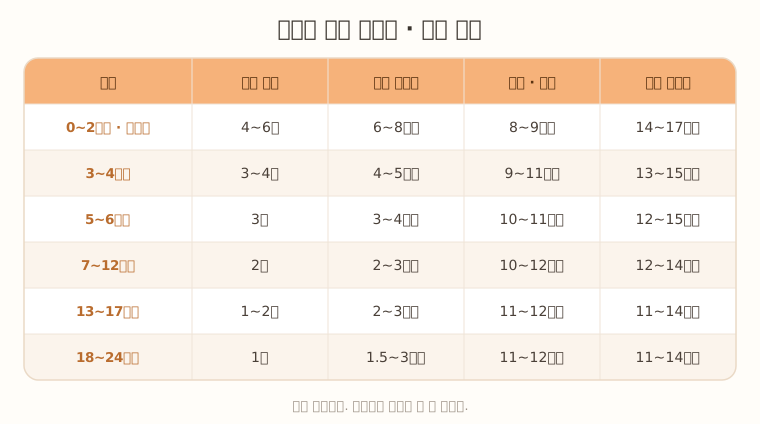
Looking at the table, you can see the trend clearly. The number and duration of naps gradually decrease, while the duration of consolidated nighttime sleep slowly increases. As a result, total daily sleep tends to decline gently rather than fluctuate wildly. However, it’s not unusual for babies of the same age to differ by two or three hours, so use these numbers only as a general guide. If you're curious about the logic behind exactly when to put your baby down, our article on Wake Windows and Nap Timing by Age will be a helpful follow-up.
Why do newborns nap so frequently?
Newborns (0–2 months) take 4 to 6 naps a day—sometimes even more. Since they haven't yet developed a clear distinction between day and night, they follow a rhythm of sleeping, waking to eat, and sleeping again in short bursts throughout the day. Sleeping in 2 to 4-hour intervals rather than long stretches is perfectly natural at this stage.
This is also the time when total daily sleep is at its peak (14–17 hours). Since naps account for 6–8 of those hours, they essentially spend more than half the day asleep. During this period, it’s easier for everyone to follow the baby's lead—letting them sleep when tired and feed when hungry—rather than trying to meet a specific nap count goal.
Day-night confusion usually starts to clear up after 6 to 8 weeks. Keeping things bright with natural light and staying active during the day, while keeping lights low and noise down at night, can help your baby start connecting longer stretches of night sleep. If you're curious about the overall flow of establishing a rhythm, check out our Basic Guide to Newborn Sleep Training.

3–6 Months: Naps drop to 3–4, and night sleep lengthens
Around 3 to 4 months, the nap count typically settles to 3 or 4, and by 5 to 6 months, it moves toward 3 naps. The erratic rhythm of the newborn stage starts to take on a more predictable structure: a morning nap, an afternoon nap, and a short late-afternoon catnap.
The most welcome change during this period is the lengthening of nighttime sleep. Consolidated night sleep tends to increase from around 3 to 4 months, so even as naps decrease, total daily sleep stays within the 12–15 hour range. If a short evening catnap seems to be interfering with bedtime, you can try moving it earlier or shortening it.
However, the pace of this change varies. Some babies settle into 3 naps as early as 4 months, while others may still take 4 naps at 6 months. Both are within the normal range, so instead of comparing your little one to the baby next door, focus on whether your baby is eating well and waking up in a good mood.

Around Age One: The transition from 2 naps to 1
Babies between 7 and 12 months usually take 2 naps. A rhythm of one morning nap and one afternoon nap often persists throughout this period, totaling about 2 to 3 hours of nap time. As night sleep stabilizes at 10–12 hours, total daily sleep falls into the 12–14 hour range.
After the first birthday (13–17 months), babies gradually fluctuate between 1 and 2 naps before finally settling into one afternoon nap by 18–24 months. During this transition from 2 naps to 1, the rhythm can be shaky for a few days—the baby might refuse the morning nap, or conversely, get too tired in the afternoon, making the evening difficult. Instead of cutting a nap cold turkey, it’s easier on the baby to gradually push the morning nap later until it naturally merges into a single post-lunch nap.
The signal to transition depends more on your baby's state than the calendar. If they can stay awake and play happily when naptime comes, or if skipping a nap doesn't negatively affect their mood or night sleep, it may be a sign they are ready for one nap. On the other hand, if forced reduction leads to extreme fussiness every evening or worsened night sleep, it might be too early, and there's no need to rush.
My baby sleeps less than the chart. Is that okay?
This is the most common concern. After looking at a chart, it’s natural to worry if your baby seems to be sleeping less. The bottom line is: if the total daily sleep is near the range and your baby is eating well and alert/happy when awake, there is usually no cause for concern.
What matters more than the frequency or length of a single nap is the sum of sleep for the entire day. Some babies take several short naps, while others take fewer, longer naps. Even if their schedules look different on the chart, their total daily sleep might be very similar. Rather than being tied to "how many times" or "how many minutes," it's better to look at total sleep and their overall condition when awake.
When in doubt, use these criteria: if growth and weight gain are on track, feeding amounts are normal, and the baby plays well with good eye contact and responsiveness, you can usually accept their sleep time as their unique rhythm. Conversely, if a lack of sleep causes constant extreme fussiness and difficulty feeding, or if they are unusually lethargic and hard to wake, consulting a pediatrician is the best way to gain peace of mind.
Will cutting naps help them sleep better at night?
When nighttime sleep is short, it's easy to think, "If I cut their naps, won't they sleep more at night?" However, this often has the opposite effect. If a baby is overtired from lack of daytime sleep, they may actually have a harder time falling asleep at night or wake up more frequently.
Naptime isn't a competitor to night sleep; rather, it supports it. A baby who is well-rested during the day is often more relaxed when it's time for bed. Therefore, we don't recommend aggressively cutting naps just to increase night sleep. If night sleep is unusually short or fragmented, it's better to check if their bedtime is too late or if their wake windows are too long for their age before reducing naps.
Of course, as mentioned earlier, if a short evening catnap falls too close to bedtime, adjusting just that one nap is worth a try. The key is understanding the difference between "reducing total nap time" and "refining one poorly timed nap."
Safety first: Essential naptime rules
Naps are sleep just like nighttime rest, so safety standards should always be the same. Especially for babies under one year old, dangerous situations can arise even during a quick nap on a sofa, in a stroller, or on an adult bed.
The most basic rule is placing them to sleep flat on their back. Additionally, the sleep surface should be free of soft mattresses, thick blankets, pillows, stuffed animals, or bumpers that could cover or press against the baby's face. This is a common recommendation by various health organizations to reduce the risk of Sudden Infant Death Syndrome (SIDS). In the summer, you should also monitor room temperature and humidity. For tips on managing AC and fans, see our guide on Using AC, Fans, and Dehumidifiers for Baby’s Sleep.
Record their patterns for a few days to see the rhythm
The chart we’ve looked at is an average; what you really need is "your baby's chart." Because naps happen several times a day, it's easy to get confused if you rely only on memory. Simply jotting down when they slept and for how long can be a huge help.
If you record nap and night sleep times in Babyfolio for just a few days, your baby's unique rhythm—which isn't in any generic table—will start to appear. You’ll visually confirm patterns like "They always get sleepy around this time" or "The morning nap is getting shorter lately." When it’s time to decide if you should transition from 2 naps to 1, having those few days of records will make the decision much easier.
Frequently Asked Questions
My newborn sleeps for 4 hours straight during the day. Should I wake them?
During the newborn stage, it is sometimes necessary to wake a baby to maintain feeding intervals. If weight gain is slow or a feeding rhythm hasn't been established, follow the feeding schedule recommended by your healthcare provider. If growth is on track and they are eating well, a slightly longer nap can be perfectly natural.
Nap times are inconsistent every day. Is that okay?
It is very common for nap times and durations to fluctuate daily, especially in younger infants. As they get older, night sleep stabilizes, and wake windows become more consistent, naps usually follow suit. If total daily sleep is sufficient and your baby is doing well, look at the trend over several days rather than focusing on a single day.
My baby wakes up after only 30–40 minutes. Should I try to get them back to sleep?
If the nap is short but total daily sleep is being met, it isn't necessarily a problem. However, if they wake up fussy, check if the room is too bright or noisy, or if they might be hungry or uncomfortable just before waking.
My one-year-old is refusing to nap altogether.
During the transition from 2 naps to 1 after the first birthday, there are periods where a baby may seem to refuse naps. Instead of eliminating the nap entirely, try consolidating the time into one afternoon session. If cutting the nap leads to extreme evening fussiness or worse night sleep, they likely still need it, so there's no need to rush the transition.
Summary
The nap schedule by age follows a general trend of starting at 4–6 naps for newborns, moving to 2 naps around age one, and 1 nap by age two. Total daily sleep also gradually decreases from 14–17 hours to 11–14 hours. Remember, these are average ranges, and it is natural for your baby to fall slightly outside these numbers.
Rather than being fixated on a specific number of naps or hours, look at the total daily sleep and how your baby feels when they are awake. Instead of trying to force longer night sleep by cutting naps, follow your baby’s cues to refine their rhythm—it’s a much smoother path for both of you. Always prioritize a safe sleep environment, and if you notice concerning patterns, don't hesitate to consult your pediatrician.
References
I-Sarang Pregnancy & Childcare Portal, "Infant Sleep and Care" https://www.childcare.go.kr/
YugaWiki, "Sleep Duration by Age" https://www.yugacrew.com/yugawiki
National Sleep Foundation (NSF), "Sleep Recommendations by Age" https://www.thensf.org/
American Academy of Pediatrics (AAP), "Safe Sleep Environment Recommendations for Infants" https://www.aap.org/