Putting Your Baby to Sleep on a Tropical Night: How to Run the AC, Fan, and Dehumidifier All Night
How to run the AC, fan, and dehumidifier when settling your baby on a sweltering tropical night, and whether it's safe to leave them on overnight. We cover what each appliance does, how to run nighttime cooling, safety rules for direct airflow, temperature gaps, and dryness, and the signs that mean it's time to see a doctor — all based on official guidance.
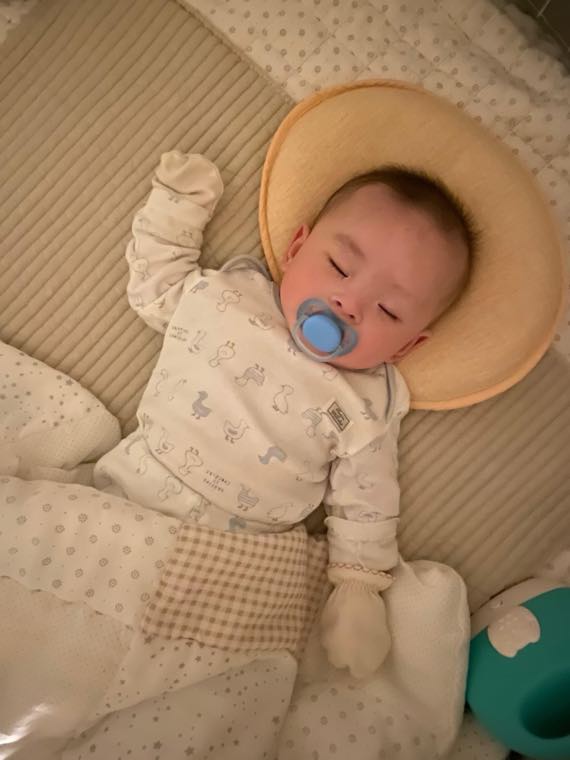
On a sweltering tropical night, even adults toss and turn, so it's especially hard for a baby who can't tell you what's wrong. When you're holding a little one who keeps waking up drenched in sweat, you find yourself second-guessing everything: Should I leave the AC on? Will she catch a cold, so maybe just a fan? Or would a dehumidifier be better?
Let me start with the bottom line. On a tropical night when the temperature never really drops, the safer approach is to bring the room temperature down with the air conditioner first. A fan and a dehumidifier each do a different job, so think of them as backing up the AC rather than replacing it. And more than whether you keep it running all night, what matters far more is sticking to a comfortable temperature, avoiding direct airflow, and managing dryness.
Of course, it's hard to say something absolute like "exactly this many degrees, and running it all night is always safe." It varies a little with your baby's age, your home's layout, and how humid that particular night is. So we've laid out what each of the three appliances does, how to combine and run them at night, the safety rules to follow, and the signs that mean it's time to see a doctor.
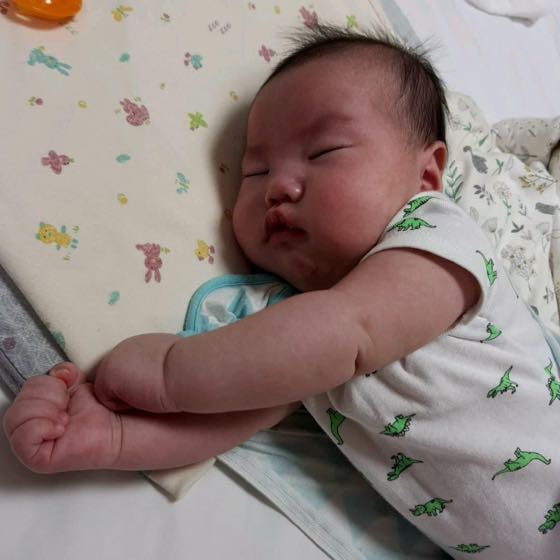
AC, fan, or dehumidifier — what should you run on a tropical night?
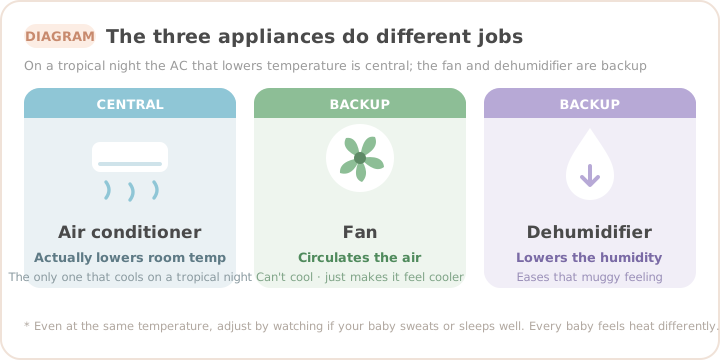
The three appliances may sound similar, but they do completely different jobs. The air conditioner lowers the temperature, the fan circulates the air, and the dehumidifier lowers the humidity. So on a tropical night when the temperature doesn't fall even after dark, the AC that actually brings the room temperature down is the centerpiece, and the other two play a supporting role alongside it.
1. Air conditioner — it actually lowers the room temperature
On a tropical night, the air conditioner is the surest way to bring the temperature down. Heat itself puts a strain on a baby through dehydration, disrupted sleep, and heat rash, so when the room is too hot, setting the temperature to a comfortable range with the AC is actually the choice that's better for your baby.
For a baby's room in summer, a temperature of roughly 22–26°C, and about 24–26°C for sleep is recommended (per official guidance such as Korea's Childcare and Ange). These numbers are just a target range; within it, you adjust while watching how your baby is doing. We've written up the misconceptions around the "ideal" temperature and a more detailed look at it separately in Baby AC temperature in summer: what's really the right setting?
2. Fan — it can't lower the temperature, only move the air around
A fan dries sweat and makes your baby feel cooler, but it can't lower the room temperature itself. It just moves the already-warm air around. So on a tropical night when the temperature won't drop below around 30°C, there are many nights when a fan alone isn't enough to get through.
Used together with the AC, though, it's a great pairing, spreading the cool air evenly into every corner of the room. Here too, the key is keeping the airflow from hitting your baby directly, and we'll cover how in the safety rules below.
3. Dehumidifier — it eases that muggy, sticky feeling
After the rainy season or on a humid night, it can feel sticky and muggy even when the temperature isn't that high. At times like these, lowering the humidity with a dehumidifier helps sweat evaporate and makes things feel much cooler. In summer, an indoor humidity of about 40–60% is a good target.
That said, a dehumidifier can't lower the temperature much either. It only handles humidity, so on a hot night it's best used as a helper to the AC. And if you run it too hard and the humidity drops well below 40%, your baby's nose and skin can get dry, so avoid over-dehumidifying.
Here's how we combine them at night
| That night's situation | Main appliance | Backup |
|---|---|---|
| A hot tropical night when the temperature won't drop | AC (gentle cooling) | Fan for air circulation |
| Hot and humid, so sticky and muggy | AC + dehumidifying (dehumidify mode) | Fan |
| A night that's more or less bearable | Fan + dehumidifying | AC if it gets hot |
The table is just a general framework. Even at the same temperature, adjust while watching whether your baby is sweating or sleeping well. Every baby feels the heat differently.
Is it okay to leave the AC on all night?
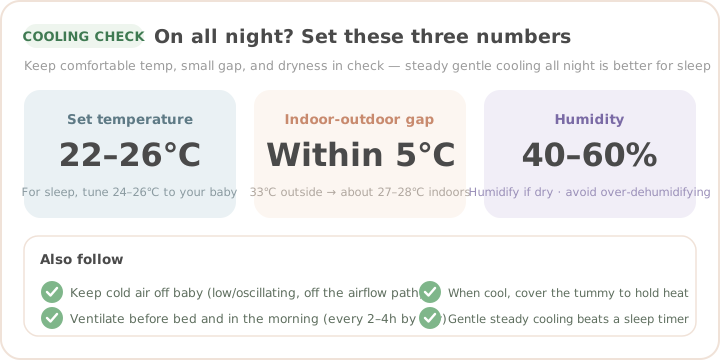
This is the question that comes up most. If you keep it at a comfortable temperature, avoid direct airflow, and manage dryness, it's often fine to leave it on all night. Rather than having a sleep timer shut it off, letting the room heat up again, and waking your baby, keeping the temperature steady with gentle cooling tends to be better for sleep.
Many parents worry that "AC all night equals air-conditioning sickness," but this isn't an infection — it's the strain on the body from a combination of sudden temperature swings, cold drafts, and dryness. As long as you follow the operating tips below, cooling through the night doesn't automatically lead to it.
1. Steady gentle cooling tends to beat a sleep timer
A sleep timer that shuts off after an hour or two is convenient, but once it turns off, the room heats up again and your baby is likely to wake in the early hours. On a tropical night, rather than cranking the temperature way down and cycling it off, keeping it gently steady with light cooling wakes your baby less.
2. Keep the setting within the 22–26°C range
As mentioned, about 24–26°C is recommended for sleep, but it's not "always 24" — you tune it to your own baby within that range. Lower it a touch if she's sweating, raise it a touch if she seems cool. Feeling the back of the neck and the back is more accurate than checking hands and feet.
3. Keep the indoor-outdoor temperature gap around 5°C
When it's blazing hot outside and you make the room too cold, that big gap can strain a baby's autonomic nervous system. We recommend keeping the indoor-outdoor gap around 5°C. If it's 33°C outside in the afternoon, about 27–28°C indoors is comfortable. On a tropical night when the temperature stays high, you don't need to cool the room down excessively either.
Nighttime cooling: the essentials to follow
Once you've chosen your appliance, there are a few safety rules to follow while running it. For all-night cooling to be safe, these are the crucial parts.
- Don't let cold air blow directly on your baby. Point the AC airflow upward (toward the ceiling) and aim the fan at a wall or the ceiling, running it on low with the swing (oscillation) on. Lay your baby down outside the path of the airflow.
- Keep the temperature gap around 5°C, and set the temperature to your baby's state within the 22–26°C range.
- Manage dryness. Cooling for a long time tends to dry out the air. If the humidity drops below 40%, use a humidifier to bring it to 40–60%. Conversely, don't run a dehumidifier so hard that it gets too dry.
- Ventilate. Since the door stays closed while your baby sleeps, open a window once before bedtime and once in the morning to refresh the air. During the day, ventilating every 2–4 hours is a good idea.
- Cover the tummy. When it's cool from the AC, cover the tummy with something thin to help hold in body heat.
Clothing and bedding on a tropical night
In a cooled room, the trick is to dress your baby lightly while keeping body heat from escaping. With a thin short-sleeved cotton bodysuit, plus a breathable sleep sack (wearable blanket) or a thin blanket instead of a duvet, your baby's tummy stays covered even if she kicks the blanket off.
Thick duvets and heavy bedding are best avoided on summer nights, since they trap heat and can pose a risk of covering the face. For a baby who sweats a lot, placing a thin gauze cloth against the back and swapping it out when it gets damp is another option. Cooling that reduces sweating also helps with heat rash and infant rash, and we've covered how to look after your baby's skin environment in summer in Newborn infant rash: care that starts with the environment.
Hot or cold? Check with your baby's body
Whether it's the AC or a fan, in the end the measure isn't a number — it's your baby's body. To tell if she's hot or cold, feel the back of the neck, the chest, and the back. Hands and feet are naturally cooler than core temperature, so they're an unreliable gauge.
If the back or the back of the neck is damp with sweat, that's a sign she's hot, so lower the temperature a little or take off a layer. Conversely, if her back is cool and she's curling up, warm her up a bit. A flushed face and rapid breathing, or the opposite — a cool body and fussiness — are also signs to watch together. We've written up how to read your baby's hot and cold signals in more detail in Telling your baby's "I'm hot" and "I'm cold" signals apart.
See a doctor if you notice these signs
Even if you've managed the cooling well, on a day when the room is hotter than you thought or your baby is more vulnerable to heat, signs of heat illness can appear. Rather than assuming it's fine because you're indoors, if you notice any of the signs below, don't delay — see a pediatrician.
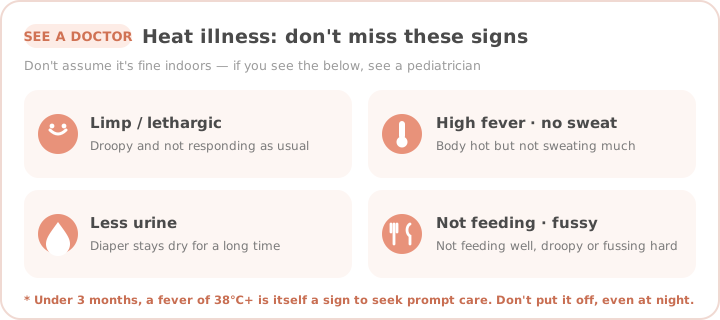
- Your baby is limp and not responding the way she usually does
- Her fever rises and her body feels hot, but she isn't sweating much
- Her urine output has noticeably dropped (the diaper stays dry for a long time)
- She isn't feeding well and seems droopy, or keeps fussing hard
- Her face is pale or clammy, and she's breathing rapidly
In particular, if lethargy, high fever, and reduced urination appear together, it could be dehydration or heat illness and needs prompt care. And for a baby under 3 months, a fever (38°C or higher) is itself a sign that calls for prompt care. The younger the baby, the faster things can change, so if there's a fever, it's safer to seek care without putting it off, even at night. On another note, when there's a stuffy nose, sneezing, or coughing after long exposure to AC airflow, it's easy to confuse with a summer cold; we've written up how to tell the two apart separately in Baby air-conditioning sickness vs. a summer cold: how do they differ?
Frequently asked questions
Can we get through a tropical night with just a fan and a dehumidifier, without an AC?
Since neither can lower the temperature, there are many nights when they fall short on a tropical night when the temperature doesn't drop. A room that stays hot is a strain on your baby, so on a sweltering night it's safer to lower the temperature with the AC and use the other two as backup.
Can a newborn have the AC on all night too?
The younger the baby, the less skilled she is at regulating her temperature and the more vulnerable she is to heat, so cooling that keeps a comfortable temperature actually helps. Just be even more thorough about avoiding direct airflow, and watch the temperature carefully. We cover age-by-age tips for putting a baby to sleep in more detail in Putting your baby to sleep on a tropical night, by age.
Won't running a dehumidifier all night make it too dry?
It can. If the humidity drops below 40%, your baby's nose and skin can dry out easily, so it's best to keep a hygrometer handy and maintain 40–60%. If there's a mode that shuts off once the target humidity is reached, use it, and if it feels dry, balance it out with a humidifier.
I also worry about the heat when we go out with the stroller on a summer day.
Managing the heat matters not just indoors but on midday outings too. The inside of a stroller can get hotter than you'd expect from heat radiating off the ground, so it helps to prepare using the Summer stroller heat safety checklist.
To wrap up
When putting your baby to sleep on a tropical night, the basics are to put the temperature-lowering AC at the center, with the fan and dehumidifier as backup. The fan handles air circulation and the dehumidifier tackles the mugginess, so on a sweltering night they can't replace the AC.
Whether you leave it on all night isn't the issue in itself. Tune it to your baby's state within the 22–26°C range, keep cold air from hitting her directly, keep the temperature gap around 5°C, and manage dryness. Follow just these few things, and keeping the temperature steady with gentle cooling is better for your baby's sleep.
Above all, your baby's body — not a number — is the measure. Adjust while feeling the back of the neck and the back, and if you notice signs like lethargy, high fever, or reduced urination, don't let your guard down just because you're indoors — see a pediatrician.