Timing Baby Naps by Wake Windows | Awake Time by Month
The clock says it's time but your baby isn't sleepy, and naps end after 30 minutes? Here's a by-month wake-window reference table, how to read drowsy cues, and how to fit it into an eat-play-sleep rhythm.

You have a rough sense of how many naps your baby takes and for how long, but the real question stumps you: "So do I put them down now?" The clock is ambiguous, and when you force it, they wake up 30 minutes later and you're back to square one. This is where awake time helps, a concept most people know as wake windows.
Let's start with the core idea. Awake time is the stretch your baby is awake from the moment they wake up until they fall asleep for the next nap. When this stretch is the right length for your baby's age, they drift into naps much more easily. Too short and they aren't tired enough to sleep yet; too long and they get overtired, which usually means more fussing and shorter naps. So "how long they're awake before you put them down" matters just as much as "how long they sleep."
One thing to note up front, though. The by-age times below are not officially confirmed medical figures, but a commonly cited range from parenting guides. Every baby has a slightly different window that works for them, so treat the clock as a reference and watch your baby's drowsy cues alongside it for the most accurate read. In this article, we'll walk through a reference table of awake time by age, how to read drowsy cues, and an example of applying it to the eat-play-sleep flow. If you're curious about nap counts and lengths themselves, you might also read nap counts and lengths by age.
What are awake time and wake windows?
Awake time is the gap from the moment your baby wakes up until they fall asleep for the next sleep. For example, if they wake at 7:00 a.m. and nap at 8:30, that hour and a half in between is the first awake time. This window repeats several times over the day, and as your baby grows, the time they can stay awake in one stretch gradually gets longer.

Why does keeping an eye on this help? Babies build up fatigue far faster than adults. Yet they still find it hard to regulate "I'm sleepy, I should sleep" on their own. Put them down when they're pleasantly tired and they'll settle gently, but miss that timing and let them get overtired, and their body releases alertness hormones that actually leave them wired. Eyes wide open but body exhausted and fussing, the state we commonly call overtired. At that point they're much harder to settle, and even once asleep they tend to sleep lightly and wake quickly.
On the flip side, putting them down too early doesn't work either. They haven't built up enough fatigue to be ready for sleep. So awake time isn't a "put them down at this exact time no matter what" rule, but a reference line for gauging the window in which your baby can comfortably fall asleep.
Awake time by age, please read it as a reference range
The table below shows commonly cited awake time ranges by age. Again, it's not a fixed rule but a starting point. Whether your baby sits at the shorter or longer end of this range is something you'll get a feel for after watching for a few days.
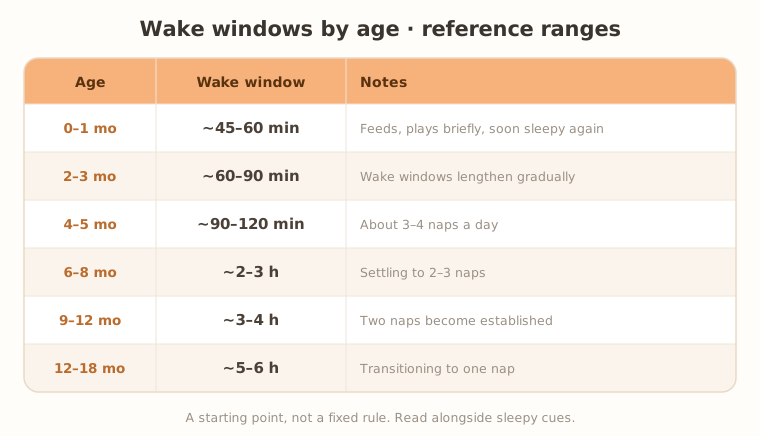
Looking at the table, a newborn's awake time is less than an hour, but around the first birthday it stretches to three or four hours. Naturally, the number of naps drops accordingly. In particular, the first awake time is usually the shortest, while the last window before nighttime sleep often runs a little longer. So rather than spacing the whole day out evenly, it feels more natural to keep mornings a bit shorter and let the windows lengthen toward evening.
During times when your baby is off their game, like a growth spurt or teething, this window can run shorter than usual. If the nap rhythm suddenly falls apart, it helps to check whether your baby's condition is different from usual, and the reason may become clearer.
Drowsy cues, which you should read before the clock
If awake time is the reference line, the real traffic light comes from your baby's body. Even with time to spare, if the drowsy cues are clear, that's the moment to put them down; and if the time is up but they're still lively, a little more play is fine. When the clock and the cues disagree, read the cues first.

Drowsy cues usually arrive in stages like this.
- Early cues: yawning, looking away or staring blankly at one spot, slowing movements, less eye contact
- Middle cues: rubbing their eyes or touching their ears and head, starting to fuss, burrowing in to be held
- Late cues: crying hard and fretting, arching their back and squirming, reddened eyes
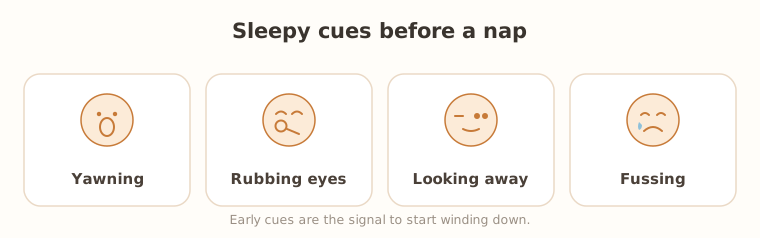
The best moment to put them down is right around the shift from early to middle cues. Lay them down then and they go in gently. Once they reach the late cues they've often already tipped into overtired, so soothing actually takes longer. That's why, when you see early signs like yawning or looking away, it's good to start easing into the wind-down from that point.
One tip: because the cues only appear a few minutes before it's time to sleep, they aren't easy to catch in advance. So it helps to roughly know your baby's awake time range and start watching closely as that time approaches, so you don't miss the early cues. You're using the clock and the cues together.
How do you apply awake time to eat-play-sleep?
A popular way to weave awake time into an actual day is the eat-play-sleep flow. When your baby wakes, you feed first, then spend time changing a diaper or playing, and put them down before the drowsy cues arrive.

Let's take a 3-month-old whose awake time is about 90 minutes as an example. If they wake at 7:00 a.m., it might flow like this.
- Eat (7:00): feed as soon as they wake to fill their tummy.
- Play (7:20–8:10): change the diaper and pass the time with tummy time or eye-contact play.
- Wind-down (8:10–8:20): when you see cues like yawning or looking away, dim the lights and create a quiet environment.
- Sleep (around 8:30): at about 90 minutes after waking, put them down in line with the drowsy cues.
Doing it this way puts playtime between feeding and sleeping, which can create a little distance from the habit of only falling asleep while nursing or on a bottle. Of course, this is by no means an absolute rule. With night feeds or in the early newborn days, falling asleep right at the breast is natural, and it isn't a problem. If the flow fits well, use it as a reference; if it doesn't match your baby's rhythm, feel free to adapt flexibly.
There's no single right way to sleep. There are many approaches to settling a baby too, so you can find the one that fits your family. If you'd like to look further into how to shape sleep habits, our guide to building newborn sleep habits should help.
Avoid these mistakes and it gets much easier
There are a few common ways things go off track when you use awake time. Knowing them in advance makes settling into a nap rhythm much easier.

The most common is watching only the clock and missing the cues. If you fixate on the time, thinking "the table says 90 minutes, so I'll put them down at exactly 90 minutes," you can end up out of sync with the cues your baby is actually giving. The time is just a readiness signal; the actual moment to put them down is best decided by watching your baby's state.
On the other hand, seeing the cues but delaying until they tip into overtired is also common. You see them yawn but think "just a little more play," and before you know it you've reached the late cues. Once you see early cues, it's safer to start the wind-down from that point.
Being caught off guard when a nap ends after just 30 minutes happens often too. Short naps commonly show up when the awake time was off. The window right before may have been too long, so they slept lightly from being overtired, or too short, so they couldn't settle deeply. In that case, try adjusting the window a little at the next nap to find the range that fits your baby.
When nighttime sleep gets worse, take a look at the gap between the last nap and nighttime sleep. If this window is too short, they aren't tired enough yet and toss and turn at night; if it's too long, being overtired makes them likely to wake during sleep. If your baby frets and cries often during the day, it also helps to check the order to work through when your newborn cries to rule out causes one by one.
One safety note: however you settle your baby, it's safest to put them down on their back, lying face up, in an environment free of soft objects nearby. And no matter how well you time things, if your baby has an unusually hard time sleeping and frets severely all day, or conversely stays overly limp and hard to rouse, and this persists, it may be a sleep issue itself, so it's reassuring to check with your pediatrician.
Track your baby's awake time and it starts to show
Because the window that works varies from baby to baby, in the end watching your own baby for a few days is the most accurate approach. If you jot down just the wake time and the sleep time, the flow shows up much more clearly.

If you keep these notes in Babyfolio as sleep records, your baby's own window comes into view, like "my baby tends to get sleepy after about an hour and a half," which makes it easier to gauge the next nap's timing in advance. Records don't replace your judgment, but they do lighten the daily worry of putting your baby down.
Frequently asked questions
The time on the table is up but my baby doesn't seem sleepy. Should I still put them down?
Drowsy cues take priority over the clock. If the time is up but they're playing happily and full of energy, a little more play is fine. The range on the table is a reference line, so your baby may just sit at the longer end of it. Instead, keep a close watch for early cues like yawning or looking away.
If awake time and drowsy cues disagree, which should I follow?
Follow the cues first. The time is for roughly gauging when they'll get sleepy, while the actual moment to put them down is best decided by the cues your baby's body gives. Even with time to spare, put them down if they're clearly sleepy; and even past the time, if they're comfortable, it's fine to wait a bit.
My baby only naps 30 minutes and wakes up. Is that related to awake time?
It can be. If the previous awake time was too long and they fell asleep overtired, they tend to sleep lightly and wake quickly; if it was too short, they can't settle deeply and sleep briefly too. It helps to try adjusting the window a little at the next nap to find the range that fits your baby.
Until when do I need to pay attention to awake time?
As your baby grows, the windows gradually get longer and naps decrease, and once they pass the first birthday and shift to a single nap, the rhythm settles on its own without needing to track it as closely as before. Until then, you can keep timing things by reading the reference range and the cues together.
A final recap
Awake time is a great compass for timing naps. Too short and they won't sleep, too long and being overtired makes it harder, so knowing the reference range by age helps you gauge roughly when they'll get sleepy. Just please remember that this time is a starting point, not a fixed rule.
The most accurate traffic light comes from your baby's body. The moment drowsy cues like yawning, looking away, and rubbing their eyes shift from early to middle is a good time to put them down. Reading the clock and the cues together and watching for a few days to find your baby's own window, you'll find settling them has become much easier before you know it.