Putting Your Baby to Sleep on a Tropical Night Changes by Age: Newborn, Solids Stage, and Past One
How you settle your baby on a tropical night changes with age. We break it down for newborns (0–3 months), the solids stage (6–12 months), and past the first birthday — covering clothing and bedding, temperature regulation, hydration, and cautions — plus the dehydration and heat illness warning signs to watch at any age.
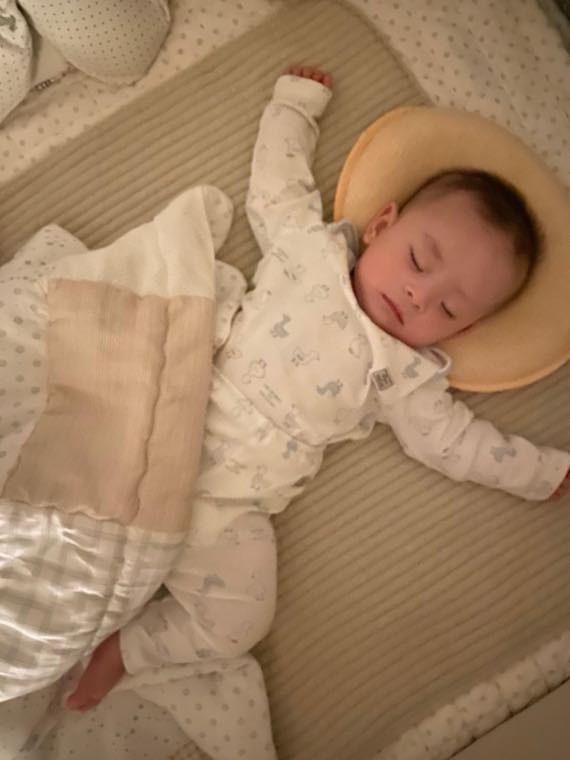
When tropical nights drag on and the temperature won't drop even after dark, putting your baby to sleep feels especially delicate. Turn the AC up high and you worry she'll be cold; bundle her up instead and she tosses and turns, soaked in sweat. Yet even on the same tropical night, how you put a newborn to sleep and how you put a toddler past their first birthday to sleep are quite different.
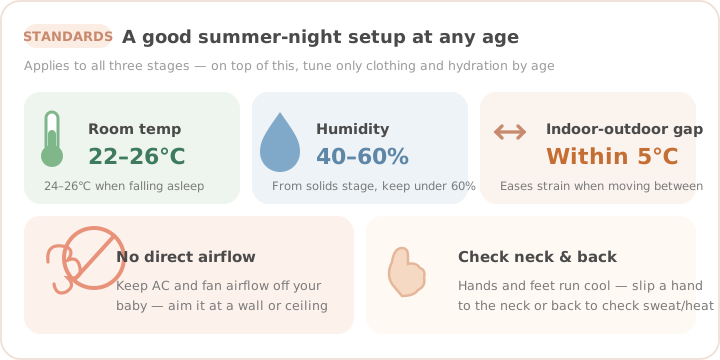
Let's start with the big picture. On a summer night, a baby's room is generally considered comfortable at around 22–26°C (24–26°C for sleep) and 40–60% humidity. This standard is the same regardless of age. What changes with age, within that environment, is how you dress her, how you cover her, and how you keep her hydrated. A newborn regulates her temperature poorly, so overheating is especially risky; a baby on solids moves more and sweats more; and a toddler past one kicks the blanket right off.
So in this article we've divided things into three stages — newborn (around 0–3 months), the solids stage (around 6–12 months), and past the first birthday (12 months+) — and laid out clothing and bedding, temperature regulation, hydration, and things to watch for, one by one. At the end, we've also included the warning signs of dehydration and heat illness that show up regardless of age, so start with the part that matches your baby's age.
Why putting a baby to sleep on a tropical night differs by age
Even in the same room at the same temperature, a baby's ability to cope with heat varies by age. A newborn is still unskilled at regulating her own temperature, so she's more vulnerable than an adult to both hot and cold environments. A toddler past one, by contrast, regulates her temperature much better, but she rolls around all night and kicks off the blanket, making it hard to manage her temperature through bedding.
The way you provide fluids differs too. For a baby under 6 months, the principle is not to give water separately but to meet her needs through feeds. From around 6 months, when solids begin, you can add a small amount of water alongside them. Because temperature regulation, activity level, and how fluids are taken all shift with age, there's no single way to put a baby to sleep on a tropical night.
A good sleep environment to keep regardless of age
Before getting into the age-by-age details, it helps to set up the basic environment that applies to every baby. Aim for a summer-night baby room of 22–26°C (24–26°C when falling asleep) and 40–60% humidity, and it's sensible to keep the indoor-outdoor temperature gap within 5°C. If the gap is too large, your baby's body can struggle when moving between the two.
Point the AC or fan airflow toward a wall or the ceiling so it doesn't hit your baby directly. Dress her in thin cotton, and covering just her tummy with a thin sleep sack (wearable blanket) instead of a duvet makes summer nights much more comfortable. To tell whether she's hot or cold, it's more accurate to slip a hand against the back of her neck or her back than to check hands and feet. Hands and feet are naturally a bit cool, and if you bundle her up going by those alone, it's easy to overheat her.
We've written up separately how best to run the AC, fan, and dehumidifier overnight and whether it's okay to leave them on all night in Baby sleep on a tropical night: how to run the AC, fan, and dehumidifier. Here we'll focus on the differences by age.
Newborn (around 0–3 months): watch for overheating more than for cold
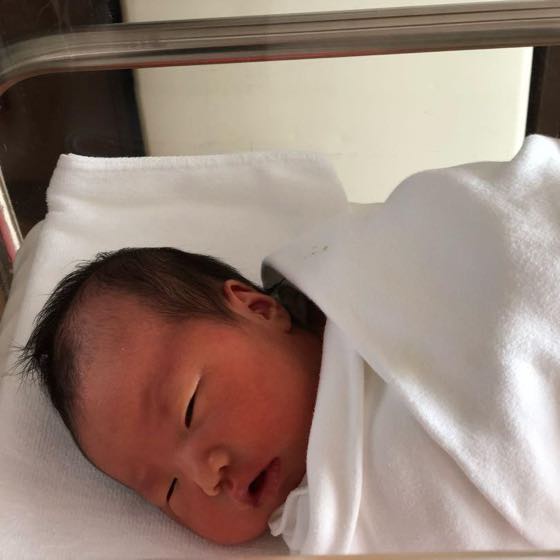
There's one thing to remember first during the newborn stage: in summer, keeping a baby too warm calls for more caution than keeping her cool. Babies at this age regulate their temperature poorly and are especially vulnerable to heat. Being bundled up so thickly that her temperature rises is far from a safe sleep environment. The idea that "newborns must be swaddled in case they get cold" can actually become a burden in summer.
For clothing and bedding, a thin short-sleeved cotton outfit with a swaddle or thin sleep sack covering just the tummy is about right. Avoid thick duvets and layers of clothing; it's better to set the room to the 24–26°C mentioned earlier and then adjust clothing one layer at a time.
For temperature regulation, the key is to run the AC but keep the airflow from hitting your baby directly. Newborns are sensitive to temperature swings too, so keep the indoor-outdoor difference within 5°C, and even after she's asleep, feel the back of her neck and her back to check she isn't soaked in sweat.
For hydration, the principle is not to give water separately. For a baby under 6 months, the way to meet her fluid needs is breast or formula feeds a little more often rather than water. Breast milk and formula contain plenty of fluid on their own, so on hot days feeds may come closer together than usual.
There's also a point to watch. For a baby under 3 months, the principle is to seek prompt care for even a single abnormal sign such as fever. A fever in a baby this age is hard to pin down, so if she feels hot on a tropical night or looks different from usual, rather than watching at home, check with a pediatrician.
Solids stage (around 6–12 months): activity and sweat rise together
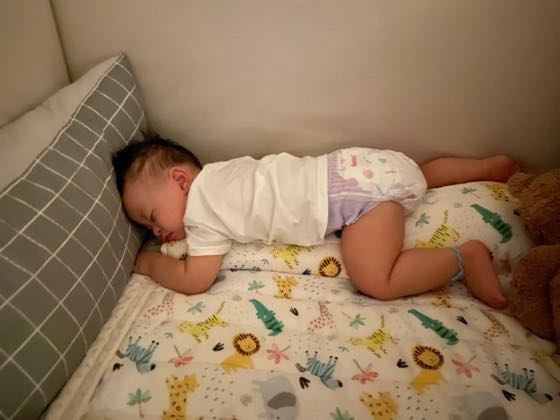
From around 6 months, when she starts rolling over and crawling, your baby's movement picks up markedly. Along with it, she sweats more and may show her discomfort with the heat by shifting around in her sleep. For putting a baby to sleep on a tropical night at this stage, the point is to look after the increased activity and hydration together.
For clothing and bedding, as in the newborn stage, a thin cotton outfit with a sleep sack is useful. From now on, though, your baby starts rolling and pushing the blanket away, so a wearable sleep sack keeps the tummy covered more reliably than a blanket laid over her.
For temperature regulation, with her greater activity, take care that sweat dries well. If she sweated a lot during the day, give her a quick wash before bed to keep her fresh, and keeping the room humidity from exceeding 60% helps her sleep much more comfortably.
For hydration, things shift a little from this stage. From 6 months you can begin a small amount of water alongside solids, so you can add water to her hydration on hot days. Water is only a small addition, though, and it helps to remember that feeds are still an important source of fluids and nutrition at this stage.
Past the first birthday (12 months+): the blanket-kicking stage, where a sleep sack is the realistic choice
Once past her first birthday, her temperature regulation is fairly well established. But a new worry arises: namely, rolling around all night and kicking the blanket right off with her feet. No matter how well you tuck her in, by morning the blanket is way over there and her tummy is fully exposed. So at this stage, covering the tummy with thin pajamas and a sleep sack is far more realistic than a blanket laid over her.
For clothing and bedding, adding a sleep sack over thin, breathable pajamas keeps her tummy covered no matter how much she moves. If you find yourself thinking "should I keep a blanket firmly over her in case she gets a tummy ache," it eases the mind a little to think of covering just her tummy with a sleep sack instead of a blanket.
For temperature regulation, this is a stage where you also need to watch daytime heat and dehydration. As her range of movement widens and she sweats a lot during the day, look after her fluids and how she's doing before and after sleep. Some babies begin to say a little "I'm hot," so listen to your baby's words and expressions too.
For hydration, it's much easier now that she can drink water from a cup. Offer water when she wakes at night or between daytime activities, but giving a large amount right before sleep makes her likely to wake in the night, so it's better to have her drink plenty spread across the day.
Clothing, hydration, and cautions by age at a glance
We've gathered the three stages into a table. The below is the broad flow, and even at the same age babies differ, so adjust to how your own baby is.
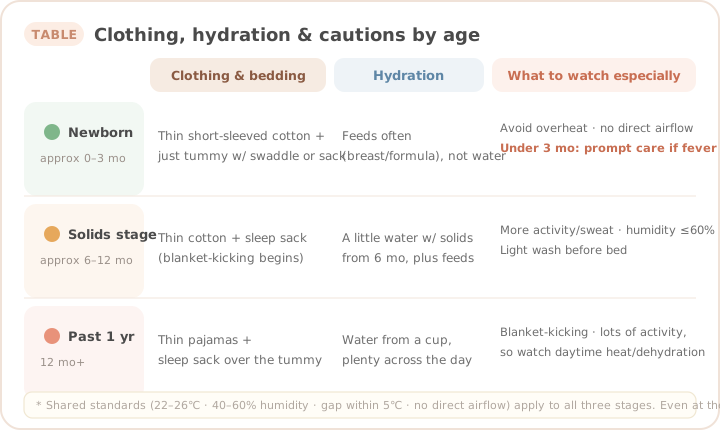
| Stage | Clothing & bedding | Hydration | What to watch especially |
|---|---|---|---|
| Newborn (around 0–3 months) | Thin short-sleeved cotton + just the tummy with a swaddle or sleep sack | Feeds (breast/formula) often, instead of water | Watch for overheating, no direct airflow; under 3 months, seek prompt care for fever or other abnormal signs |
| Solids stage (around 6–12 months) | Thin cotton outfit + sleep sack (blanket-kicking begins) | Small amount of water with solids from 6 months, alongside feeds | More activity, more sweat; keep humidity at or below 60%; quick wash before bed |
| Past the first birthday (12 months+) | Thin pajamas + sleep sack to cover the tummy | Water from a cup, spread plenty across the day | Blanket-kicking; lots of daytime activity, so watch daytime heat and dehydration |
The shared standards (22–26°C, 40–60% humidity, temperature gap within 5°C, no direct airflow) apply to all three stages. If you're unsure how to read whether your baby is signaling that she's hot or cold, see How to read the signals your baby sends for hot and cold, and for the right AC temperature in summer, see A guide to the ideal AC temperature for a baby's room for more detail.
These signs could mean dehydration or heat illness
If everything up to here has been about ordinary sleep, this part is a safety alert worth knowing regardless of age. When tropical nights continue, there's a risk of dehydration and heat illness at any age, so if you notice the signs below, move your baby to a cooler place to bring the heat down, look after her fluids (feeds for those under 6 months), and depending on her state, have her checked at a pediatrician or the emergency room.
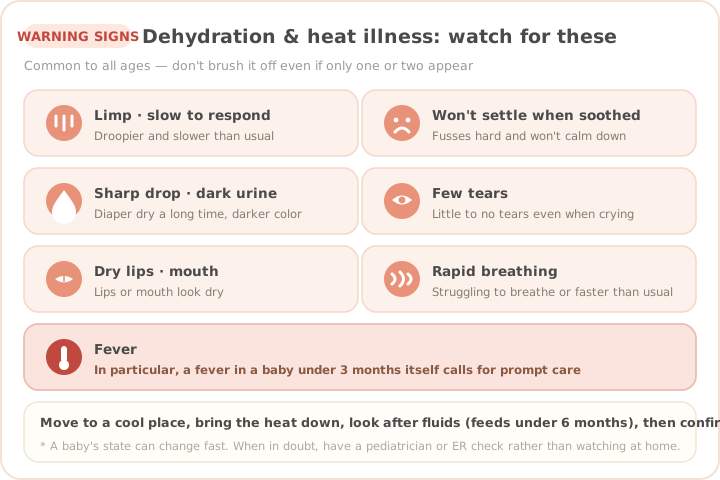
- Your baby is limp or slower to respond than usual
- She's fussing more than usual, or won't settle even when soothed
- Her urine output has noticeably dropped or the color is dark (the diaper stays dry for a long time)
- She produces few tears even when crying
- Her lips or mouth look dry
- She's struggling to breathe or breathing faster than usual
- She has a fever — in particular, a fever in a baby under 3 months itself calls for prompt care
It's best not to brush these off even if only one or two appear. A baby's condition can change quickly, so when in doubt, it's safer to have a professional see and assess her directly rather than watching at home.
Frequently asked questions
My baby is a newborn — can I leave the AC on all night?
If the airflow doesn't hit your baby directly and the room stays at 24–26°C and 40–60% humidity, leaving the AC on isn't a problem in itself — it can actually help prevent overheating. Just keep the temperature gap from growing large, and check the sweat and body heat at the back of the neck and the back now and then while she sleeps. We cover how to run it all night more fully in the AC and fan article linked above.
She's not even 6 months, but it's so hot I'd like to give her a little water.
For a baby under 6 months, the principle is feeding a little more often rather than giving water separately. Breast milk and formula contain plenty of fluid, so on hot days you can meet her needs by shortening the intervals between feeds. If you're worried about a situation where she really needs water, check with a pediatrician.
My toddler past one keeps kicking the blanket off and I worry about a tummy ache.
Kicking the blanket is natural at this stage. Since it's hard to keep the tummy covered with a blanket laid over her, covering the tummy with a wearable sleep sack is the realistic approach. Adding a sleep sack over thin pajamas keeps the tummy from being exposed no matter how she moves.
Her hands and feet are cold — could she be cold?
A baby's hands and feet are naturally cooler than her core, so judging by those alone makes it easy to over-bundle. To tell whether she's hot or cold, it's more accurate to place a hand on the back of her neck or her back. If her back is damp with sweat, that could actually be a sign she's hot.
To wrap up
The heart of putting a baby to sleep on a tropical night is one shared standard, with the details tuned by age. Setting the room to 22–26°C, 40–60% humidity, and no direct airflow is common to all; within that, a newborn calls for watching out for overheating and using feeds instead of water, the solids stage for handling more sweat and a small amount of water, and past the first birthday for covering the tummy with a sleep sack instead of a blanket.
And at any age, one thing stays the same: if she's limp, her urine drops sharply, her lips are dry, or she has a high fever, suspect dehydration or heat illness and seek advice promptly. Tune things little by little to your baby's age, but watching the signals she sends alongside it is the surest way to get through a sweltering summer night in comfort. If your baby has an especially hard time sleeping on summer nights because of infant rash, also see Newborn infant rash: caring for it through the environment.